
Speaker Report: Lighting Up Local Communities, Onko Chishin’s Resort Strategy | Senri Life Science Forum 2025
2025 - 12 - 26
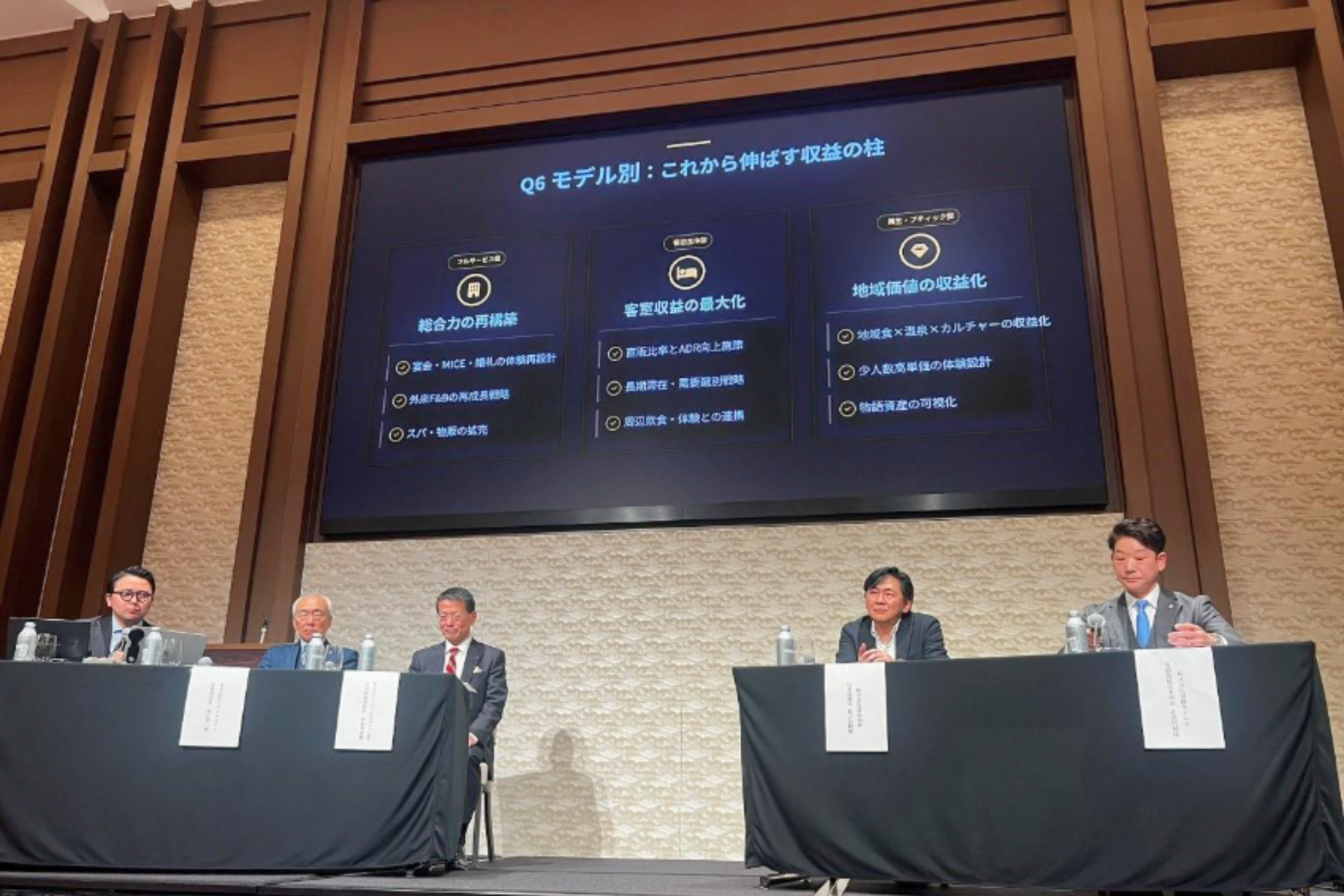
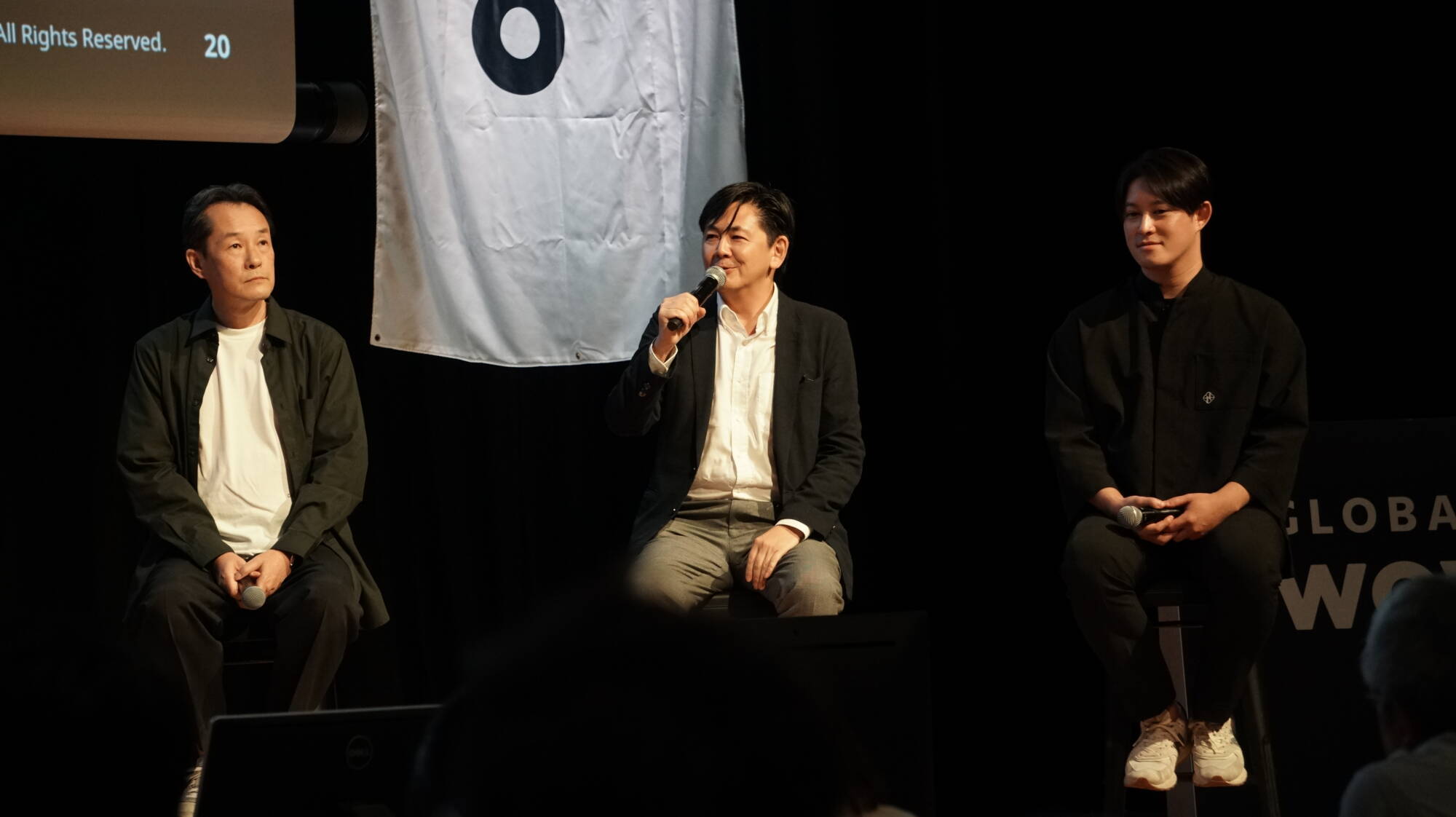
On December 11, 2025, our CEO Tomoki Matsuyama spoke at the Senri Life Science Forum 2025, held at the Senri Life Science Center in Osaka, under the title “Lighting Up Local Communities: Onko Chishin’s Resort Strategy.” Based on the talk that day, this article summarizes Onko Chishin’s journey so far, our thoughts on the business, and our outlook.
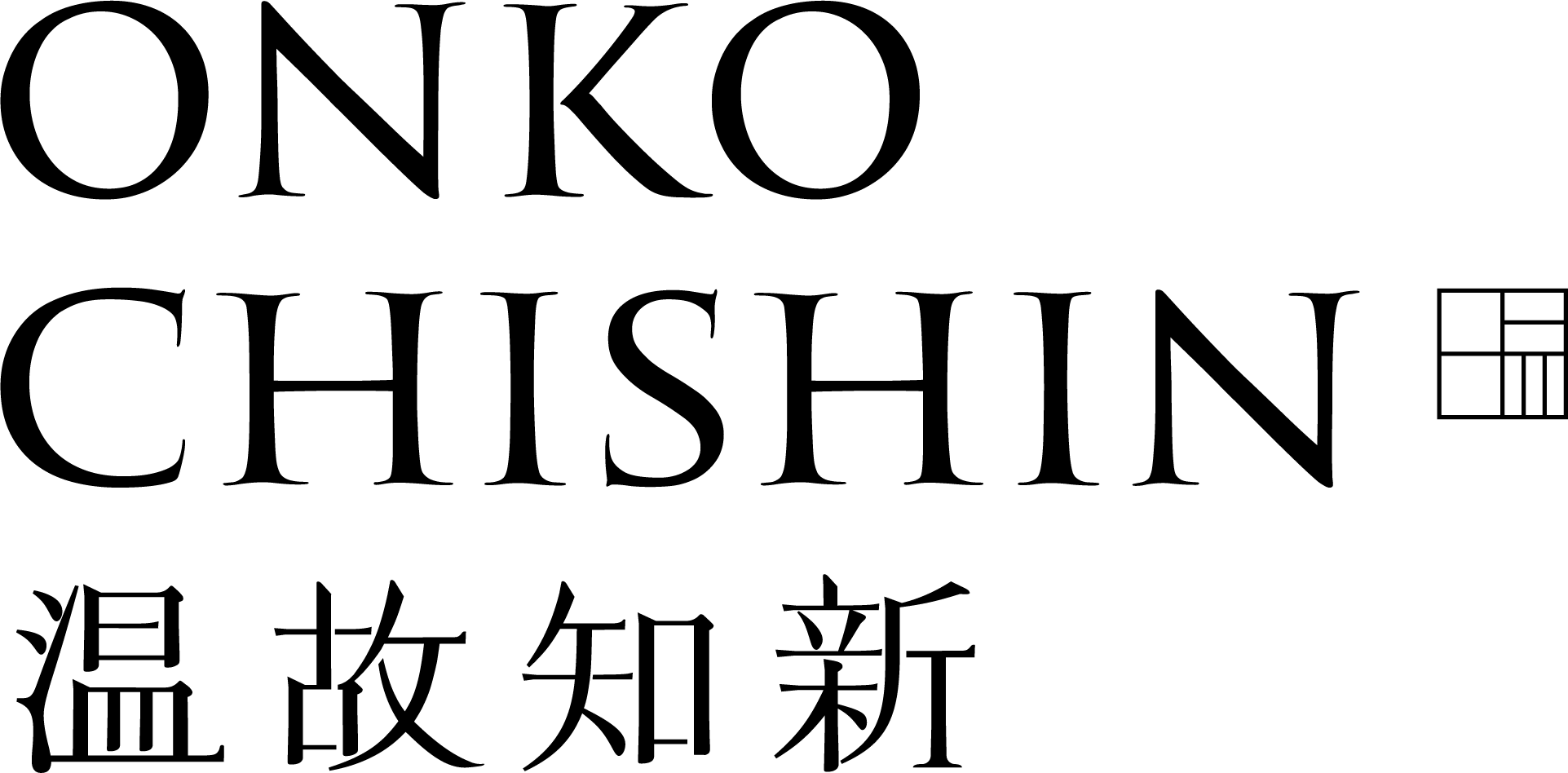
Matsuyama: As of December 2025, Onko Chishin is based in Tokyo and operates 11 hotels and 4 restaurants at 15 locations across Japan. The places we work with range from Rebun Island in Hokkaido to remote islands in Kyushu, destinations that people rarely visit and that make you feel, “I want to go there once in my lifetime.”
In such places, we create “places for a stay experience” through our hotels, aiming to bring out the full charm and value unique to each land. Our fundamental philosophy is not to build mere lodgings, but to draw out the full appeal of a region and create inns that become the destination of a journey.
A brand that grows through three kinds of experience value
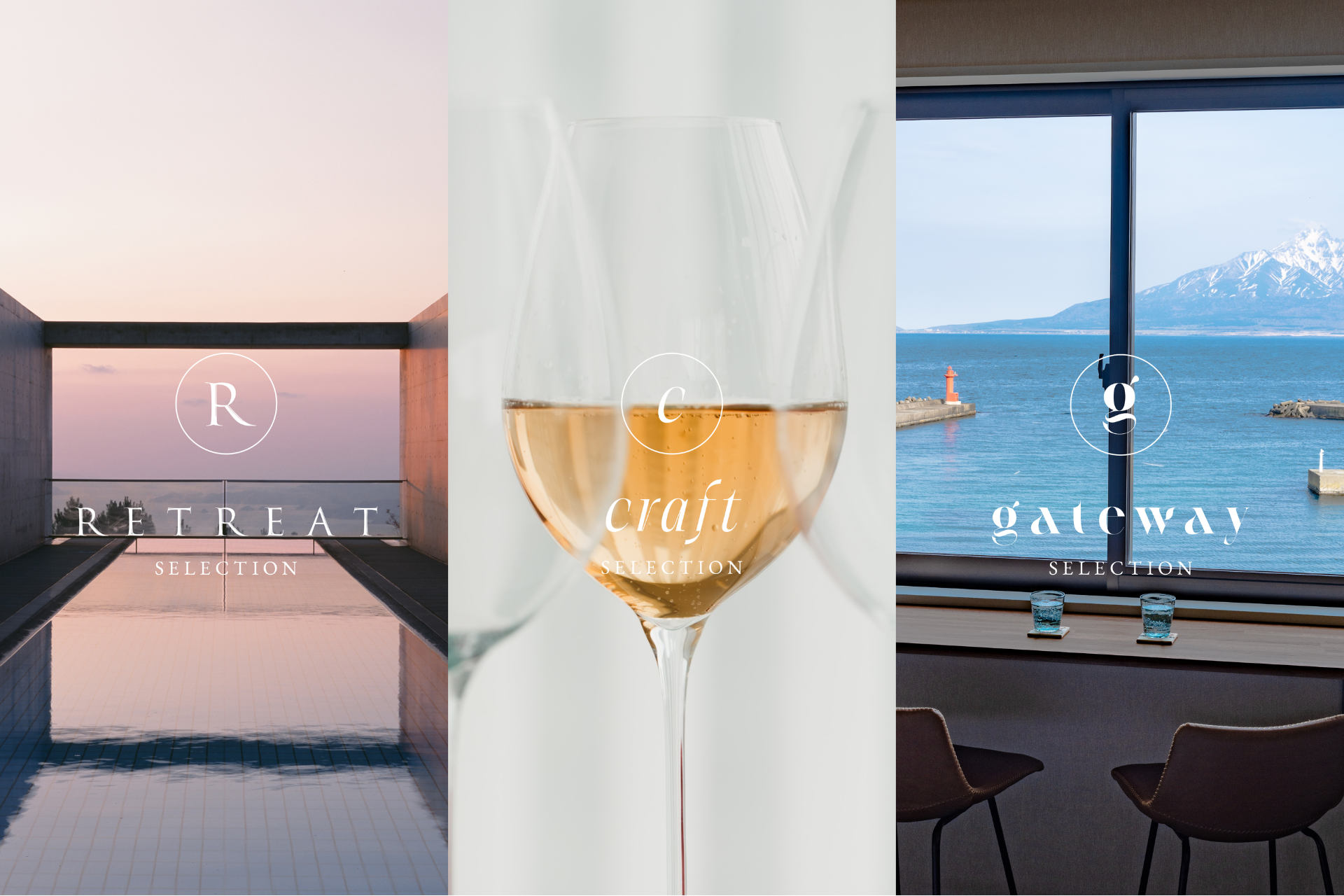
As the number of properties has grown, we have now organized our hotels into three categories: RETREAT SELECTION, CRAFT SELECTION and GATEWAY SELECTION.
RETREAT SELECTION consists of hotels where guests can retreat in mind and body within an extraordinary space of beautiful design, food and relaxation. CRAFT SELECTION consists of one-of-a-kind hotels with distinct personality, where a clear theme and the passion of their makers come alive. GATEWAY SELECTION consists of hotels that walk alongside their communities and value being part of everyday life, including a business succession model that takes over inns without a successor.
Price ranges are wide too, from the JPY 40,000s per person for Retreat to the JPY 10,000s for Gateway, meeting a variety of needs.
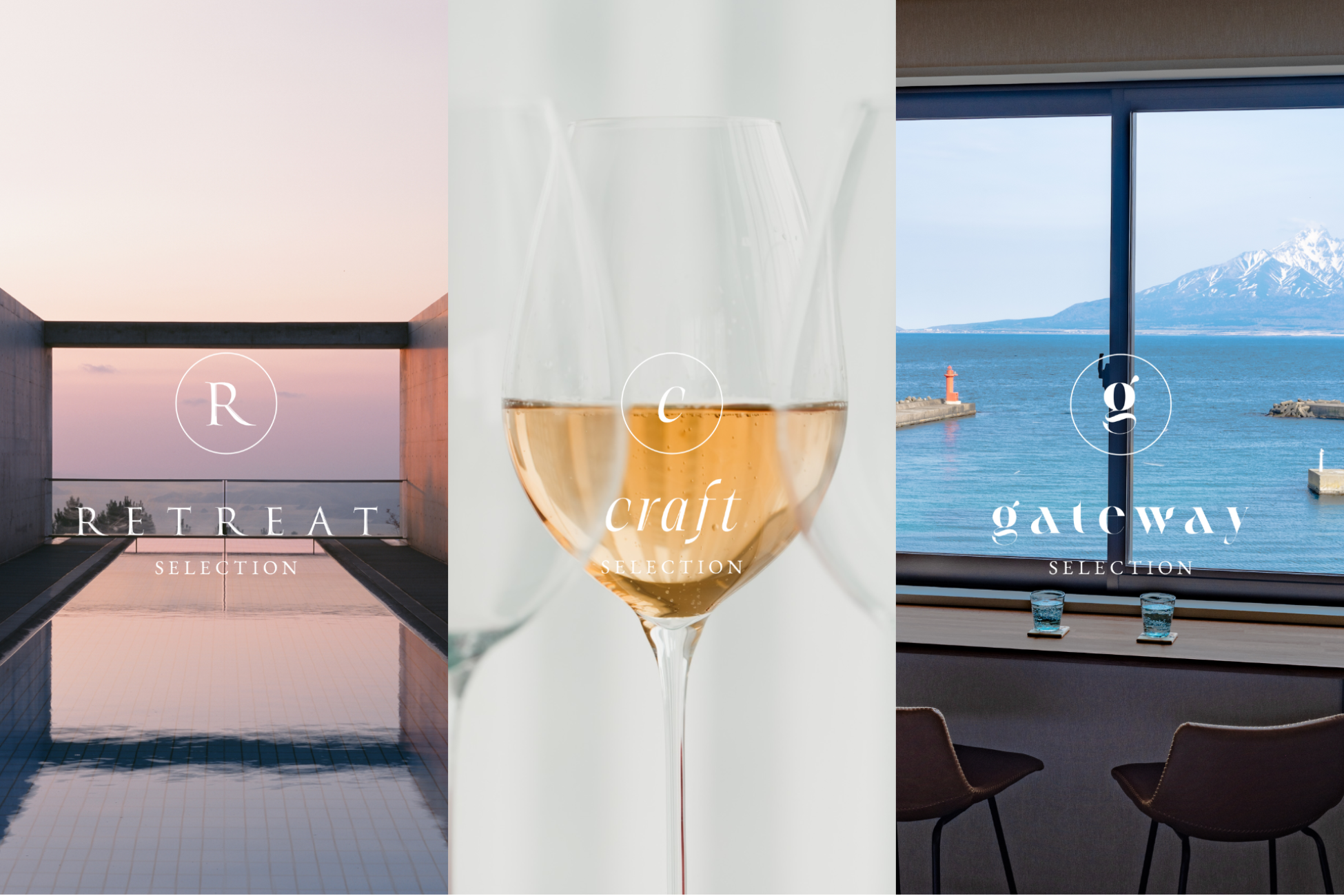
From left: RETREAT SELECTION, CRAFT SELECTION, GATEWAY SELECTION
Born from adversity: the origin of regional revitalization
In February 2011, just after we founded Onko Chishin, the Great East Japan Earthquake struck and all the projects we had planned came to nothing. With no work, what we took on was the revitalization and recovery support of hotels and ryokan in the disaster areas. Through involvement in more than 20 revitalization plans across Tohoku, we came to feel strongly the significance of inns rooted in their communities, and this became the origin of our view of business: walking together with the region.
The first property we went on to operate was SETOUCHI RETREAT AONAGI in Matsuyama, Ehime Prefecture.
The building, designed by Tadao Ando as a villa for Daio Paper, had been left unused for a long time. Faced with the options of “demolish it, sell it, or find new value in it,” we were approached about operating it.
It was a small property of only seven rooms and we had concerns about profitability, but our wish to “breathe new life into this building and light up the region” gave us the push. As a result, AONAGI drew wide attention as an inn offering a one-of-a-kind experience and became the foundation of Onko Chishin’s growth.
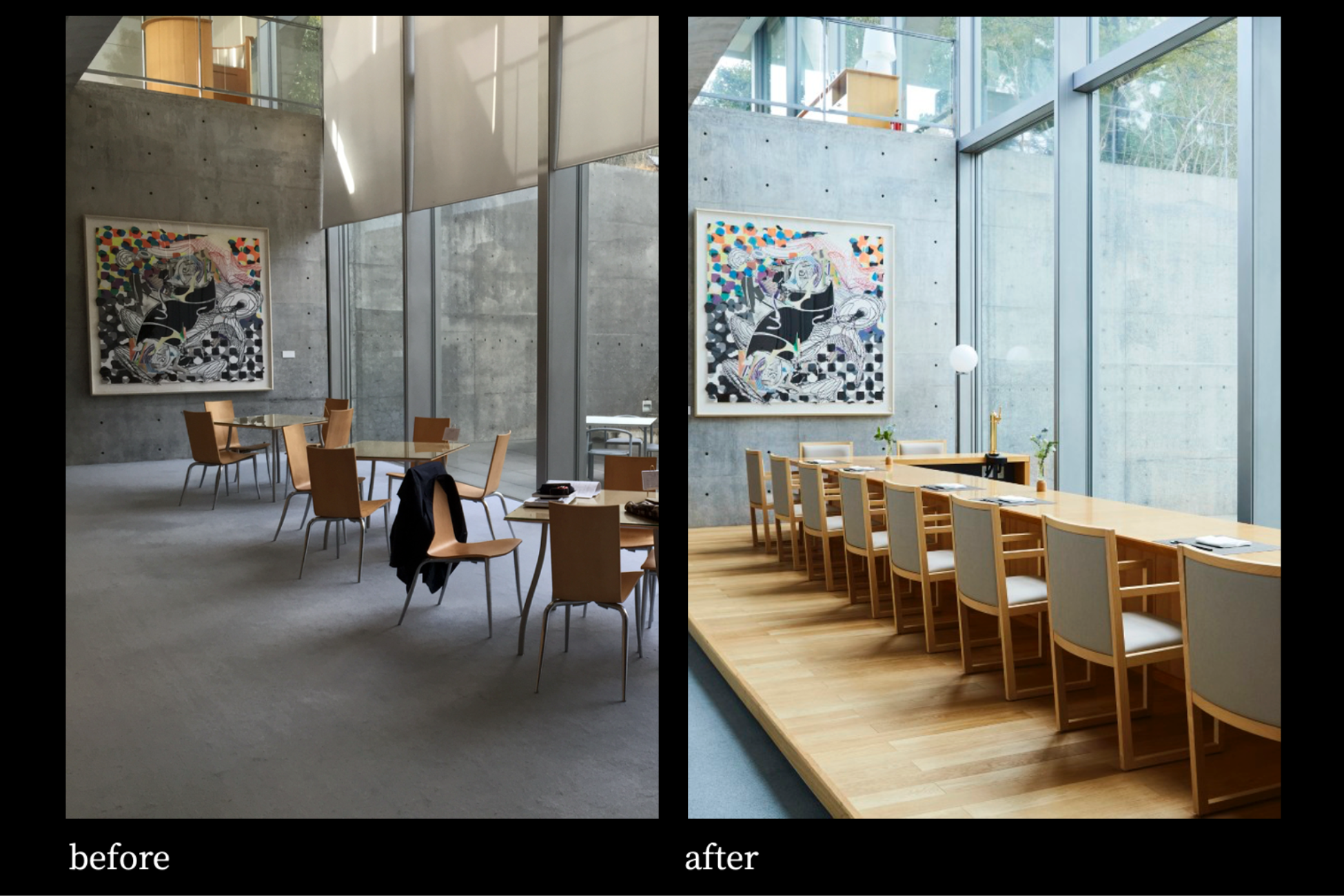
Interior of SETOUCHI RETREAT AONAGI before (left) and after (right) renovation
Building on this experience, we have widened the range of projects we take on, using the individuality of each region and building to the fullest: turning around a long-established ryokan on the verge of losing money, launching a newly built resort on a remote island, and fully renovating a hot spring ryokan.
In every project, rather than simply operating a facility, we value the question of how to draw out the value unique to each place and pass it on to the next generation. We want our hotels to be a group that inherits the culture, history and feelings of people in a region, and keeps refining them.
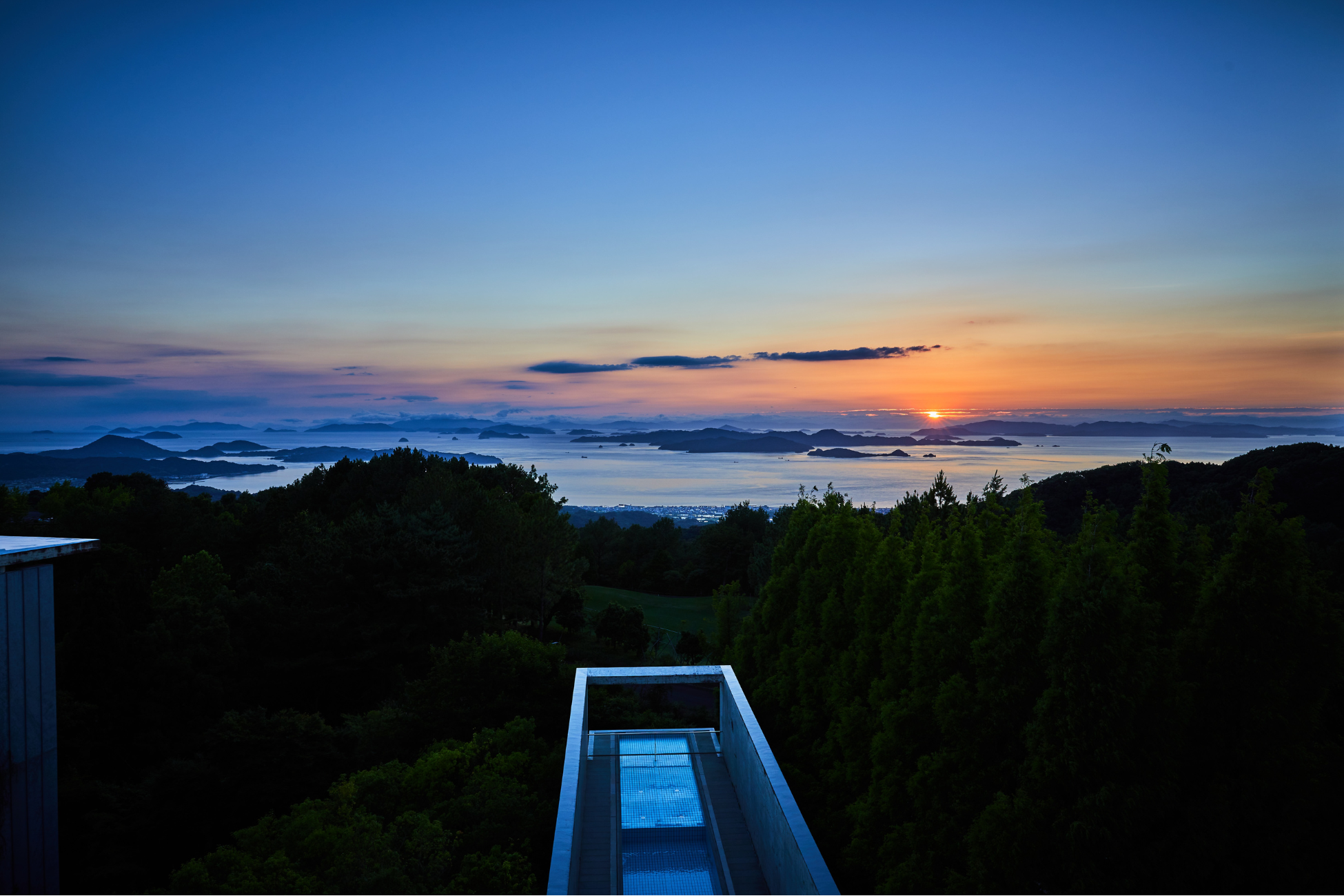
SETOUCHI RETREAT AONAGI, the first property operated by Onko Chishin, has grown into a hotel with international recognition, including an introduction in the MICHELIN Guide. Note 1: “MICHELIN Guide” is a registered trademark of Michelin & Cie.
The driving force born of a sense of crisis over disappearing regions
Why are we so committed to regions?
My own formative experience has a big influence. Having grown up in Osaka, I honestly felt a certain sadness and sense of crisis as Tokyo alone prospered while regional areas steadily declined. My family’s roots are in Fukui, and seeing its population shrink and its vitality fade with the times, my wish to keep protecting its charm and culture has only grown stronger. If a region disappears, the culture and the lives of people rooted there disappear with it. I believe that would be a great loss for Japan.
That is why, through hotels, I want to pass the charm and value of each region on to the next generation. By creating places where guests can experience the culture and the feelings of people unique to a land, not mere lodgings, I want to convey a region’s true appeal to those who visit. I tell our staff every day that I want them to engage actively with local people and create new value.
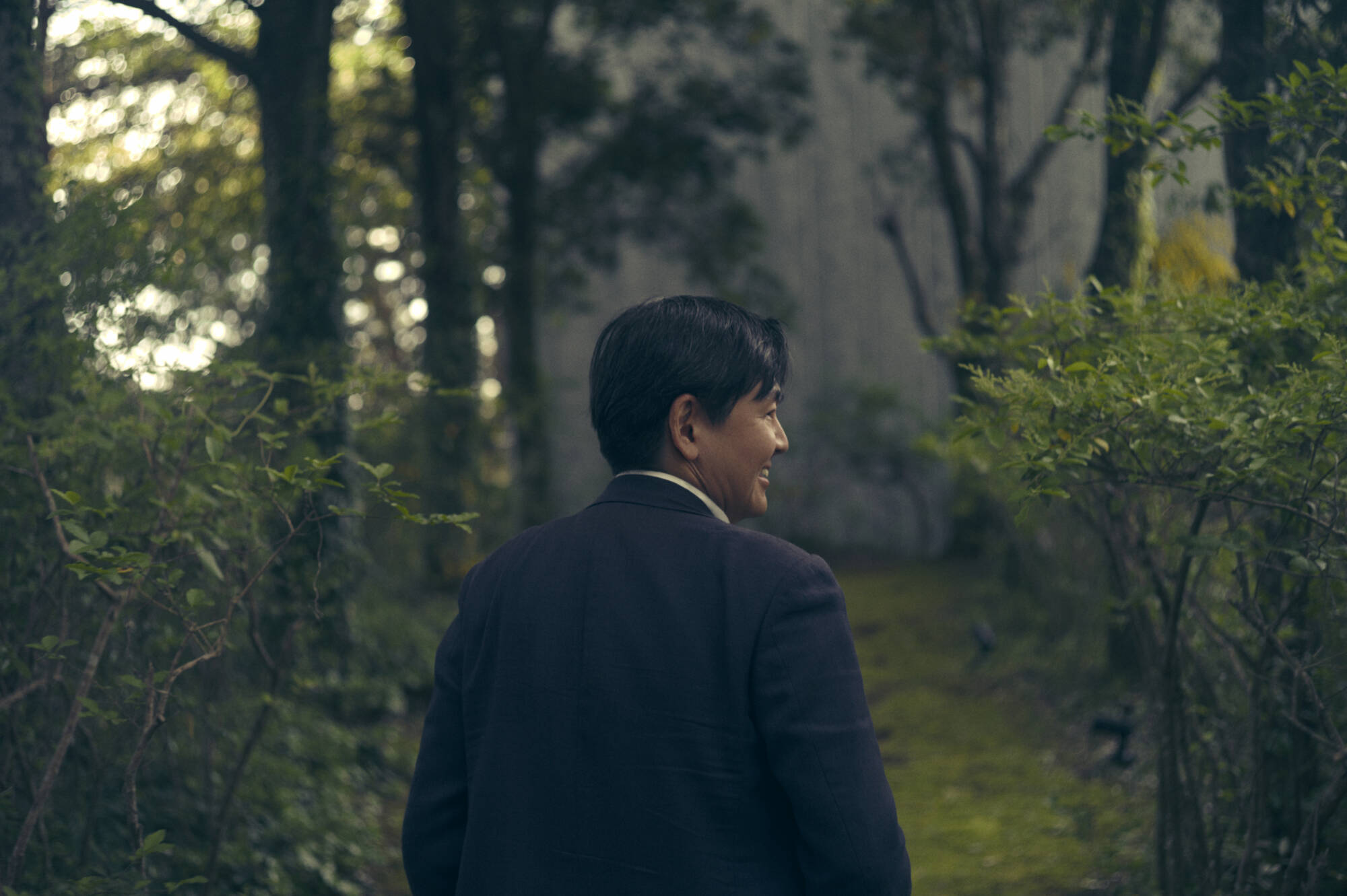
Matsuyama, CEO of Onko Chishin
The power of a team that shares values
At the base of our operating policy is an emphasis on “mindset as a person.” Beyond skills and knowledge, we value teamwork and gratitude, and we have created a “credo” so that all employees share the same values.
For example, we put daily guidelines into words, such as “Never say no” and “Actively say thank you,” and reflect them in our evaluation and recognition systems. So that staff scattered across the country feel a sense of unity, we use online information-sharing tools and also hold an annual all-employee gathering, “okcs day.”
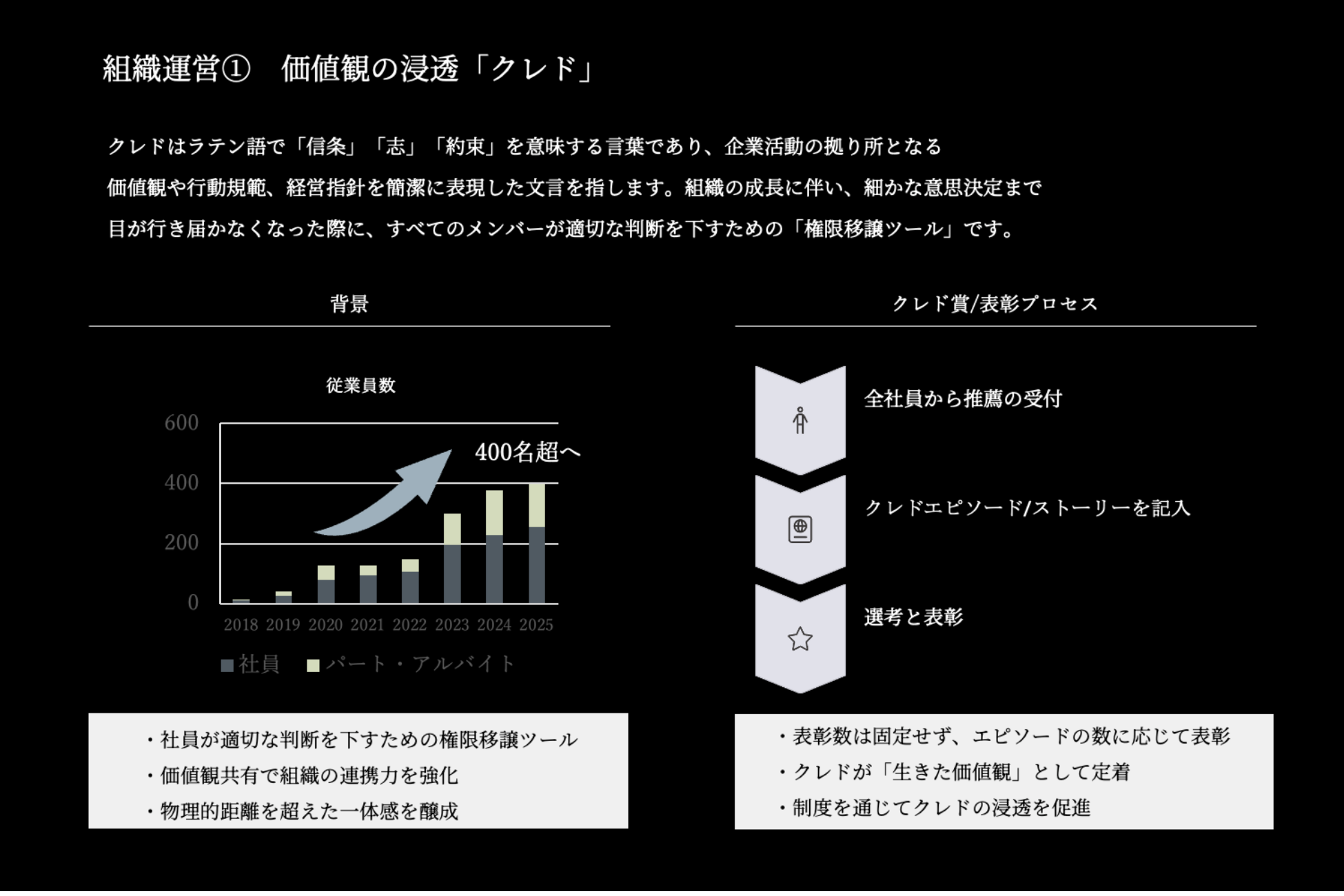
About the credo that all Onko Chishin employees share as values
Building the next era together with local communities
Looking ahead, we also have projects underway for hotels where guests can meet artisans and for distributed hotels using traditional houses. In Takaoka, Toyama Prefecture, for example, we are planning to work with local Buddhist altar craftsmen and metalworking engineers to create a place where guests can talk directly with the artisans.
As a solution to the problem of vacant houses, we are also actively pursuing the renovation of traditional houses and the use of salvaged materials. It is an effort to regard the growing number of vacant houses across Japan as a resource, creating new value while carrying on local history and culture. In this way we also contribute to preserving local landscapes and communities.
We want to go beyond simply operating lodgings and open up a new era together with local people. To protect the individuality and culture of each land and pass them on to the next generation.
That is the way of the “inn that becomes a destination” that Onko Chishin aims for. We want to remain a presence that keeps lighting up local communities.
Q&A
Q: You operate many types of hotels. How do you attract guests?
A: For attracting guests, we center on OTAs (online travel agencies) while also strengthening our own membership program to increase repeat guests. Attracting guests through OTAs is the mainstream across the industry, but through the membership program we encourage guests to travel between properties within the group and to return, aiming to build an independent system for attracting guests that does not depend on agencies.
Q: What thoughts are behind the company name Onko Chishin?
A: The name Onko Chishin carries the meaning of “studying the old to understand the new.” Rather than relying solely on new construction, we refine existing resources and culture and build the next era together with the region. We are not just a hotel operating company; as a standard-bearer of regional revitalization, we will keep creating “inns that become destinations.”

Event Overview
Event name: Senri Life Science Forum 2025
Theme: Lighting Up Local Communities: Onko Chishin’s Resort Strategy
Date and time: Thursday, December 11, 2025, 6:00 p.m.-7:00 p.m.
Venue: Senri Life Science Center Building, 6th floor, 1-4-2 Shinsenri-higashimachi, Toyonaka, Osaka
Audience: Members of the Senri Life Science Club
Organizer: Senri Life Science Foundation (https://www.senri-life.or.jp/)