
[IZU RETREAT ATAGAWA SUIKO by Onko Chishin] Bold Conversion of Communal Baths into Guest Rooms: Reopening on November 1, 2025
2025 - 11 - 06
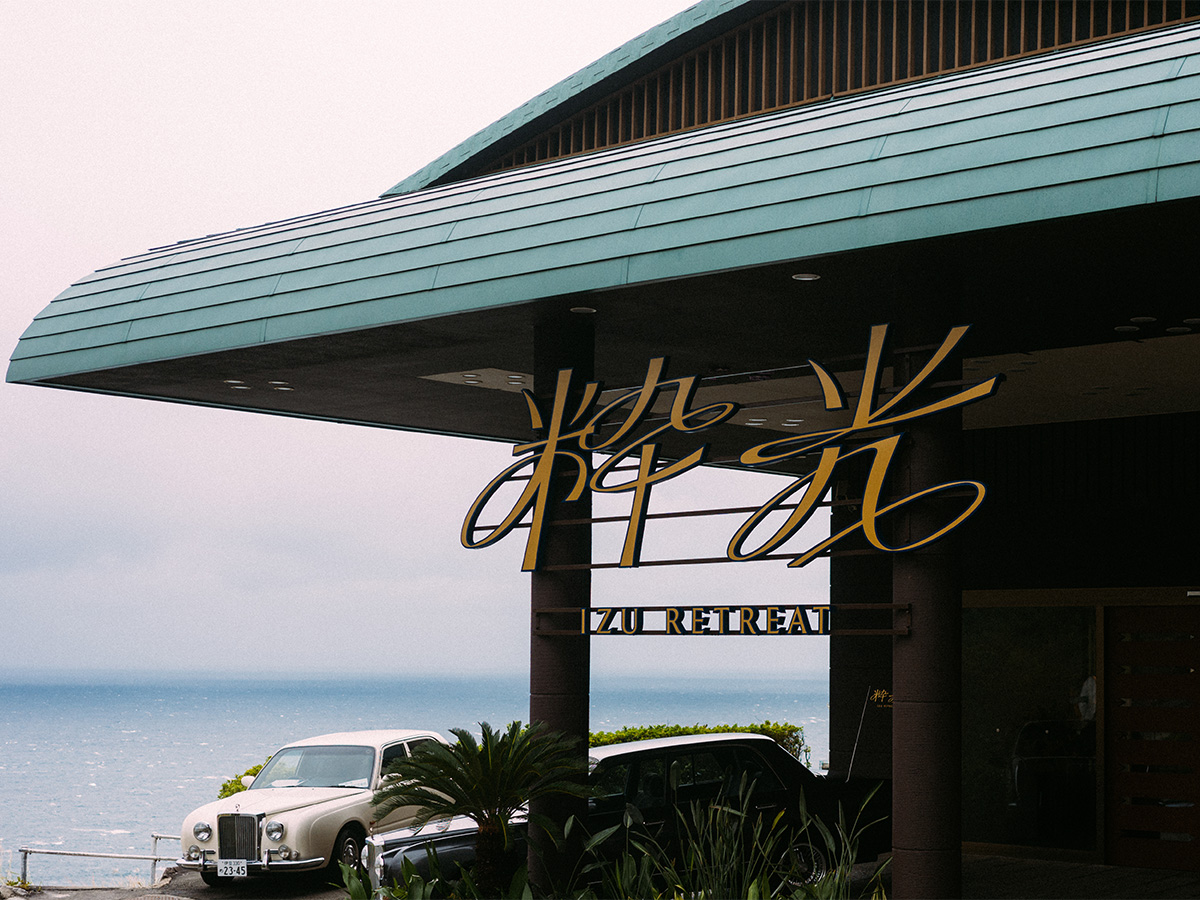
IZU RETREAT ATAGAWA SUIKO by Onko Chishin reopened on Saturday, November 1, 2025. With its concept renewed as “Nostalgic Luxury,” the property has been re-edited into a hot spring retreat of 16 rooms, all with ocean views and open-air baths fed by free-flowing source water, combining the nostalgia of a Showa-era hot spring town with modern comfort. Ahead of the reopening, we welcomed local residents to a preview on Monday, October 20.
October 20: a preview for local residents
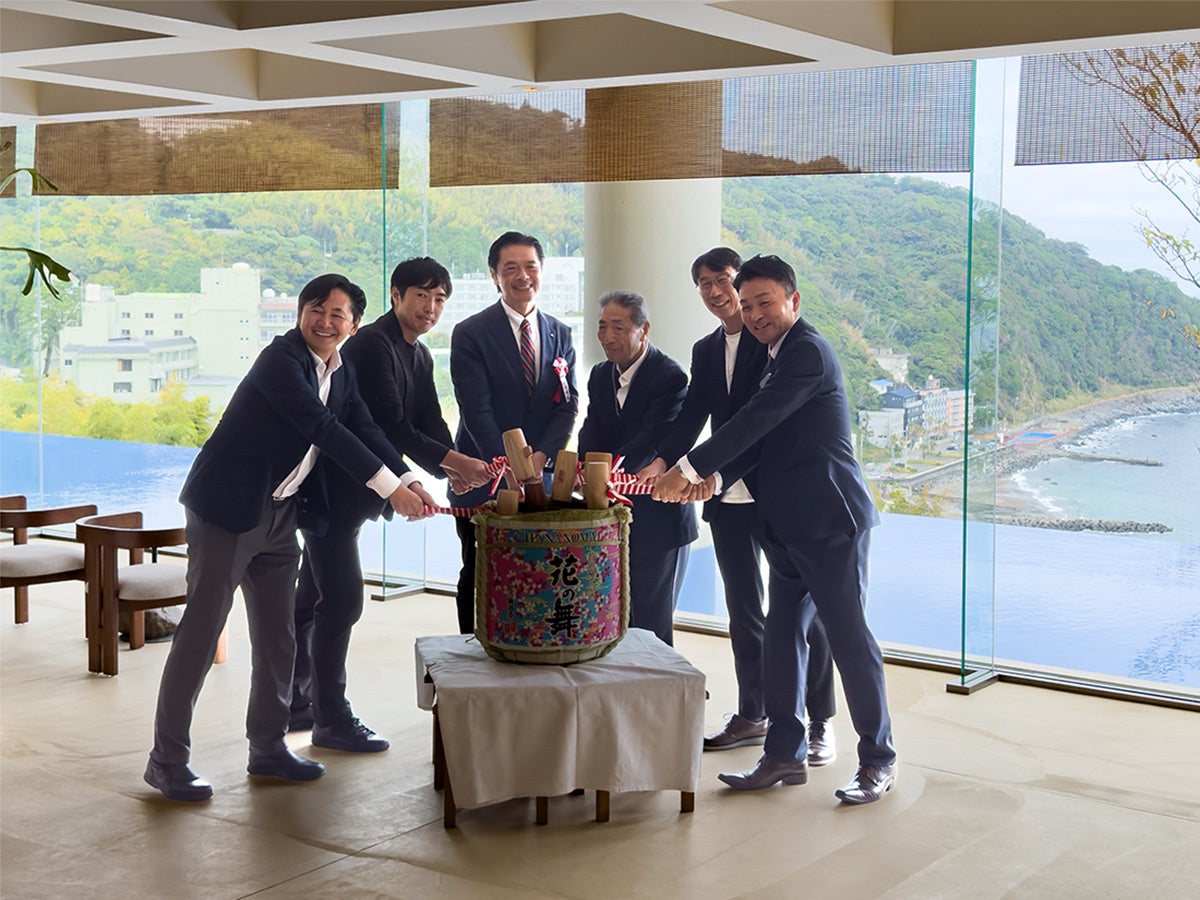
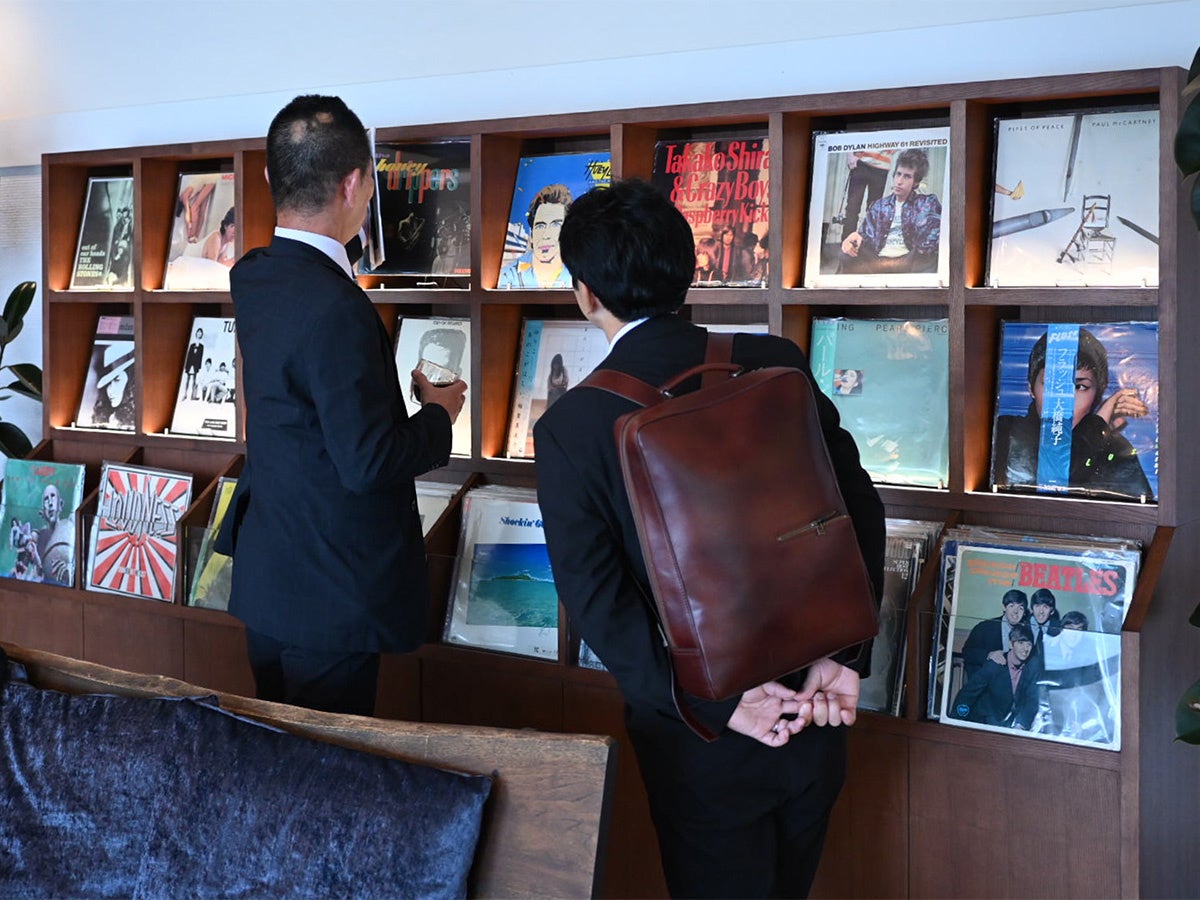
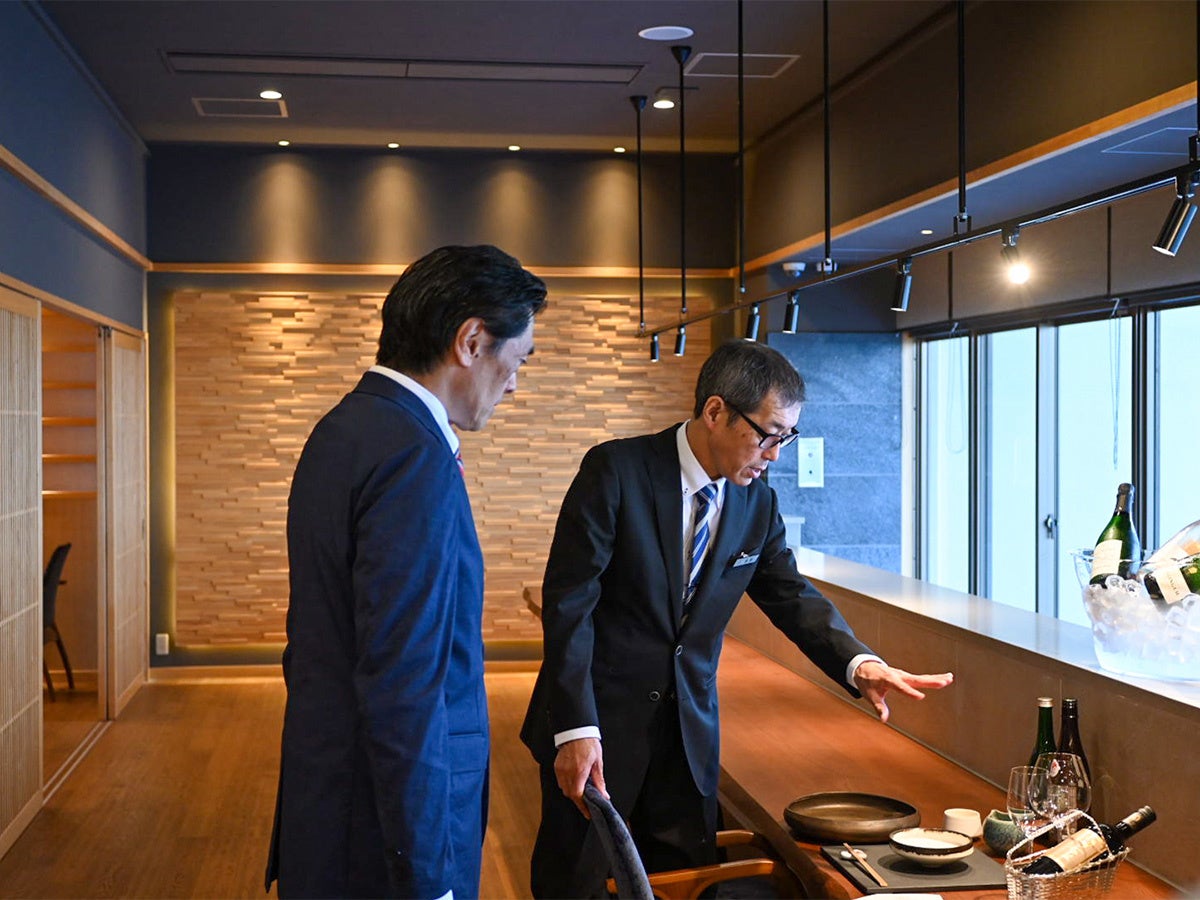
Local residents visited the preview held on Monday, October 20, ahead of the renewal. About 30 guests attended the ceremony held that day, including the Mayor of Higashiizu, representatives of the tourism association and ryokan association, and other local figures, and toured the hotel to experience the renewed SUIKO.
Mayor of Higashiizu Shigeki Iwai said, “I hope the birth of this property (IZU RETREAT ATAGAWA SUIKO) will not only raise the brand power of Atagawa Onsen, but also lead to the revitalization of the local economy and the further development of Higashiizu as a whole,” expressing hopes for the renewed SUIKO and for regional revitalization. The ceremony closed with a sake barrel opening by those involved. On stage were Mayor of Higashiizu Shigeki Iwai; Kota Segawa, CEO of SEGAWA Architects Inc.; Masamitsu Sato, President and CEO of Atagawa Green Hotel; Hitoshi Maeyama, Executive Vice President of Atagawa Green Hotel; Tomoki Matsuyama, CEO of Onko Chishin Inc.; and Naoto Tsuchida, General Manager of IZU RETREAT ATAGAWA SUIKO, who celebrated a new start made together with the region.
Throughout the hotel, old posters and photographs lent by local residents are displayed as artwork, alongside a large record collection from the era when Atagawa Onsen was at its peak, and visitors spent time lost in nostalgia as they looked at them. In the suites, boldly renovated from the former communal baths into guest rooms, visitors expressed surprise, saying, “More of the communal bath remains than I imagined.”
The re-edited story of “IZU RETREAT ATAGAWA SUIKO”
Atagawa, where the hotel stands, is a hot spring area that boasts the highest number of hot spring towers per area in Japan. During Japan’s period of rapid economic growth, with easy access from the Tokyo metropolitan area and an abundant volume of high-temperature water, it flourished as a destination for group travel. Later, as group travel declined and travel styles changed, visitor numbers tended to fall. For this renewal, we shone a light on Atagawa’s memories from its heyday to the present, designing spaces where one can feel the analog warmth, tactile quality and luxury of accumulated time that are being lost today.
1. From communal baths to suites: spatial design that redefines hot spring culture
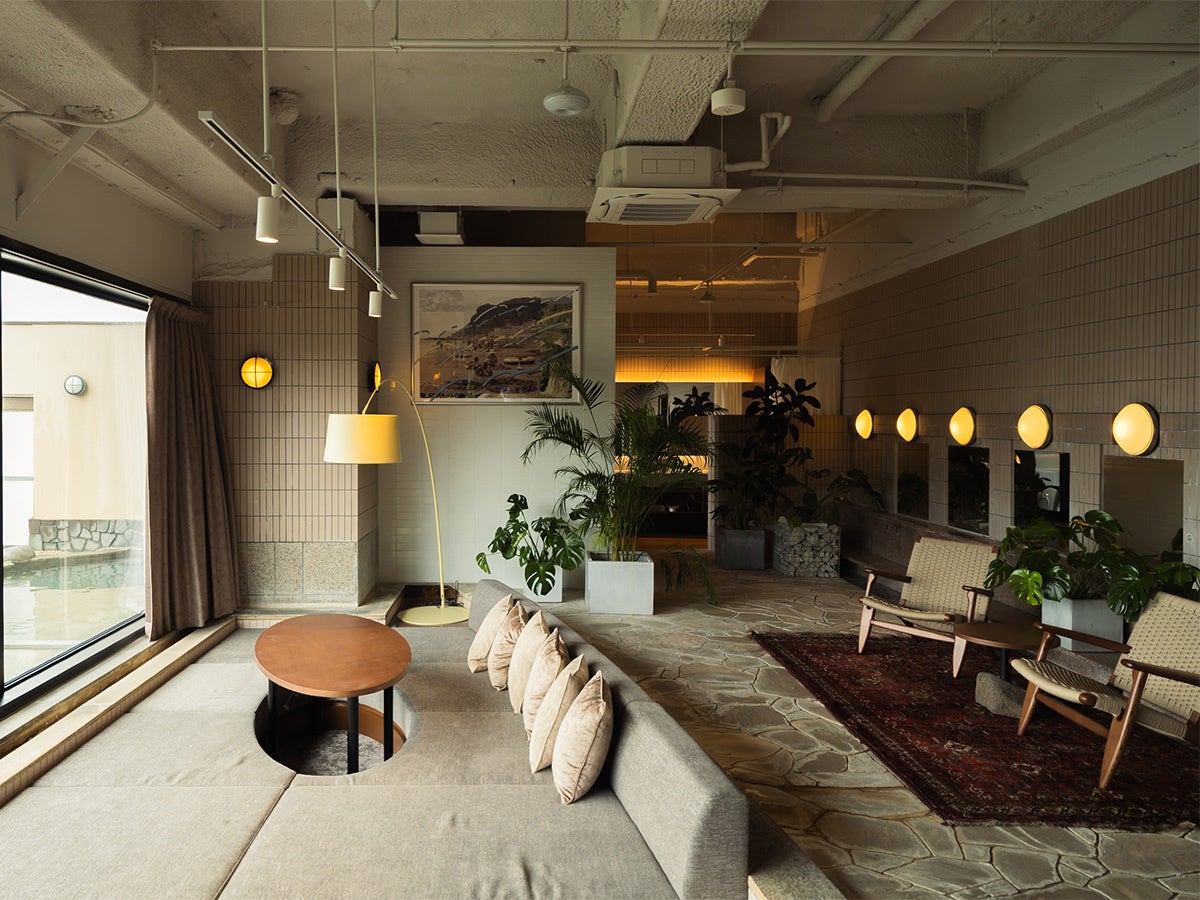
The most symbolic effort is the project that converted two communal baths into suites of about 200 sq. m each. The communal baths, once shared spaces, have been re-edited into spaces that blend the “privacy” sought by today’s travelers with Atagawa’s long-standing hot spring culture, savored with all five senses while respecting each guest’s private, luxurious time. Making use of the former structure, a private open-air bath of about 20 sq. m has been rebuilt with the same sense of openness as before. The ocean view over the Pacific and the abundant volume of water remain unchanged.
In addition, a sauna has been added, elevating traditional bathing culture into a modern wellness experience. The area that retains the look of the indoor bath has become the living room, deliberately keeping the former stone paving and washing-area mirrors, and with photographs of old Atagawa displayed as artwork, it has also been fitted out as a space that conveys hot spring culture.
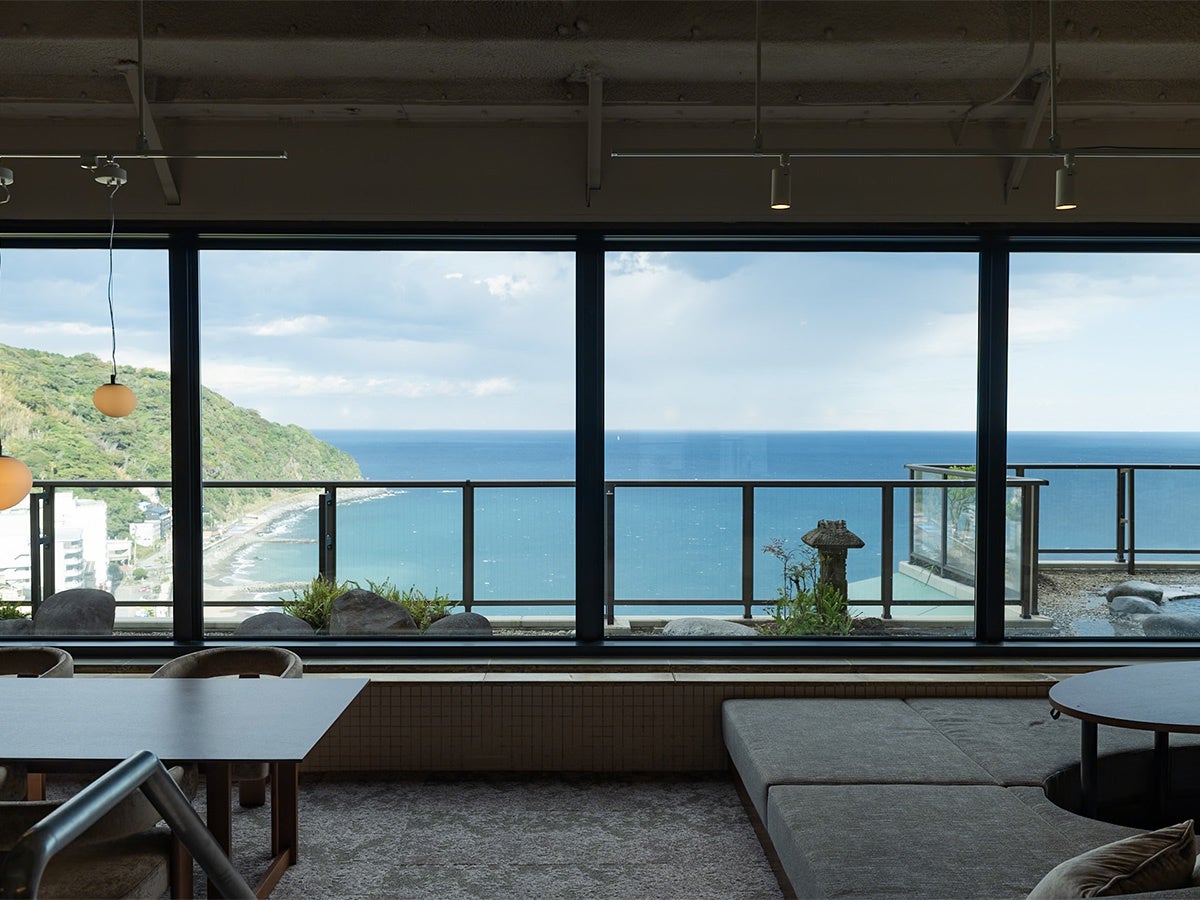
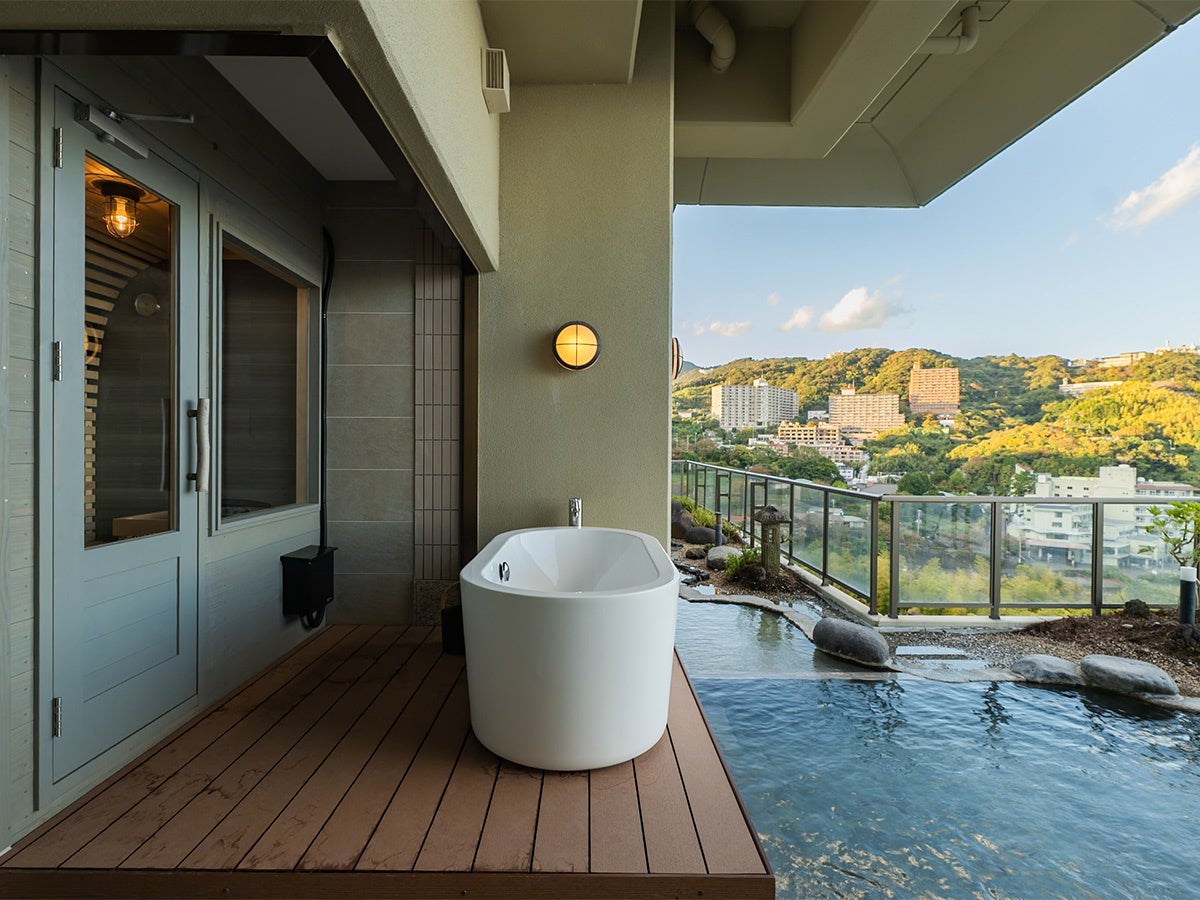
This bold renovation preserves the good old hot spring culture of Atagawa while offering comfort suited to diversifying travel styles, transforming the space into a one-of-a-kind symbol of this renewal. While turning the communal baths into guest rooms, we equipped all 16 rooms with open-air baths so that every room offers bathing with an ocean view. By reducing the count from 24 rooms to 16, every room has been refurbished to a luxury standard of about 90 to 200 sq. m.
2. Upcycling what already exists
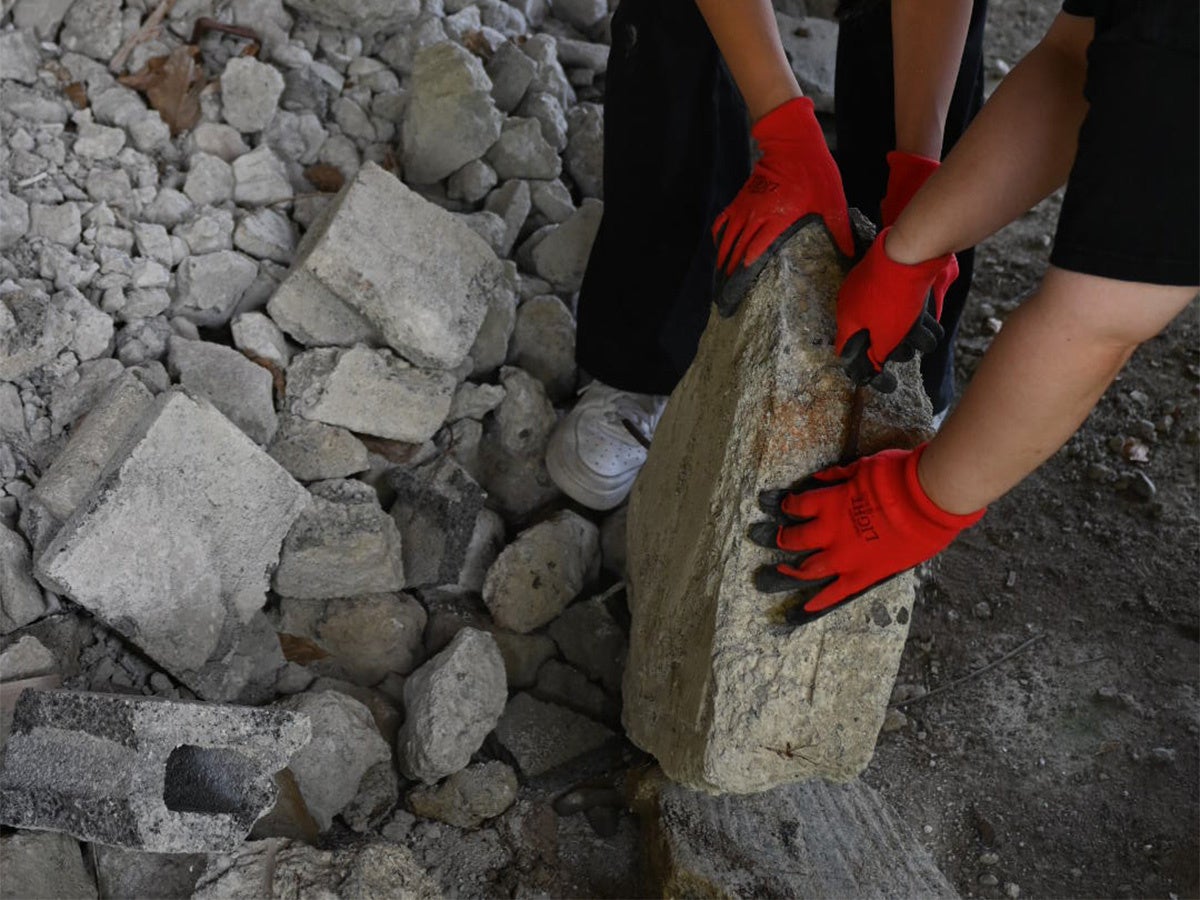
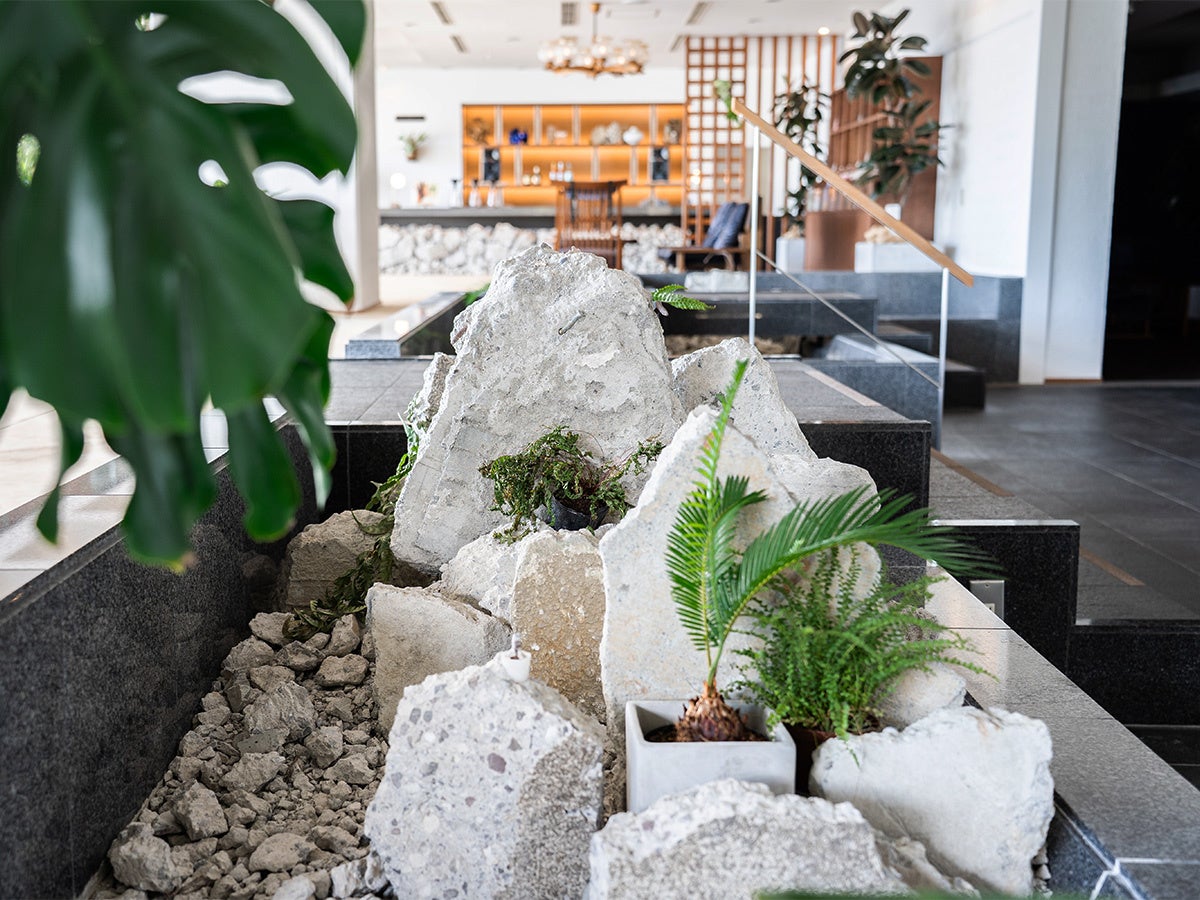
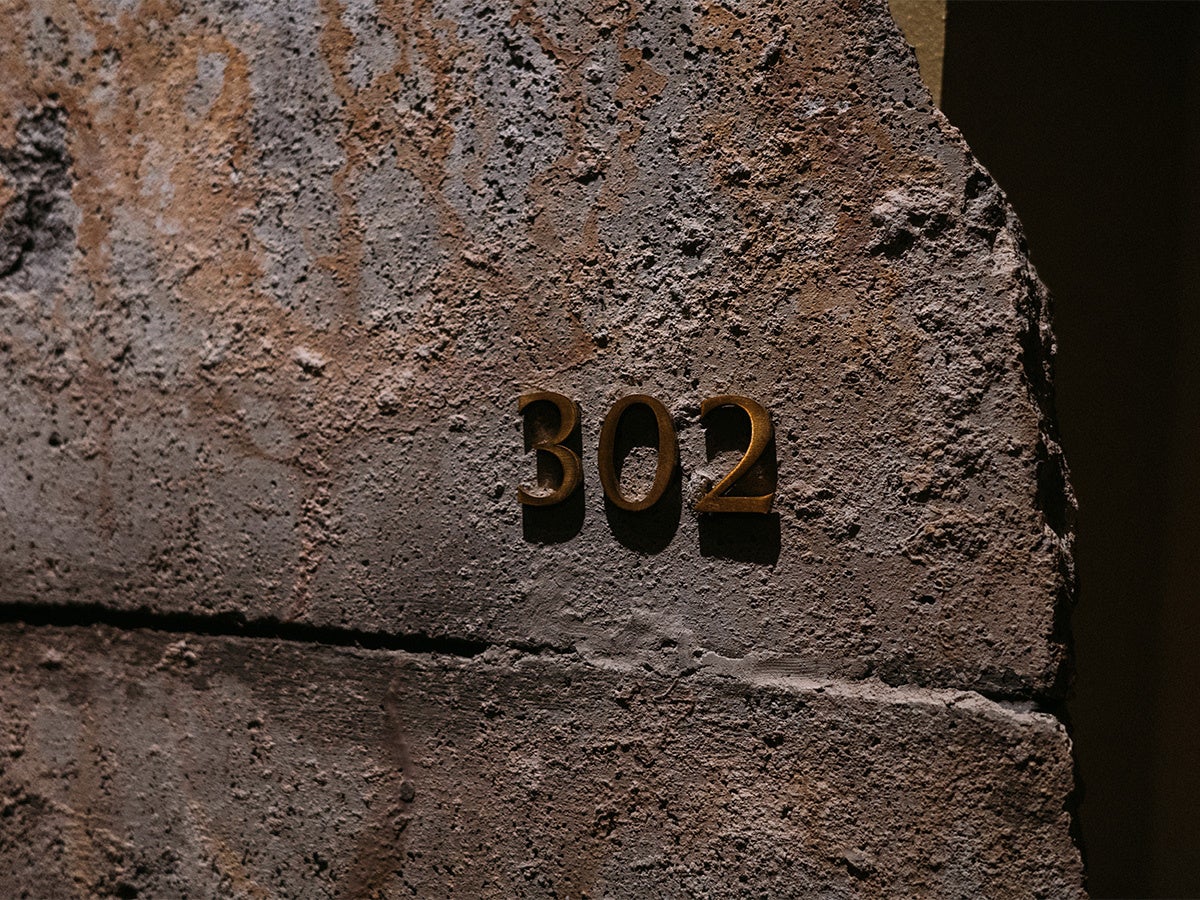
For the renewal, materials and fixtures actually used at the former SUIKO were repositioned throughout the hotel. During renovation of the building, concrete rubble was recovered from the old building and rebuilt as lobby artwork and guest room signage. The Atagawa area is known as the place where stones for building Edo Castle were once quarried. In light of this history, the concrete rubble produced by the building is placed in the hotel not as mere waste but as something that carries history forward.
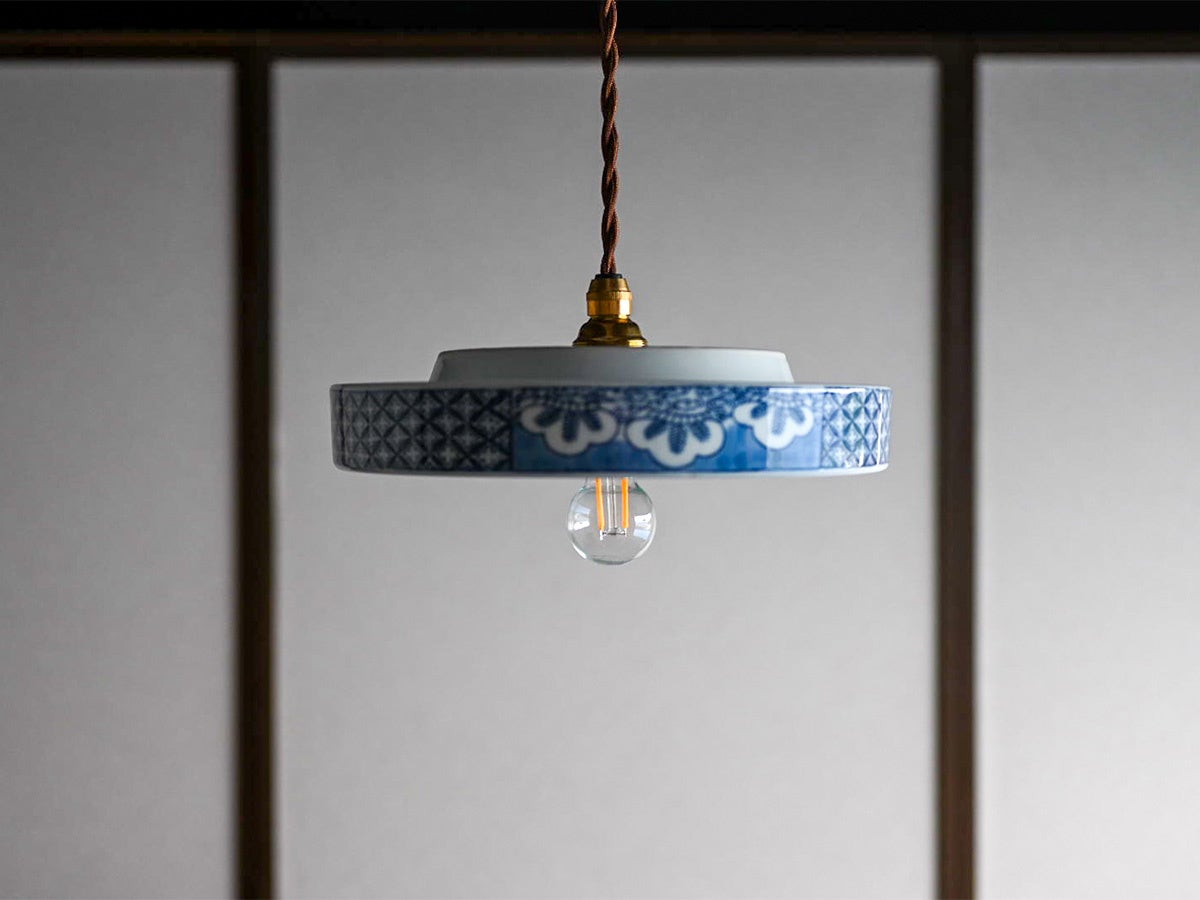
In the restaurant and public areas, ashtrays and tableware used at the former SUIKO have been upcycled into lighting. The texture of the ceramics is kept as it is, redesigned as lamp shades. Safes, telephones, tea chests and chairs, also fixtures used for many years at the former SUIKO, were finished with colors and parts to match the concept design and reused as accents in the guest rooms. Rather than placing them merely as decoration, we have kept them in usable form so that the traces of the former SUIKO can be felt naturally within the present stay experience. These efforts go beyond reuse of resources: their aim is to make the property’s history visible in concrete form and to give past materials new value.
3. Creating spaces that embody “Nostalgic Luxury”
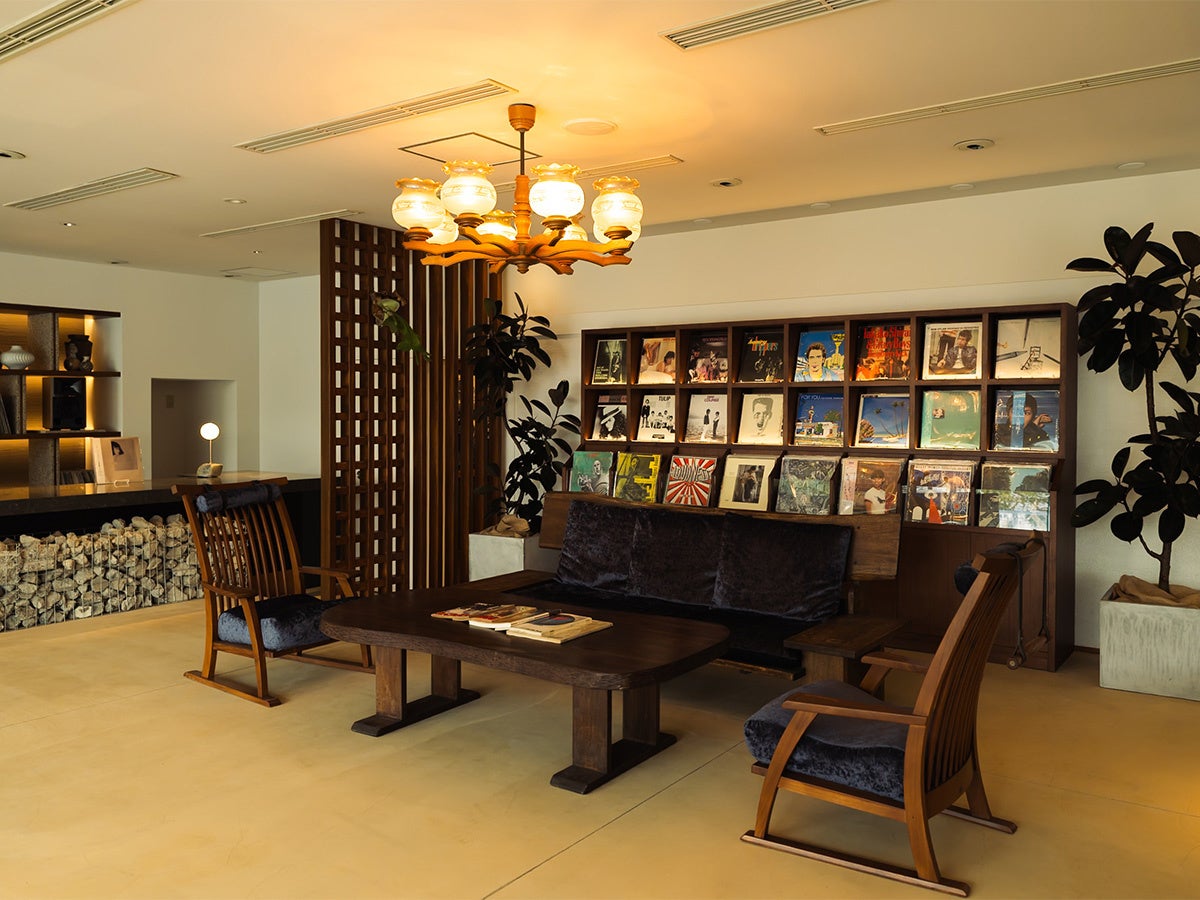
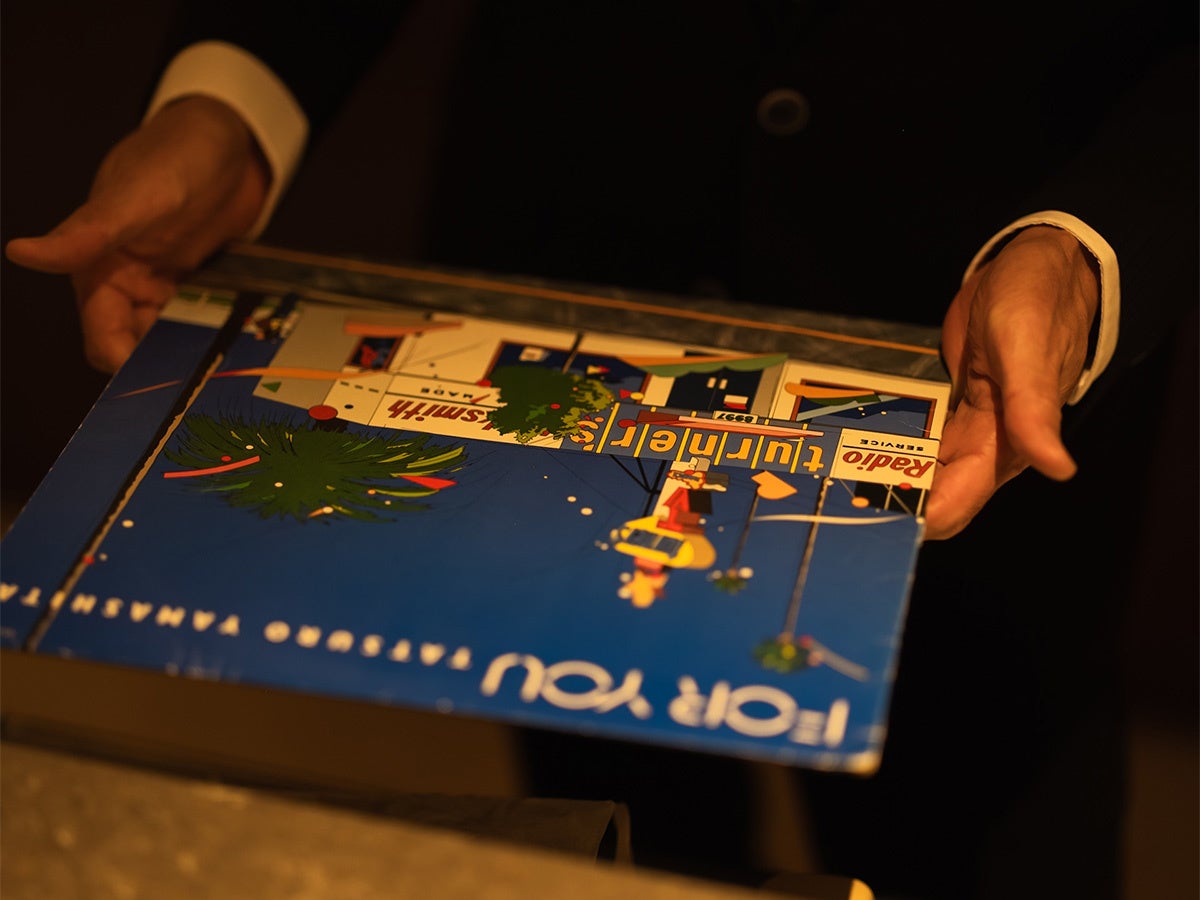
Under the “Nostalgic Luxury” concept, we have newly created the lounge bar “Shiomachi” and the game lounge “Namima.” At the lounge bar, with a view over the sea and the Atagawa townscape, guests can enjoy Shizuoka wines and craft drinks while listening to Showa-era Japanese pop and nostalgic Western music from records.
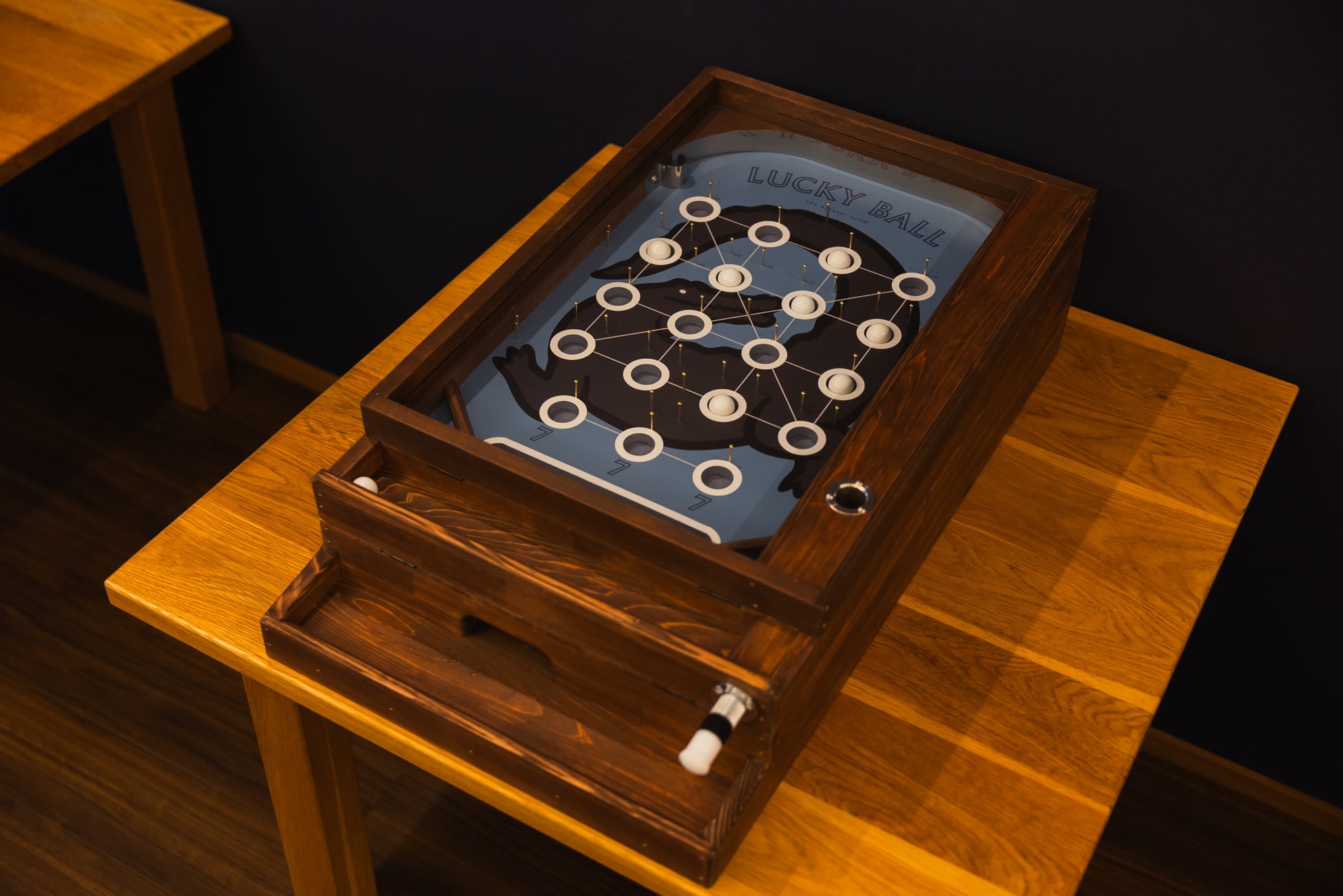
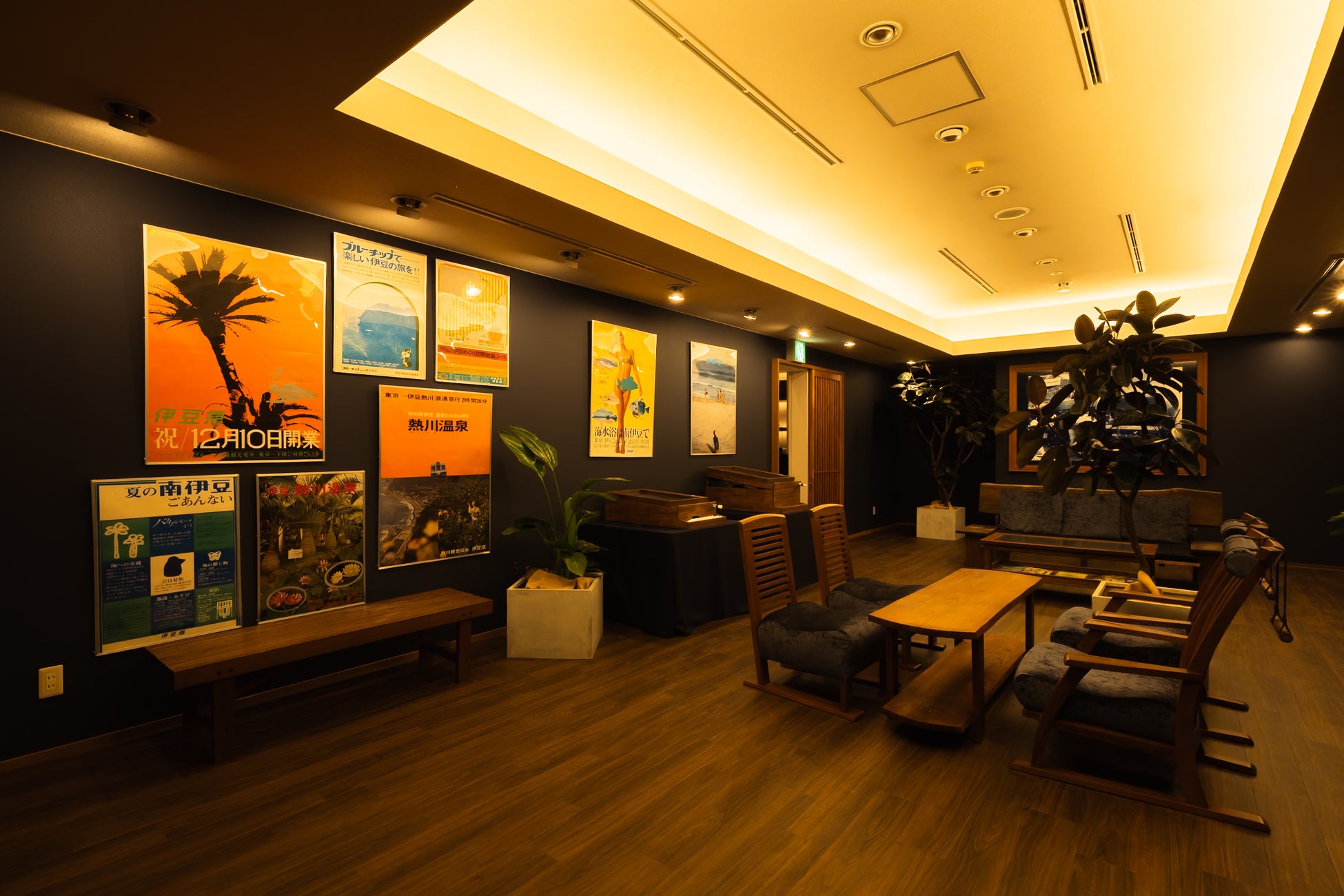
In addition, the game lounge features items emblematic of Showa-era entertainment culture, such as smart ball machines and analog board games. Enjoyed across generations, it is a space unique to SUIKO where nostalgia and playfulness meet. These new spaces are not mere additions to the property; they re-edit a warm way of spending time, now being lost, into a modern stay experience. While incorporating nostalgic elements, we have taken care to keep a balance of quiet and refinement.
These spaces also display Showa-era posters and photographs provided by local residents, re-editing the cultural archive of the time when the town was liveliest, including tourism posters and magazines of the day, as artwork and interiors. A large record collection is also on display, so visitors can touch the “story of Atagawa” handed down across time, along with a sense of nostalgia.
4. A dining experience that discovers new tastes of Izu
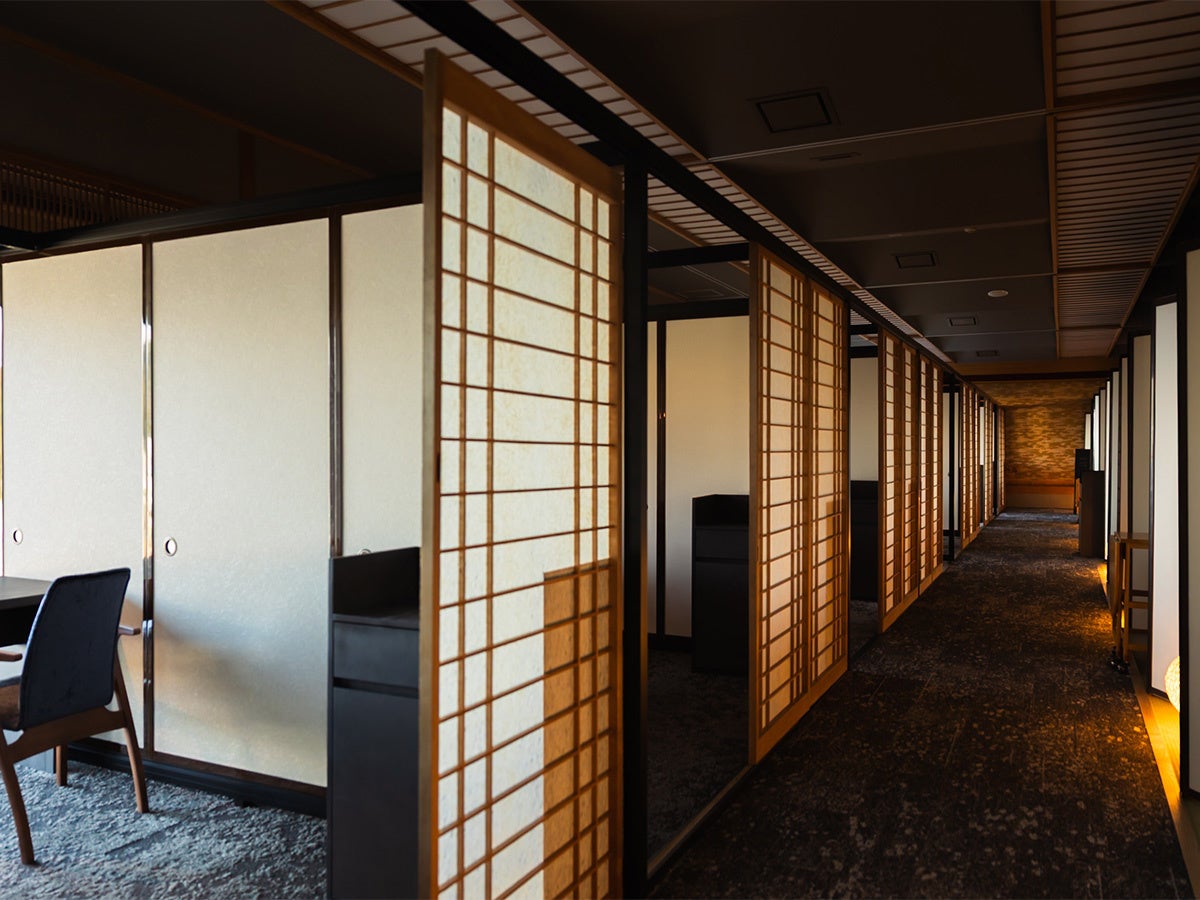
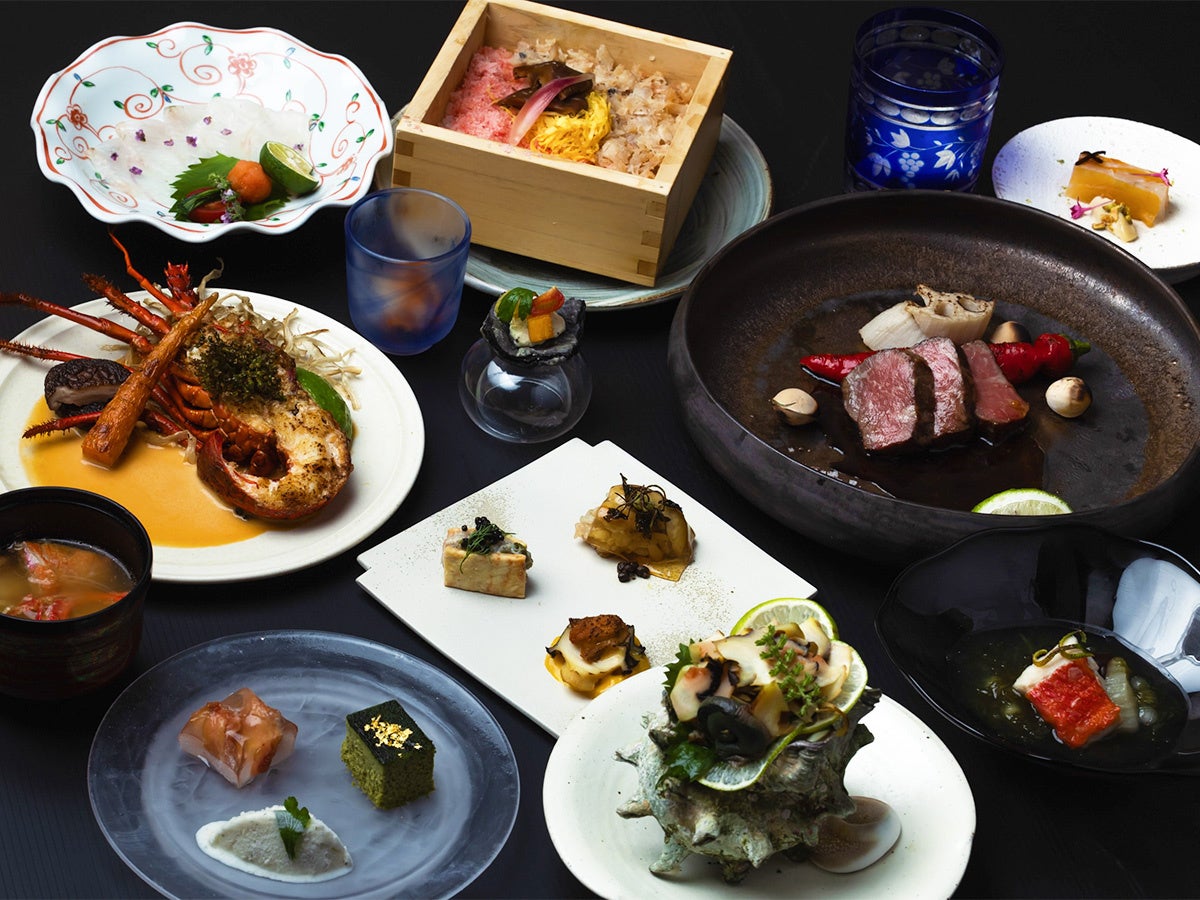
At the in-house restaurant “Shio to Sakazuki,” themed “Japanese cuisine of sea and time that awakens memories of Izu,” we serve dishes that reflect the climate and culture of Izu. Building on Izu ingredients such as splendid alfonsino, Ise lobster and black scabbardfish, and on local dishes rooted in the land, a head chef who honed his skills for many years at long-established hotels expresses “the flavors of Izu where nostalgia and novelty coexist,” with a menu balancing aroma, temperature and presentation.
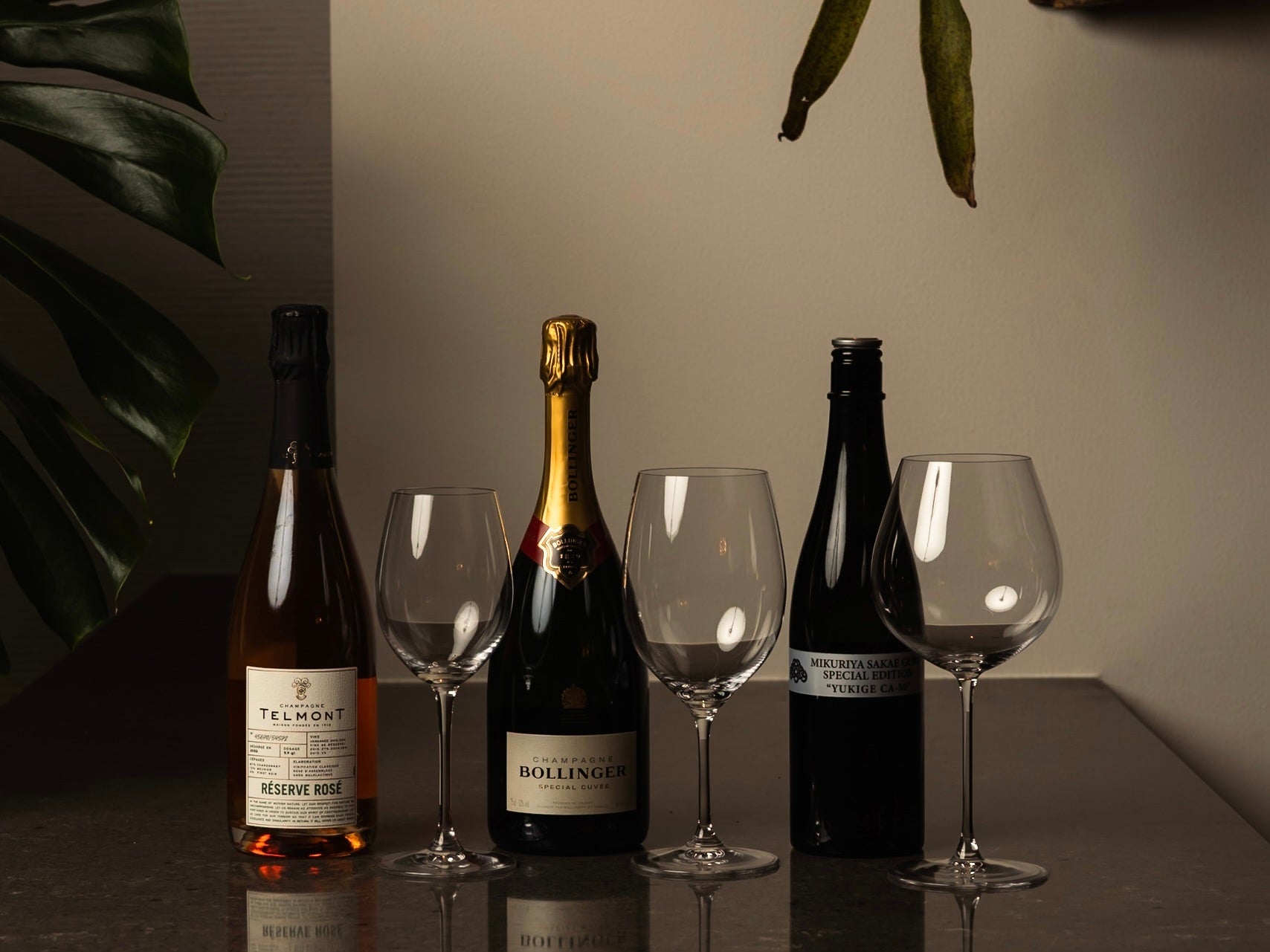
We also put effort into pairings with wine and local sake, suggesting carefully selected labels from Japan and abroad, including wineries in Shizuoka and central Izu, to match the dishes. Non-alcoholic pairings are also planned for those who do not drink. Breakfast is a Japanese spread of many small dishes centered on seasonal fish and local vegetables, made with fermentation techniques and regional handcraft to brighten the start of the day. The restaurant’s name, “Shio to Sakazuki” (“Tide and Cup”), reflects our wish for it to be a space where guests enjoy sea views and Izu ingredients while talking with loved ones and sharing cups. With counter seats overlooking Sagami Bay and semi-private rooms partitioned by sliding doors, it offers a dining experience in which you savor the tastes of Izu as time passes, with sunlight dancing on the waves in the morning and moonlight at night.
About reservations
How to reserve: Please use the reservation button below.
Official website: https://suiko.by-onko-chishin.com/