
REBUN HOTEL SARYO Original Goods: A Large Handkerchief Illustrated with Rebun’s Wildflowers and Floating-Glass-Ball Glasses in an Original Color, on Sale from Friday, July 19
2024 - 07 - 20
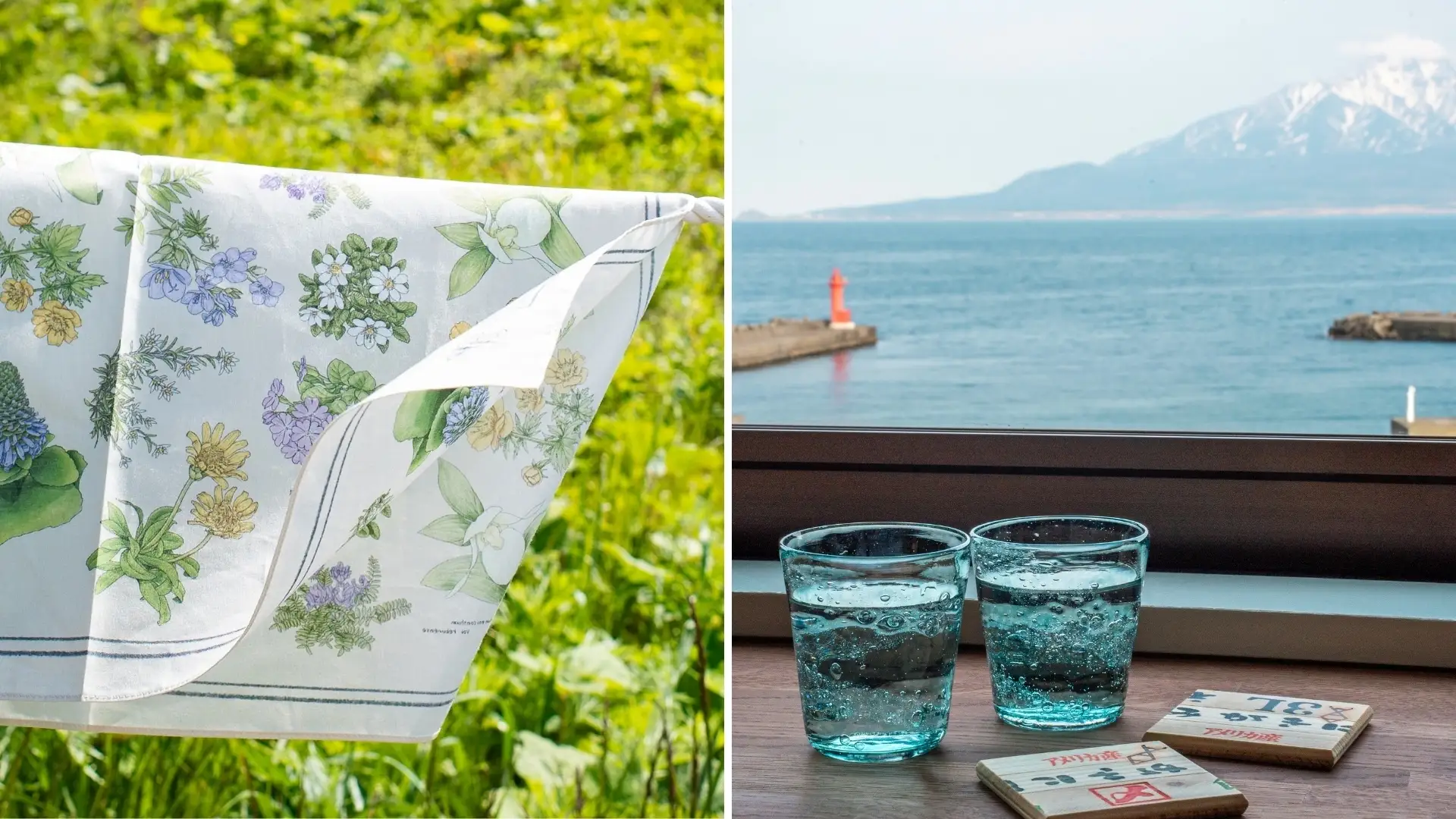
REBUN HOTEL SARYO will begin selling two original goods from Friday, July 19: a large handkerchief illustrated with the wildflowers of Rebun Island, and a floating-glass-ball glass made to order in the traditional color of glass fishing floats.
The original goods are available at REBUN HOTEL SARYO and at Onko Chishin’s official e-commerce site, RETREAT SELECTION by Onko Chishin (https://shop.okcs.co.jp/?utm_source=from_okcs_hp_selection&utm_medium=from_okcs_hp_selection&utm_campaign=from_okcs_hp_selection&utm_id=from_okcs_hp_selection).
Rebun Island, “the remote island you hope to visit someday,” is a special place where otherworldly scenery unfolds and the entire island feels like a retreat. To convey the appeal of the island, REBUN HOTEL SARYO has created two original goods: a large handkerchief on which illustrator miltata has drawn the wildflowers of Rebun Island, and a floating-glass-ball glass by Asahara Glass Factory, which has Japan’s only glass float factory in Otaru, Hokkaido.
■ About the Large Handkerchief
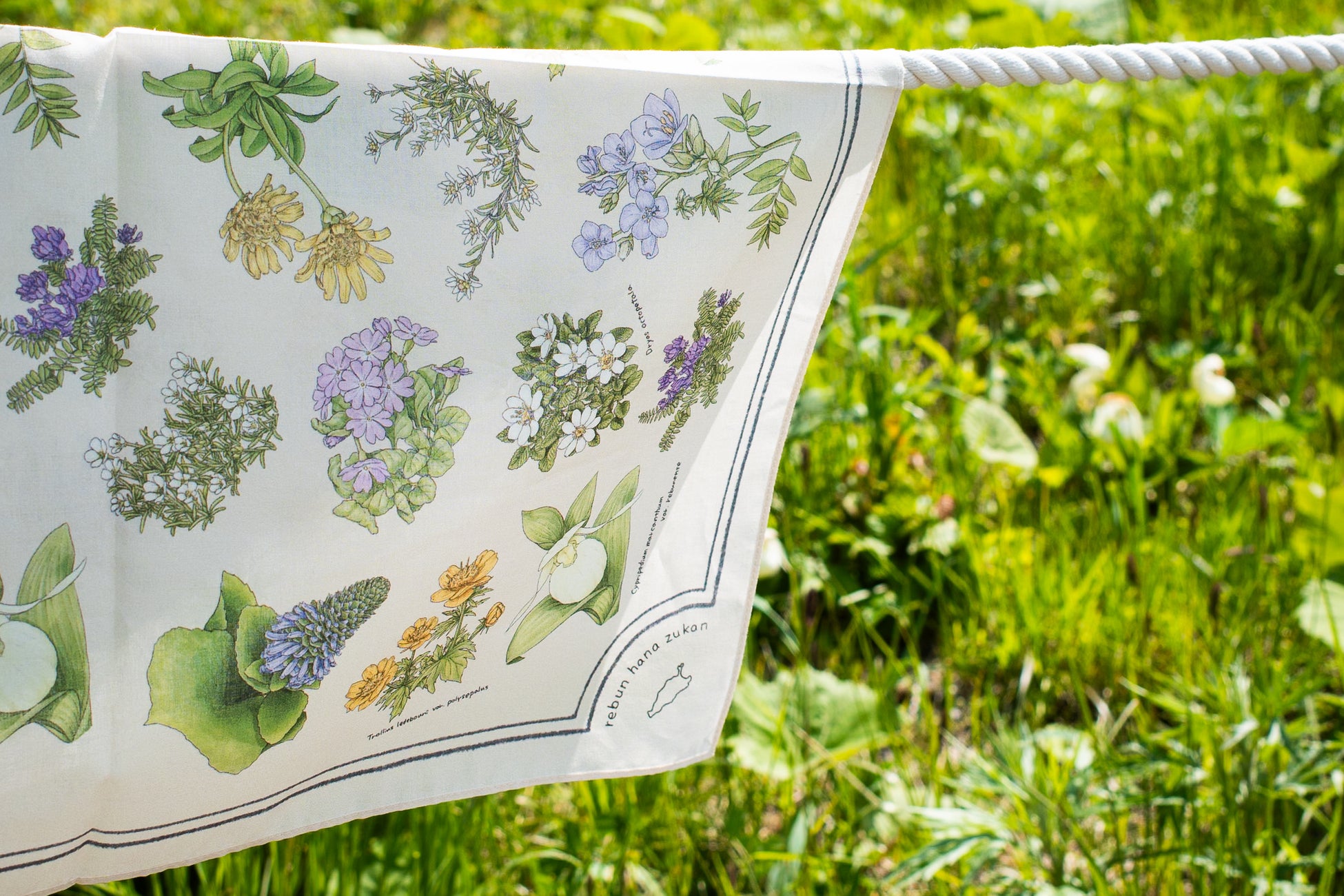
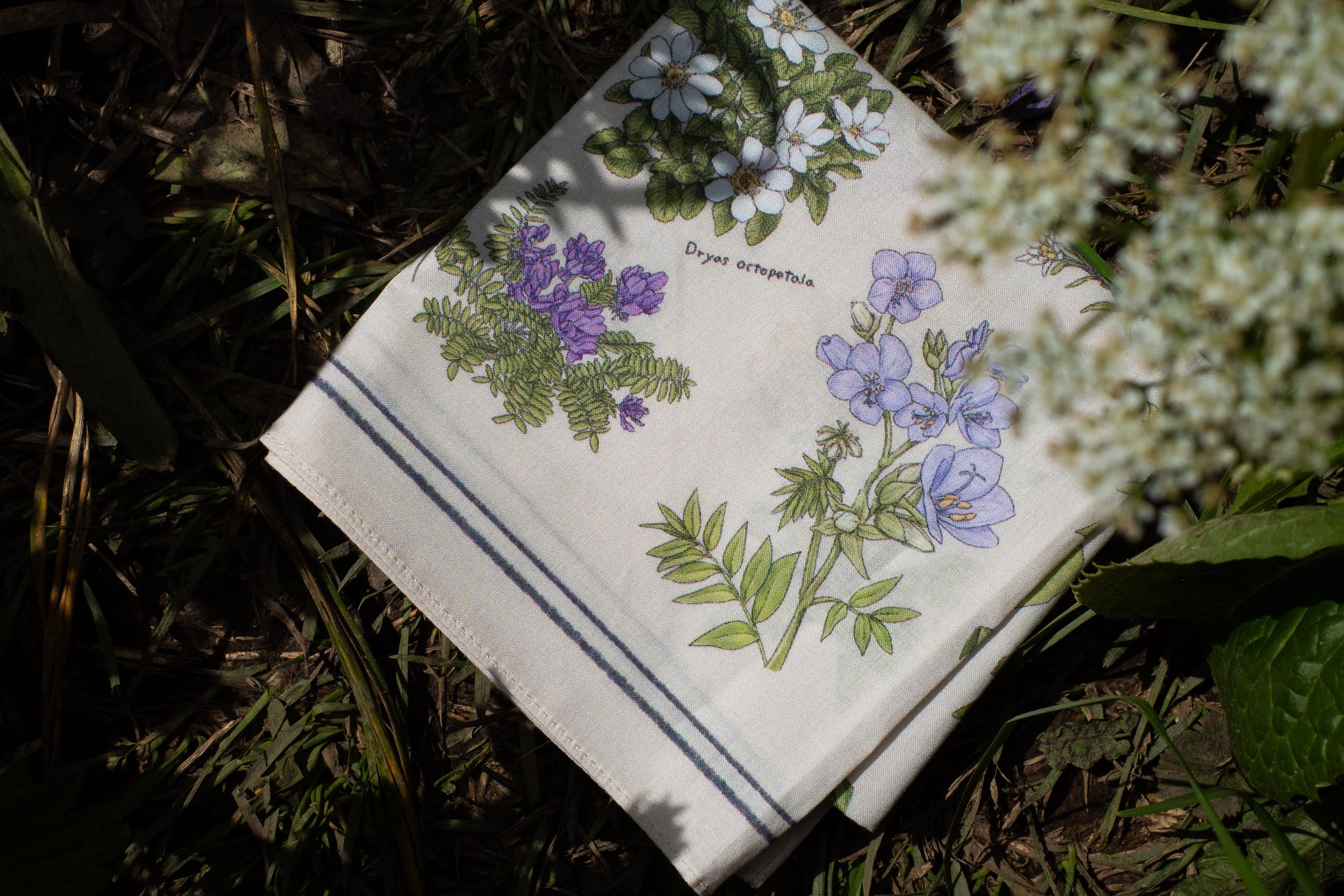
This large handkerchief, on which illustrator miltata has drawn the wildflowers of Rebun Island, was created under the concept “Flowers that are disappearing. Thinking of the island’s future.” Rebun Island is home to more than 400 species of wildflowers, including the endemic Rebun lady’s slipper (Rebun atsumorisou), and many of them are designated as endangered or rare because of environmental change and other factors. It was completed in the hope that holding a handkerchief designed around these flowers found only on Rebun, and around endangered species, may prompt even a little thought for the future flowers and nature of the island.
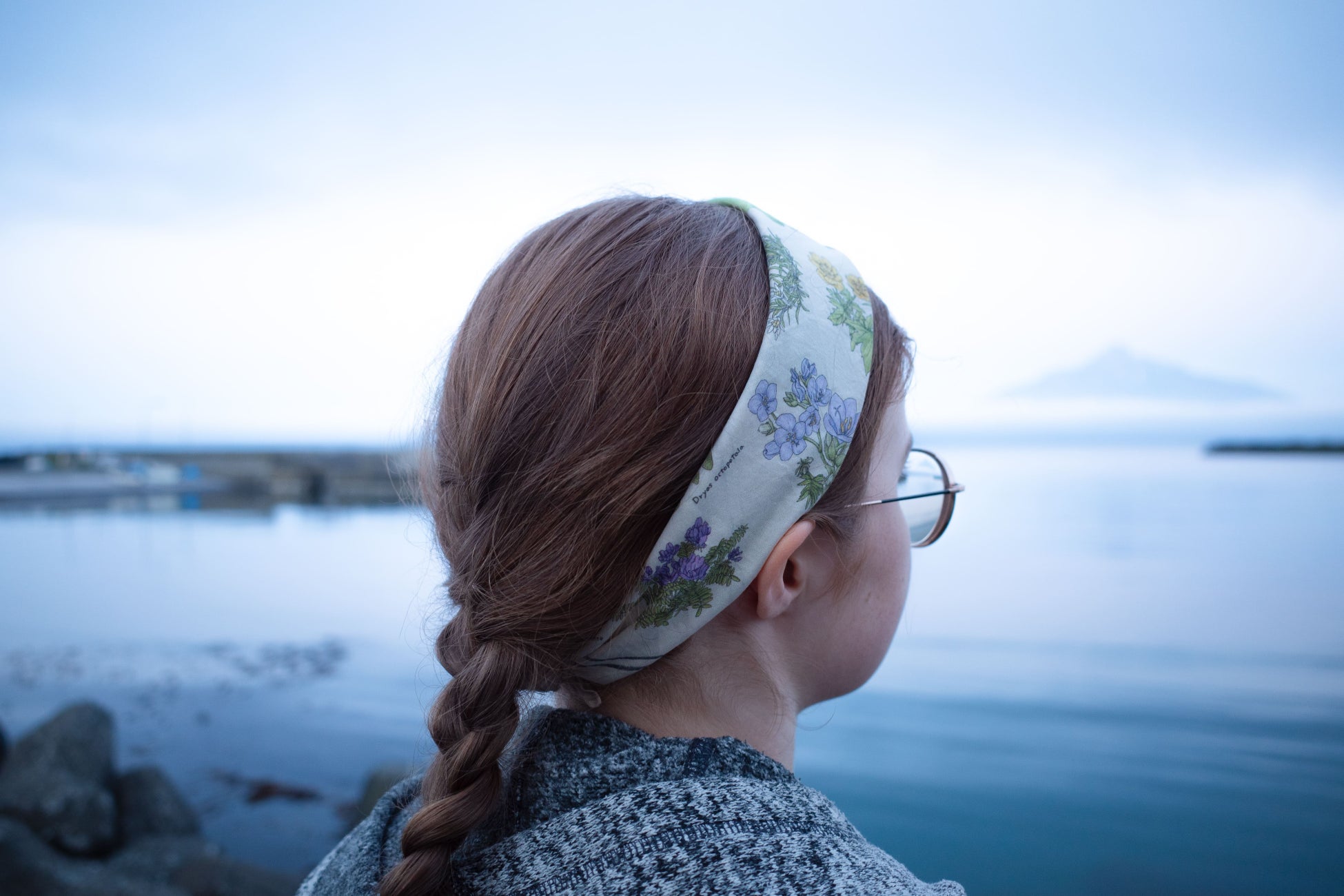
Besides being used as a handkerchief, its large size makes it useful as a scarf. It is also recommended as an everyday fashion item or interior accent, and as a companion for hiking and mountain walks.
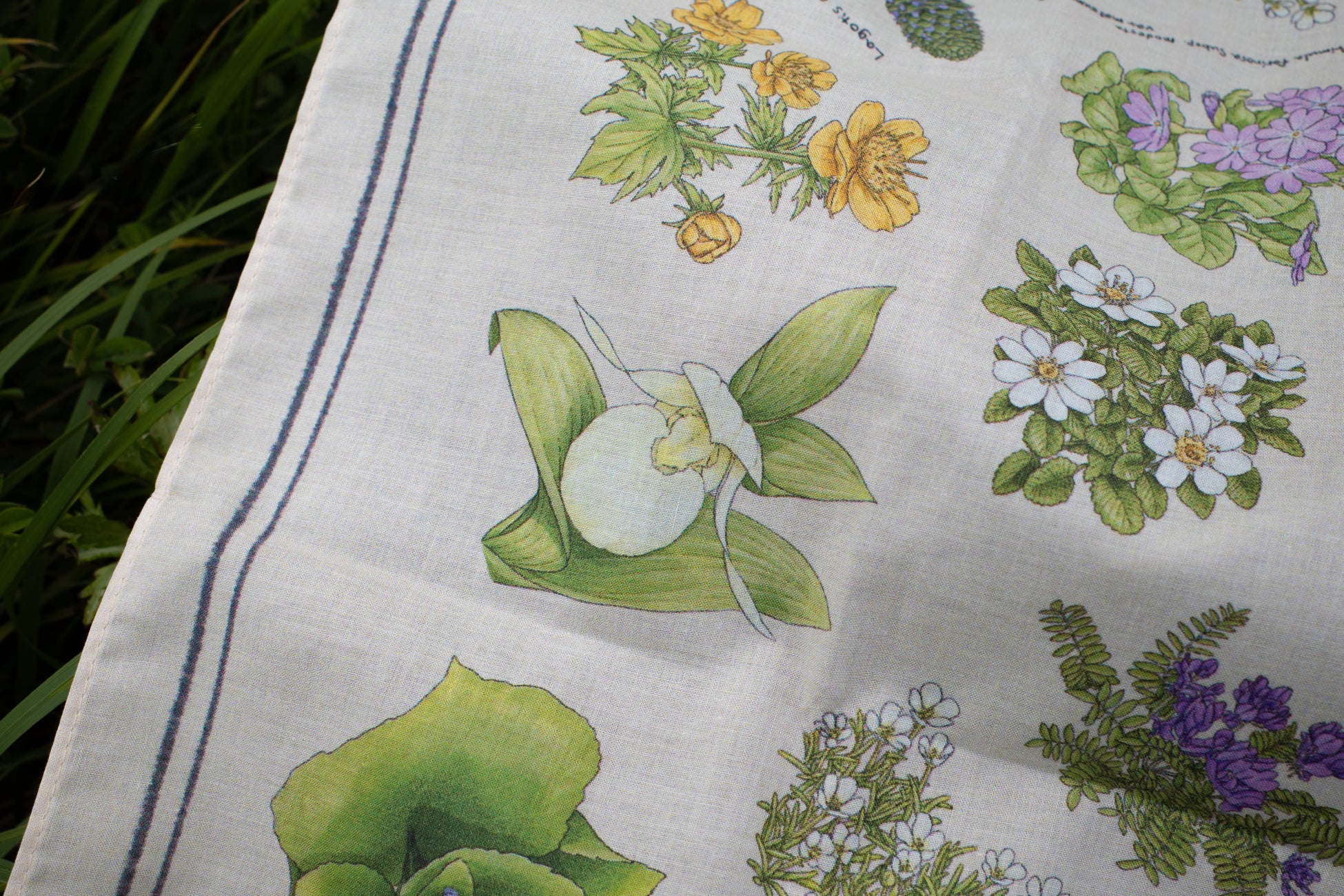
[Product Overview]
– Product name: Original brand “-Rebun Hana Zukan- Large Handkerchief”
– Price: JPY 1,500 (tax included)
– Material: 100% cotton
– Size: 50 cm × 50 cm
■ Comment from Illustrator miltata
What struck me about Rebun Island was how strange and wonderful it is that the sea and alpine plants share the same place. It is a lovely island where you can feel happiness strolling, with the sea and hills in the background, searching out the wildflowers at your feet one by one.
For this handkerchief, I drew the plants unique to Rebun, which have been protected for many years, in a touch like that of an old book. I did not give it a top or bottom, and drew it as though Rebun’s plants had been scattered across a piece of unbleached cloth.
Profile of Miltata
Born in Gunma Prefecture in 1986 and based in Yokohama. After graduating from the Faculty of Media Design at Nagoya University of Arts and working at Junya Ishigami + Associates, she became a freelance illustrator under the name Miltata. She creates illustrations for magazines, books, illustrated guides and packaging.
■ About the Floating-Glass-Ball Glass
This floating-glass-ball glass was made for REBUN HOTEL SARYO in an original color by Asahara Glass Factory, which was founded in Otaru, Hokkaido more than 120 years ago and is also Japan’s only glass factory that can produce glass floats.
In Rebun, where fishing thrived, glass floats were once widely used. Drawn to the beauty and practicality of glass floats, we asked Asahara Glass Factory to create something with the image of a “floating-glass-ball glass,” reproducing the traditional color of glass floats as the hotel’s original color. We hope you can feel the sea of Rebun, Hokkaido, and the beauty of glass floats in each handmade glass.
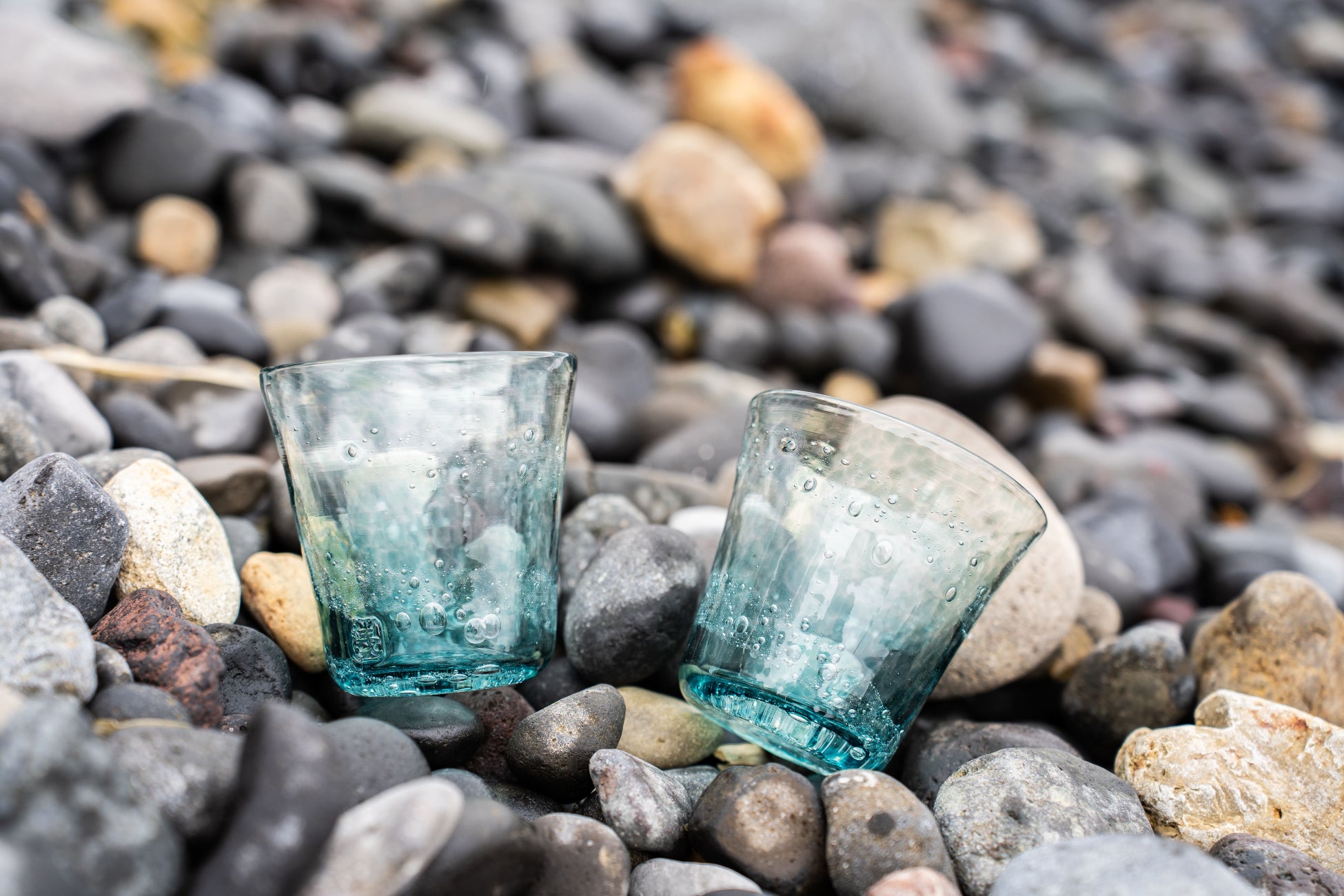
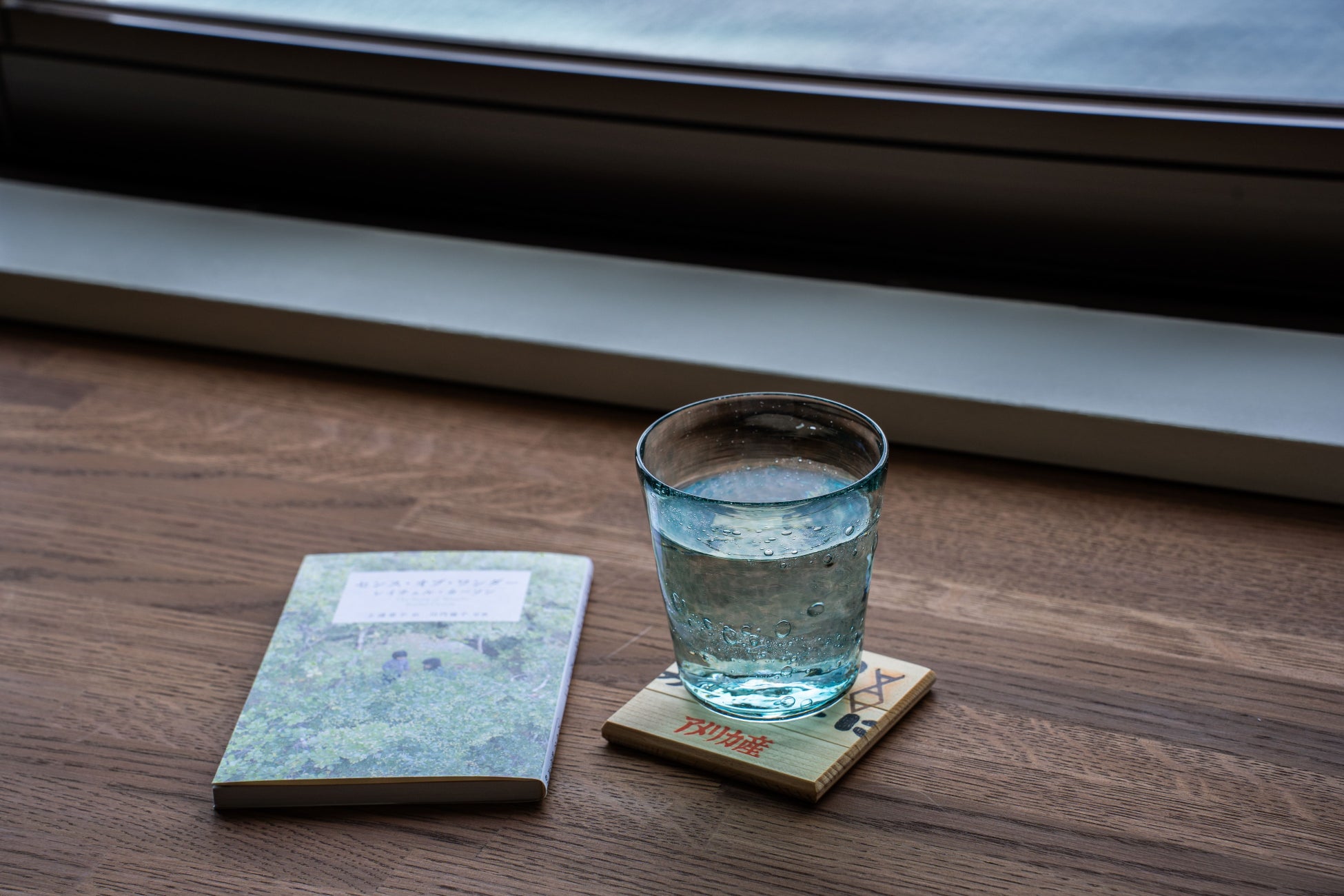
[Product Overview]
Product name: Floating-glass-ball glass
Price: JPY 3,000 (tax included)
Material: Glass
Size: Height 90 mm, width 85 mm (for reference: https://asaharaglass.com/product/cbglass/)
■ Comment from Asahara Glass Factory
Glass floats were once a tool used in fishing, but today their appeal lies in being an item that evokes the sea and can be used in interiors, and they seem to be popular among beachcombers in Japan and abroad.
Since the image you had was a “floating-glass-ball glass,” we reproduced the traditional color of glass floats and added a bubble pattern reminiscent of the sea to give it expression. We hope you will use it at your everyday table and when enjoying a drink.
About Asahara Glass Factory
Founded in 1903 (Meiji 36), Asahara Glass Factory is the original presence among the glass makers of the port town of Otaru, and has used recycled glass since its founding. In 2009 it also began recycling fluorescent tubes. It makes glass floats, now produced only here in Japan, protecting a traditional fishing heritage and aiming to be an ecological company.