
[IKI RETREAT KAIRI MURAKAMI by Onko Chishin] The Bounty of Iki in a Single Glass: The Island’s Story Behind Our Craft Gin, Part 2
2023 - 02 - 08
We wanted to create a way to share the appeal of Iki beyond the island.
JAPANESE IKI CRAFT GIN KAGURA is a craft gin born of a project that began with the pandemic.
In Part 1, we followed how a glass of gin took shape: based on Iki shochu, with botanicals drawn from produce that had gone underused on the island, as the distillery, producers and hotel each brought their knowledge.
In Part 2, we follow the project’s journey: the Iki culture carried in the name “KAGURA,” the efforts to enjoy it with food, and the craft gins that came afterward.
The Iki culture carried in the name “KAGURA”
Iki is dotted with shrines across the island.
Iki Kagura, handed down at these shrines, is a sacred performing art with a history of about 700 years. It is passed on by the Shinto priests serving at Iki’s shrines and is designated a national Important Intangible Folk Cultural Property.
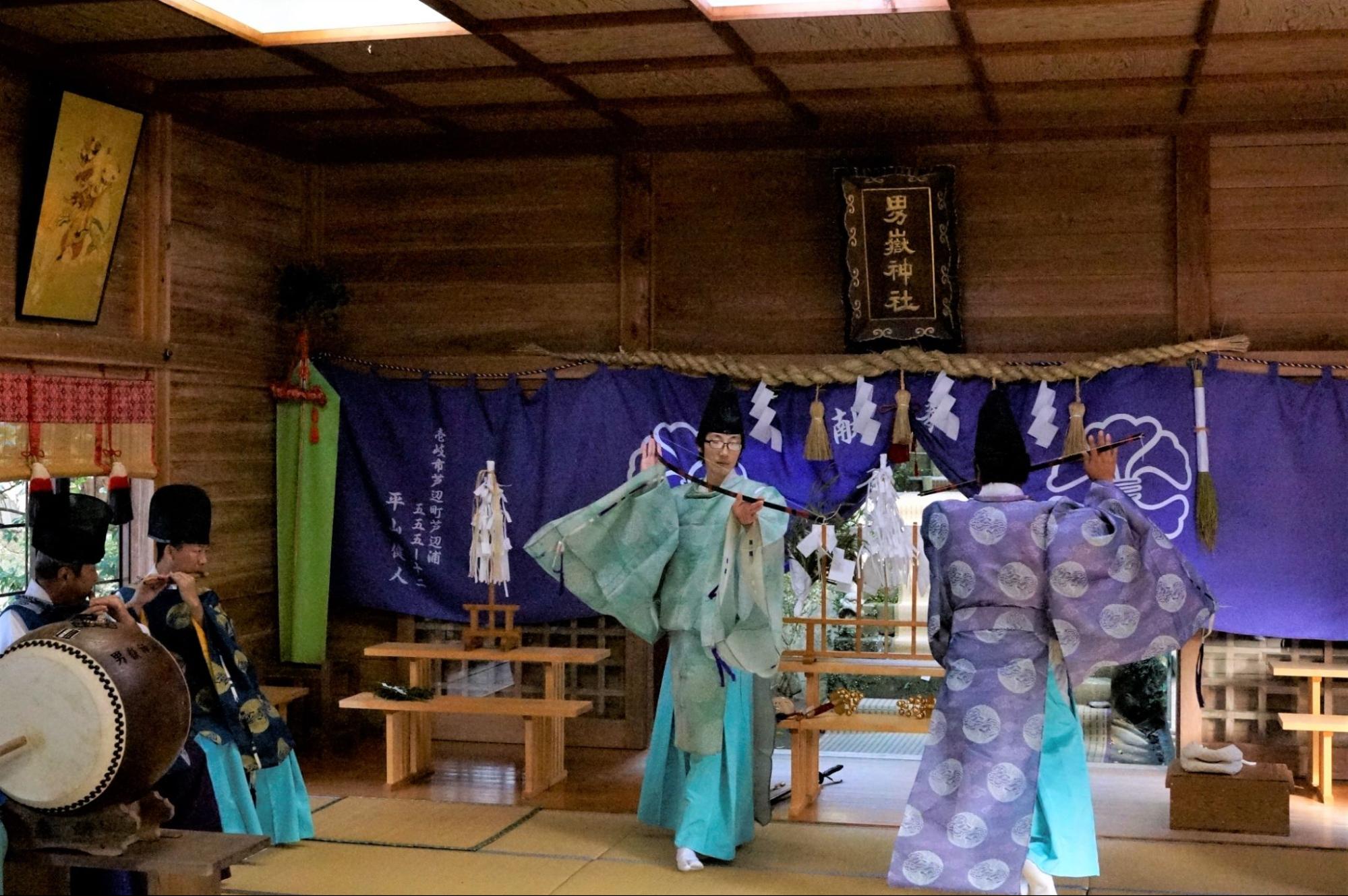
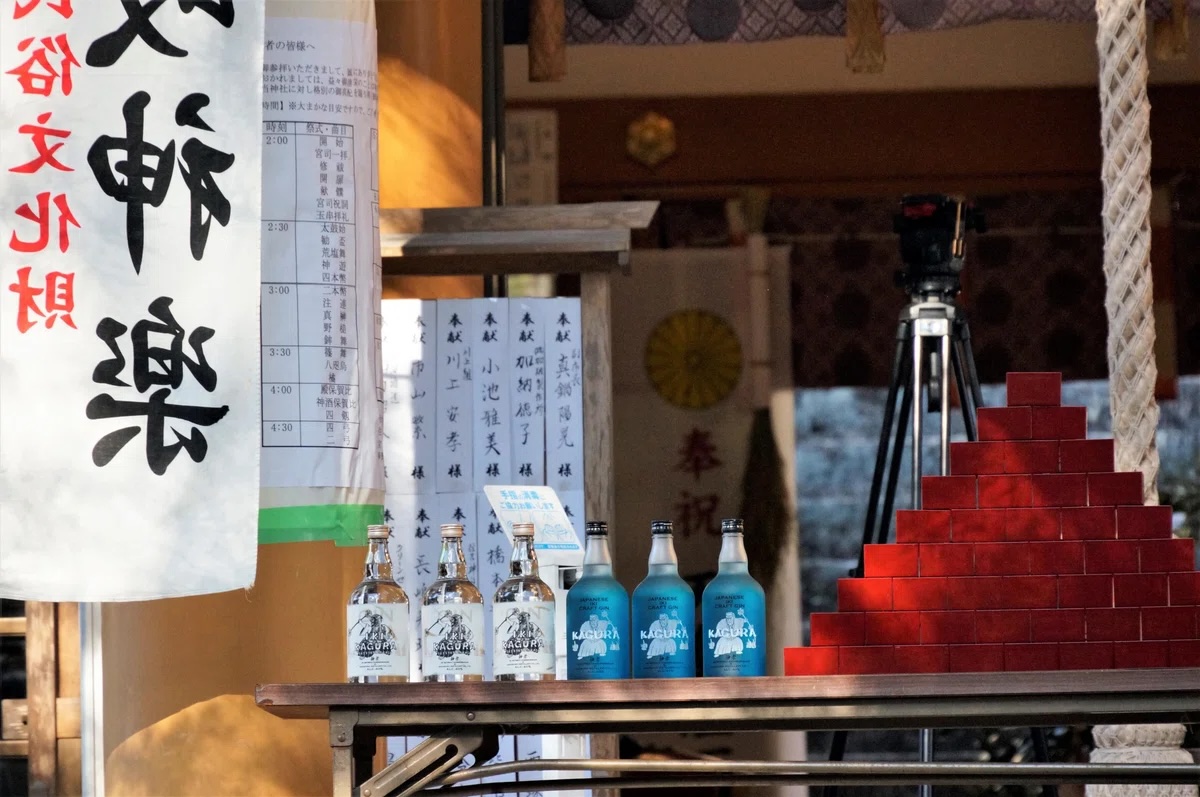
We wanted to express the island’s culture in a glass of gin as well.That thought gave the craft gin its name, “KAGURA.”At the center of the bottle is Sarutahiko no Mikoto, enshrined at Otake Shrine. The blue bottle design was created by a staff member from Iki.
In December 2022, KAGURA was dedicated at the Odai Kagura held at Sumiyoshi Shrine.Not only the spirit itself but also its name and bottle design express the project’s ties to Iki, the land where it was born.
Island ingredients layered in one glass
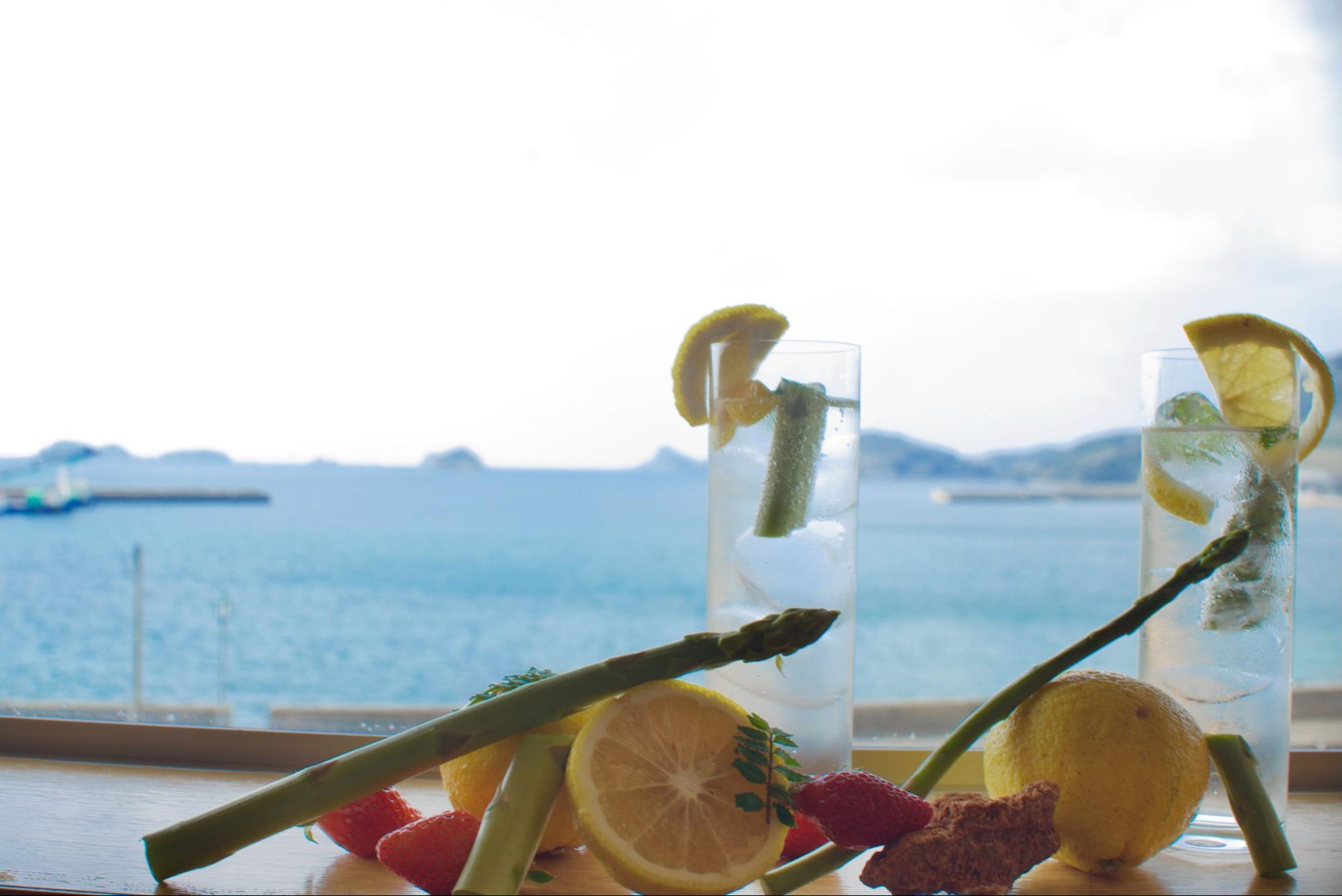
One of KAGURA’s hallmarks is the wide range of botanicals gathered on Iki.Strawberry, yuzu, daidai, asparagus, moringa, kinome, honey from Japanese honeybees and more, each with its own aroma and flavor, are used.Head chef Seiichi Ota describes its flavor:
“It has a lively fruit aroma, in which I notice strawberry and citrus in particular. I also sense the rich aroma and sweetness of honey.”
he says.Trace each ingredient back, and at the other end is a producer on the island.
KAGURA is not only a gathering of Iki ingredients. It is also a craft gin in which the connections with the producers met through the project, and with the ingredients each of them grows, are layered into a single glass.
Enjoyed with the food of Iki
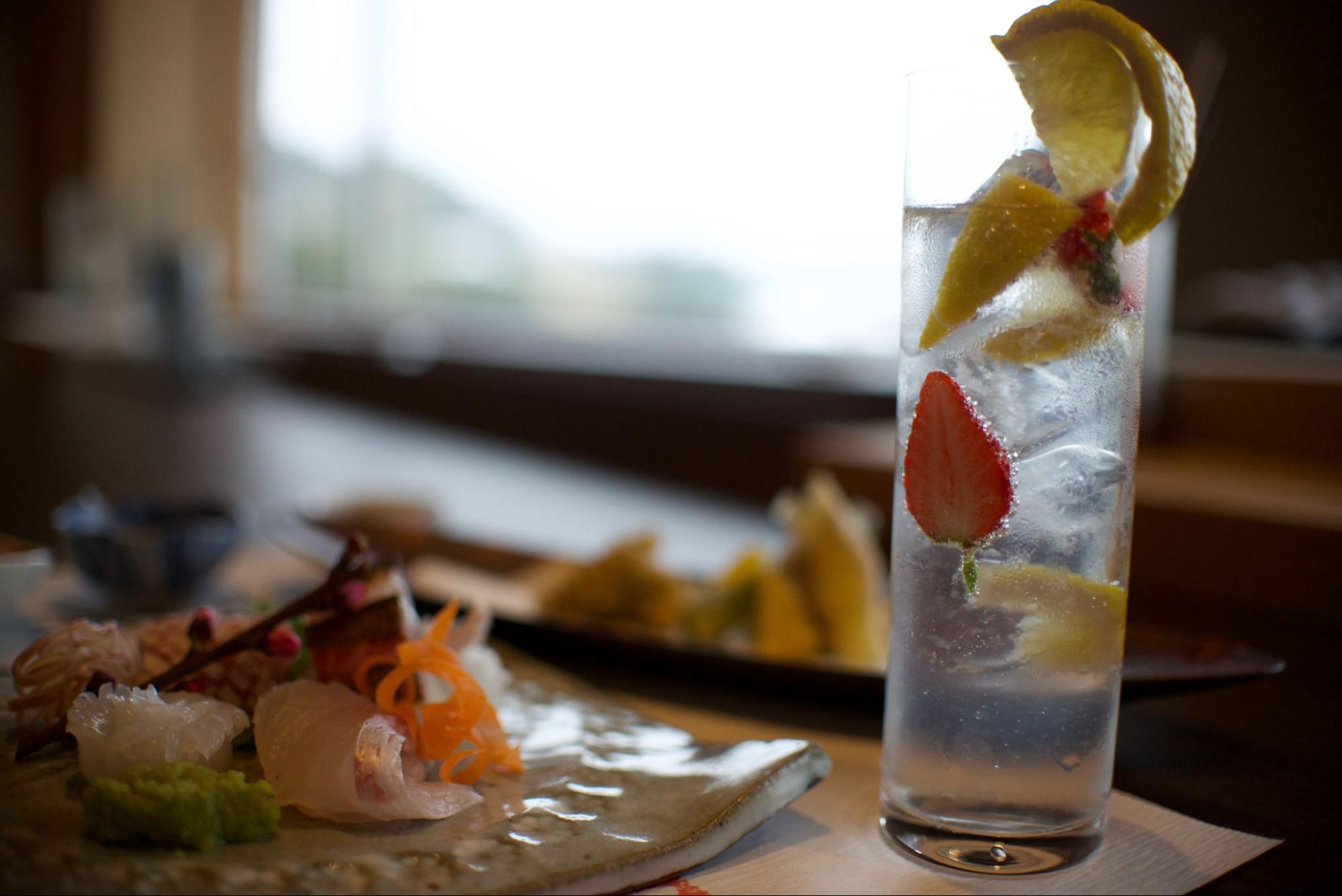
In developing KAGURA, we valued not only the taste of the gin on its own but also how to enjoy it with food.After completion, we held a pairing dinner for the crowdfunding supporters.
The appetizer of go-dofu (soybean tofu), karasumi daikon, shellfish and sea urchin was paired with the gin served neat. The tempura of black abalone and asparagus came with a soda highball. The charcoal-grilled Iki beef, with yuzu salt, was matched with a hot-water mix.For dessert, KAGURA was served neat with homemade ice cream made with honey from Iki’s Japanese honeybees.
One gin, enjoyed in different ways to suit each dish.This reflects a perspective unlike a distillery’s, that of a hotel that serves food to its guests every day.
Ingredients grown on the island, and a gin born of the island’s ingredients. Joining the two at one table widened the ways to enjoy KAGURA.
From KAGURA, and beyond
Even after KAGURA was completed, the craft gin making continued.
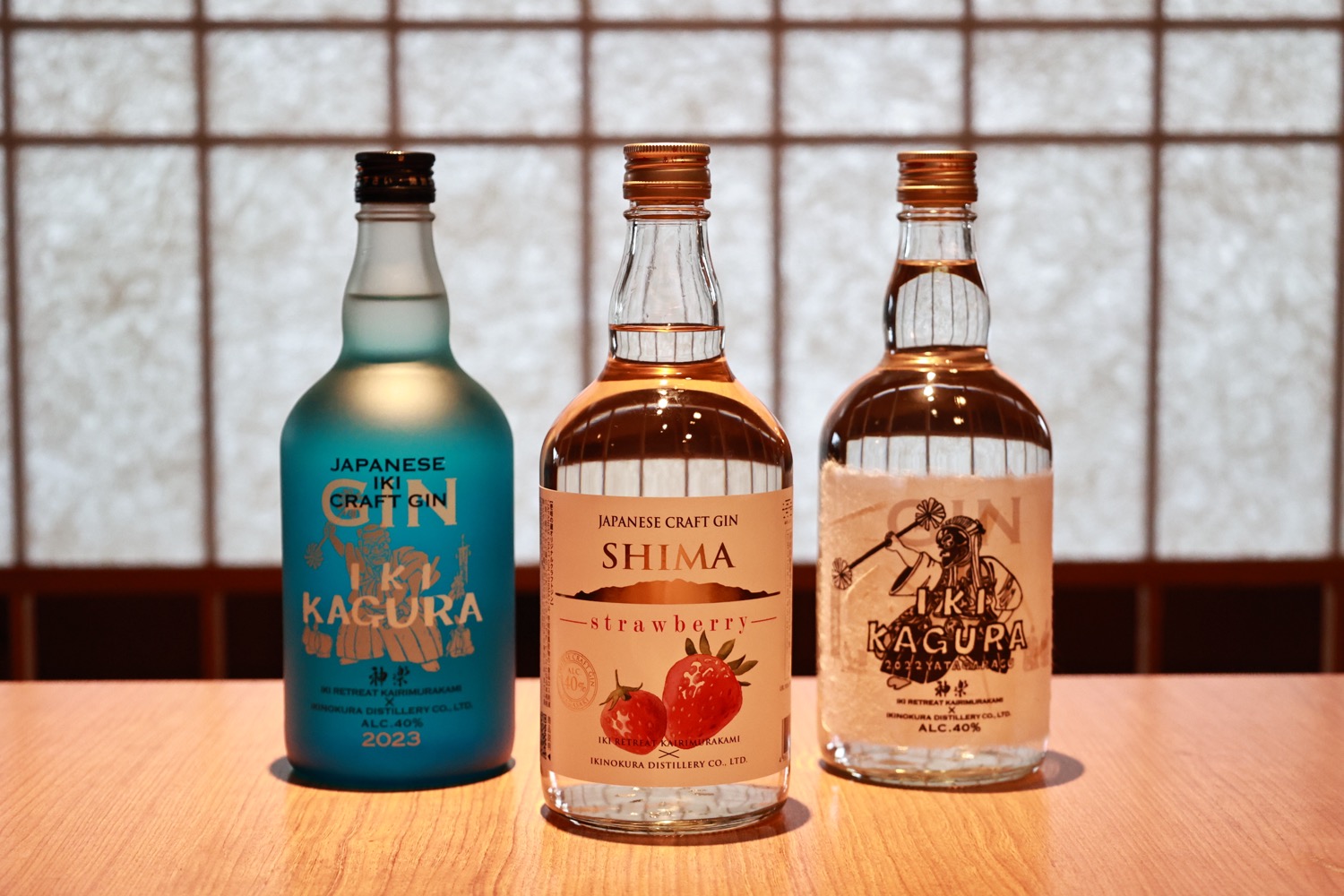
In 2023, the 2nd edition was born, with ginger and citrus in the lead.The bottle carries a label of washi paper made with the trimmed-off ends of asparagus as part of its raw material.
In 2024, “SHIMA,” centered on strawberry, joined the line.Starting from the first release, KAGURA, three craft gins have been born so far, each with different ingredients and flavors.
What they share is that they are based on Iki shochu, look to the ingredients found on the island, and express their character in a single glass.
The first release, KAGURA, has been renamed “Original Gin,” and its flavor is still carried on today.
Even with the new name, the ingredients and the connections with producers encountered at the time remain just as they were.
(Note: the 2nd edition and SHIMA are currently sold out.)
(Note: the 2nd edition and SHIMA are currently sold out.)
Using ingredients fully, and connecting them within the island
What we considered through craft gin making was not only making a product.
The botanicals used in the gin are not discarded but provided to organic farmers on the island as fertilizer. Efforts to circulate ingredients within the island have also followed, such as using vegetables grown in those fields in dishes.
Fukutaro Ishibashi of Iki no Kura Distillery speaks of the future this way.
“In making shochu, the rice is basically from Iki, but for barley there are parts that Iki alone cannot supply. Even so, someday I would like to aim for ‘Made in Iki,’ made entirely from things within Iki Island.”

Fukutaro Ishibashi, representative of Iki no Kura Distillery
Based on Iki shochu, using ingredients grown on the island.Putting the ingredients received from producers to use in the spirit, and connecting what is produced in the process back into the island.Craft gin making also became an opportunity to think about new ways of using what the island holds.
From a single glass to the land of Iki
At KAGURA’s beginning was a question, asked as travel came to a halt during the pandemic: “Is there a way to share the appeal of Iki beyond the island?”From there, together with the distillery, we visited the island’s producers, searched for ingredients, considered the distilling method and created ways to enjoy the gin with food.
The craft gin making that began with KAGURA has produced three craft gins so far, varying the ingredients and flavors.What accumulated along the way was the skill Iki no Kura Distillery has built, the ingredients the producers raised and the hotel’s knowledge of food.
From a glass of gin to the people who grow its ingredients. To the people who make the spirit. And to the land of Iki behind it all.This project, which began with the wish to share the appeal of Iki beyond the island, became one way of looking again at what the island holds and conveying its charm.