ExperienceIsland Journeys
Island Journeys
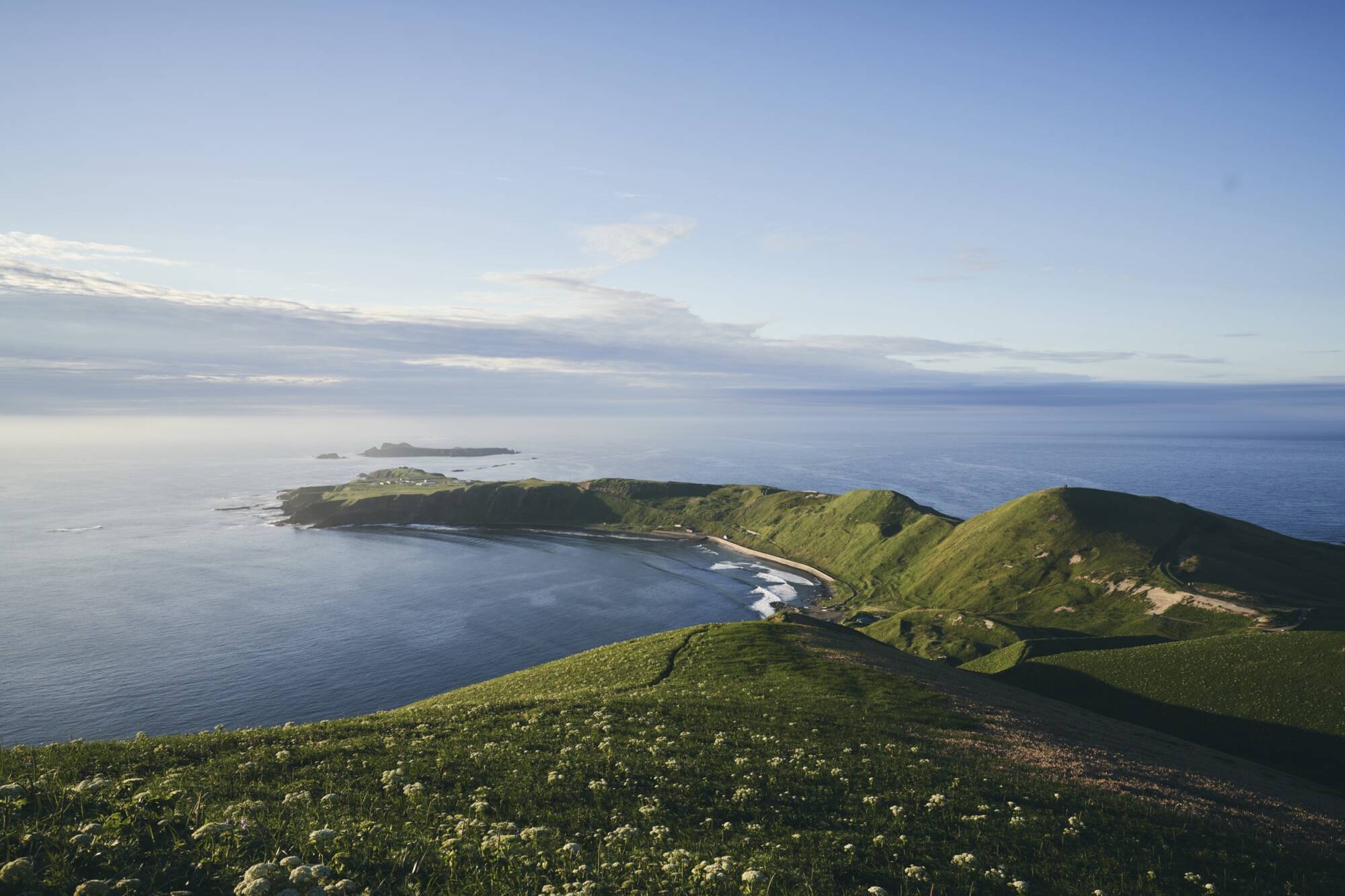
Islands
- Iki Island, NagasakiIki | The island where the gods dwell
- Goto Islands, NagasakiGoto | Island of prayer and volcanoes
- Rebun Island, HokkaidoRebun | The floating island of flowers
- Rishiri Island, HokkaidoRishiri | A volcanic island around a single peak
- Tamano / Uno Port, OkayamaSetouchi | A sea for traveling between islands
Iki Island, Nagasaki
IkiThe island where the gods dwell
One hour from Hakata. On arrival, shrines and fishing ports sit side by side.
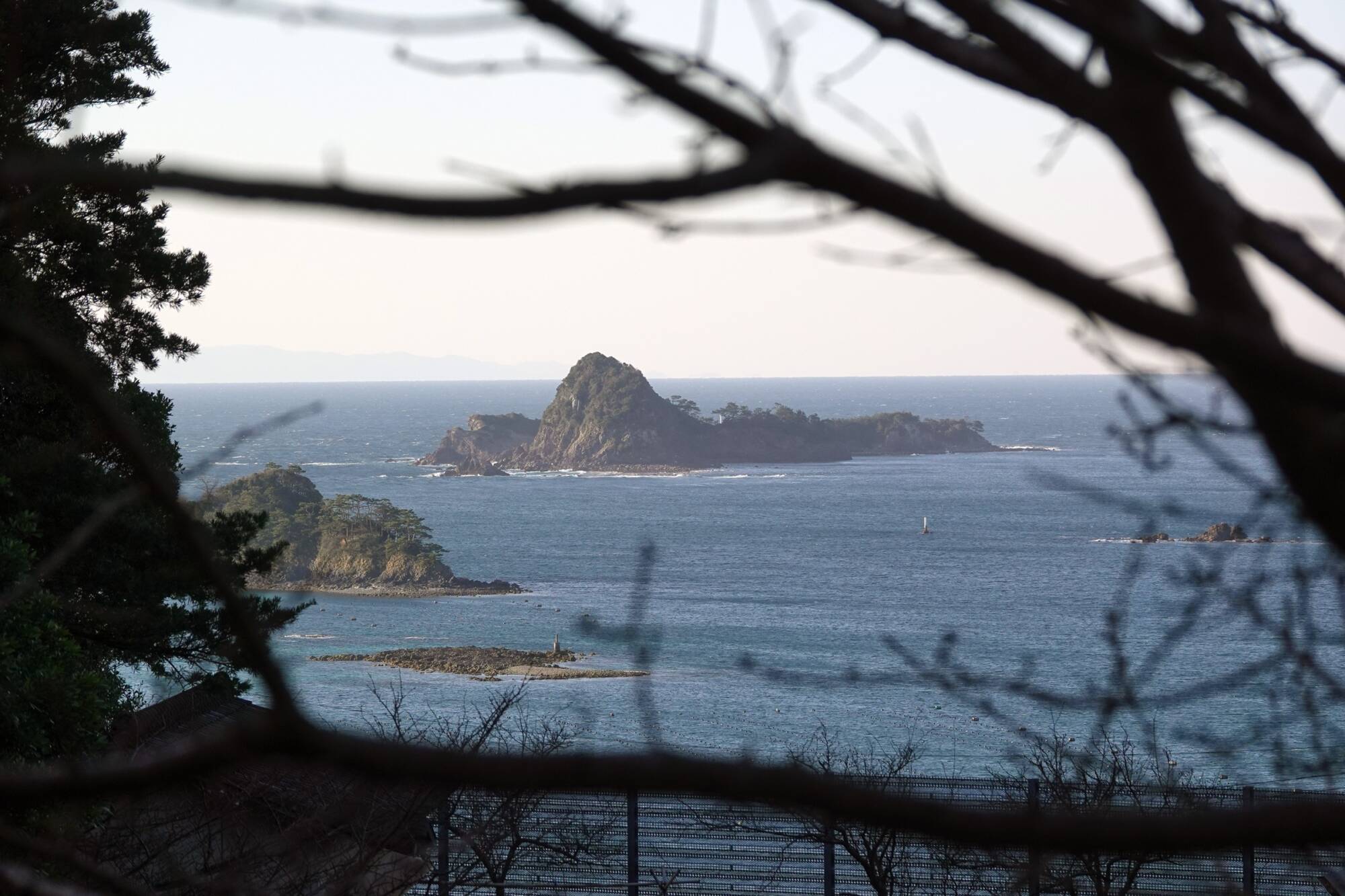
Iki Island floats in the Genkai Sea.
Fishing boats return to the morning harbor, and small shrines stand among the green. A short drive away, you come upon ancient ruins where, some two thousand years ago, people crossing the sea came and went.
Legends of the gods, people who live with the sea, a rich food culture. On Iki, the Japan that has been handed down since long ago still lives on as part of everyday scenery.
The Story of the Island
Memories of a time when the sea was a road
The sea was never what divided the islands. It was the road that carried people and culture.
Lying between Kyushu and the Korean Peninsula, Iki has long been a key maritime crossroads for the peoples of East Asia. The Chinese chronicle Wei Zhi records it as the “Iki Kingdom,” and the Harunotsuji Ruins on the island reveal the royal capital that flourished in the Yayoi period.
Iki is also closely tied to the gods, appearing in the creation myth of the Kojiki. More than 150 shrines are scattered across the island, and many are still tended by local people today.
Ancient trade and faith, and life today. Layers of time overlap on one small island.
Discover the Island
Three journeys to know Iki
Following the footsteps of ancient Japan
Iki was once a crossroads of the sea linking the continent and the Japanese archipelago. Ancient settlement sites and numerous burial mounds remain on the island, conveying the memory of an age when people and culture crossed the sea.
Places to visit
- Harunotsuji Ruins
- The site of the royal capital of the Iki Kingdom recorded in the Wei Zhi. Walk among reconstructed Yayoi-period buildings and imagine life in ancient times.
- Iki Museum of History (Iki-koku Museum)
- Through excavated pottery, trade goods and detailed dioramas, learn about the lives of ancient people and their exchanges with East Asia.
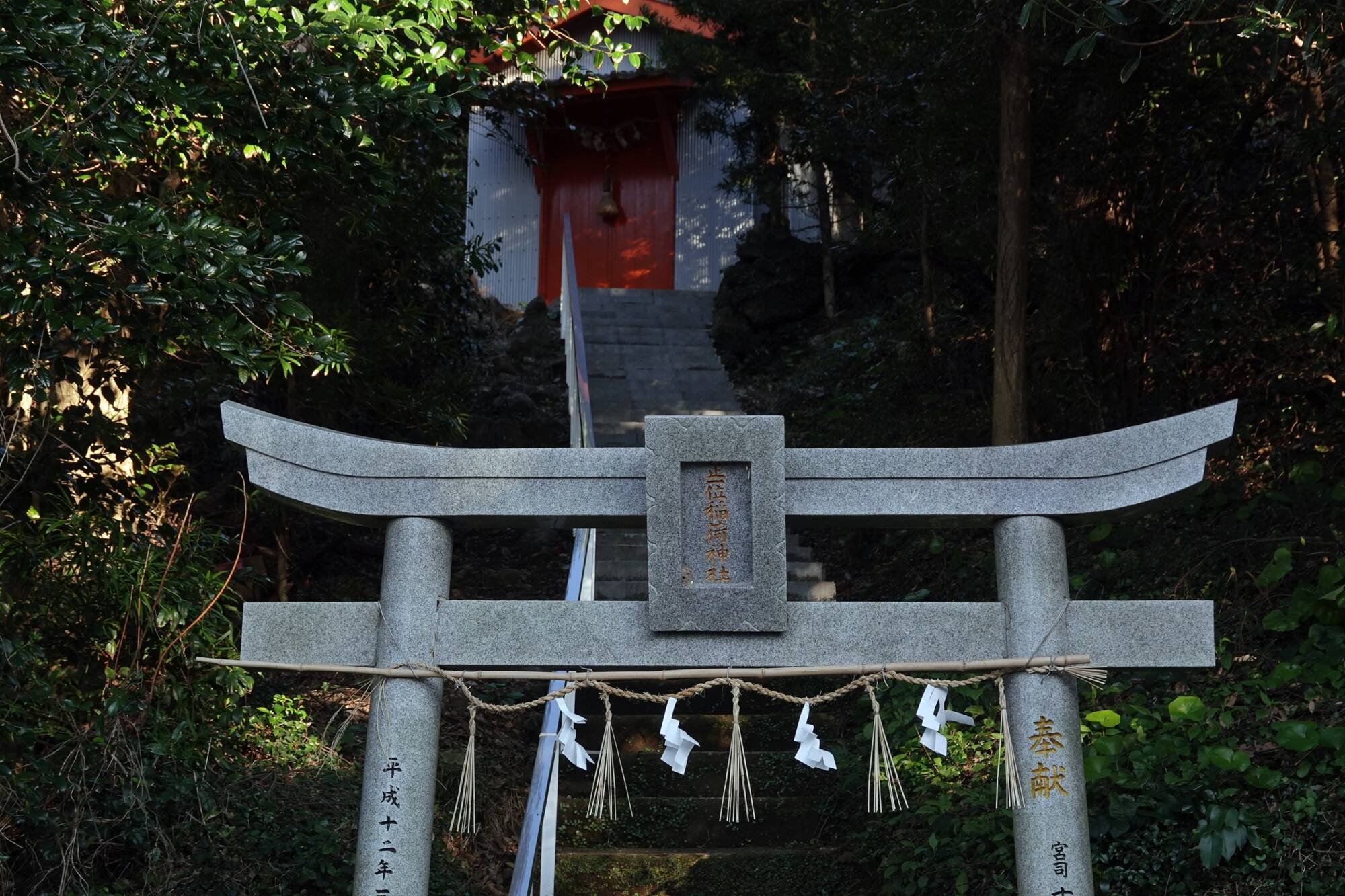
Walking through landscapes of the gods
Small shrines stand all across the island. Approaches shaded by trees and torii gates standing in the sea speak of the Japanese faith that has found the gods in nature. Iki Kagura, a sacred Shinto dance handed down for about 700 years, also conveys the island’s prayers to this day.
Places to visit
- Kojima Shrine
- A small sacred realm floating in Uchimi Bay. Its approach emerges from the sea only at low tide, so the shrine changes its look with the tides.
- Tsukiyomi Shrine
- Dedicated to Tsukiyomi-no-Mikoto, the god of the moon, and set among quiet trees. Experience the faith that lives on across the island.
- Iki Kagura
- A traditional performing art danced down the generations by Shinto priests. Time your visit with a dedication ceremony to feel the island’s prayers up close.
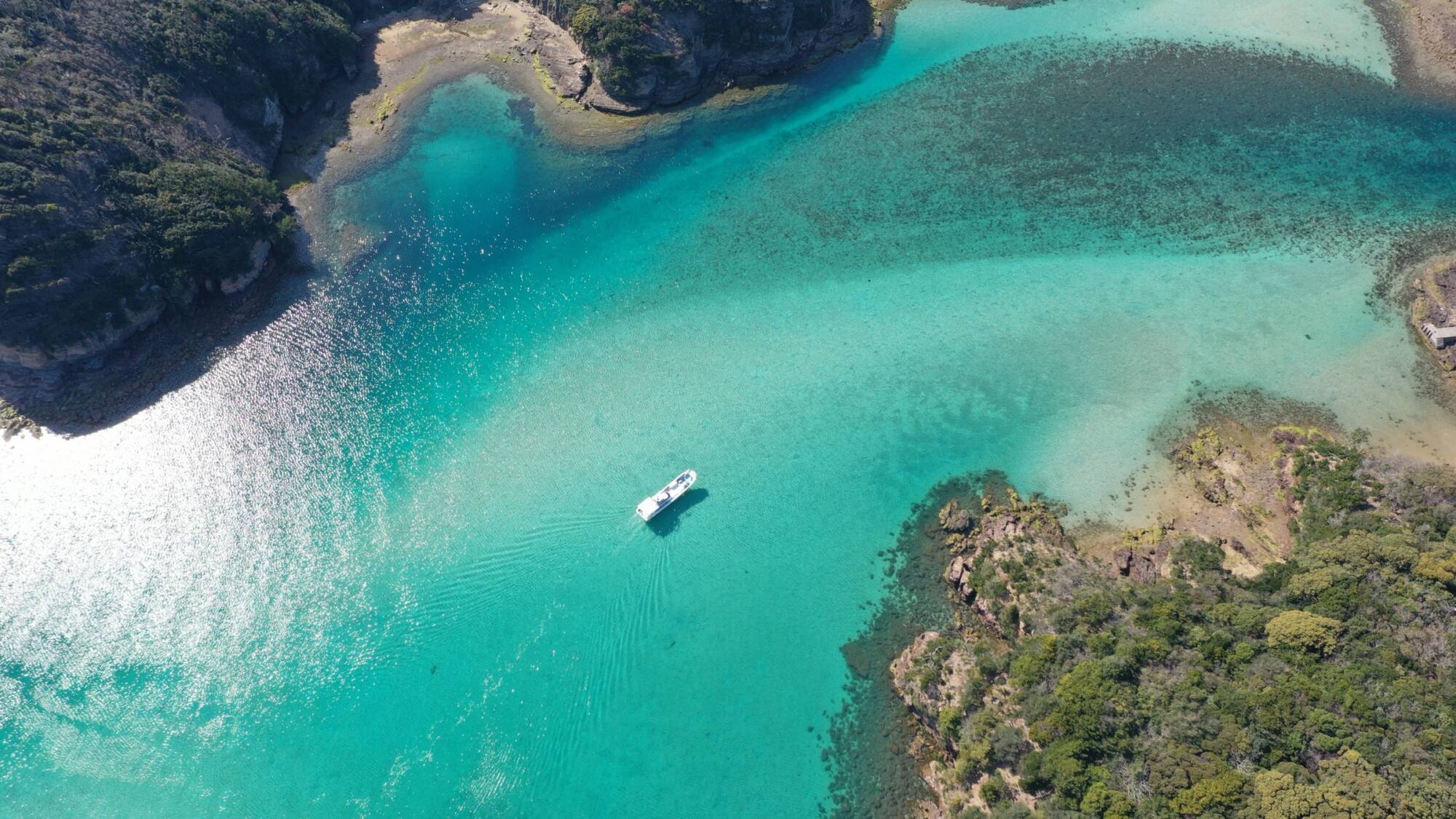
Fishermen’s lives and the grand views of the Genkai Sea
Iki is surrounded on all sides by rich seas. In the harbors, fishermen go about their lives, and out at sea lie clear coves and cliffs carved by rough waves. From gentle beaches to powerful rock formations, the sea shows a completely different face from place to place.
Places to visit
- Katsumoto port town
- The island’s leading fishing town. Stroll past the fishing harbor and old streets and touch everyday island life lived with the sea.
- Tatsunoshima
- An uninhabited island reached by boat from Katsumoto Port. Enjoy emerald-green waters, white-sand beaches and dramatic cliffs.
- Saruiwa (Monkey Rock)
- A rock formation about 45 meters tall, shaped like a monkey in profile. Linked to Iki’s creation myth, it is one of the island’s signature sights.
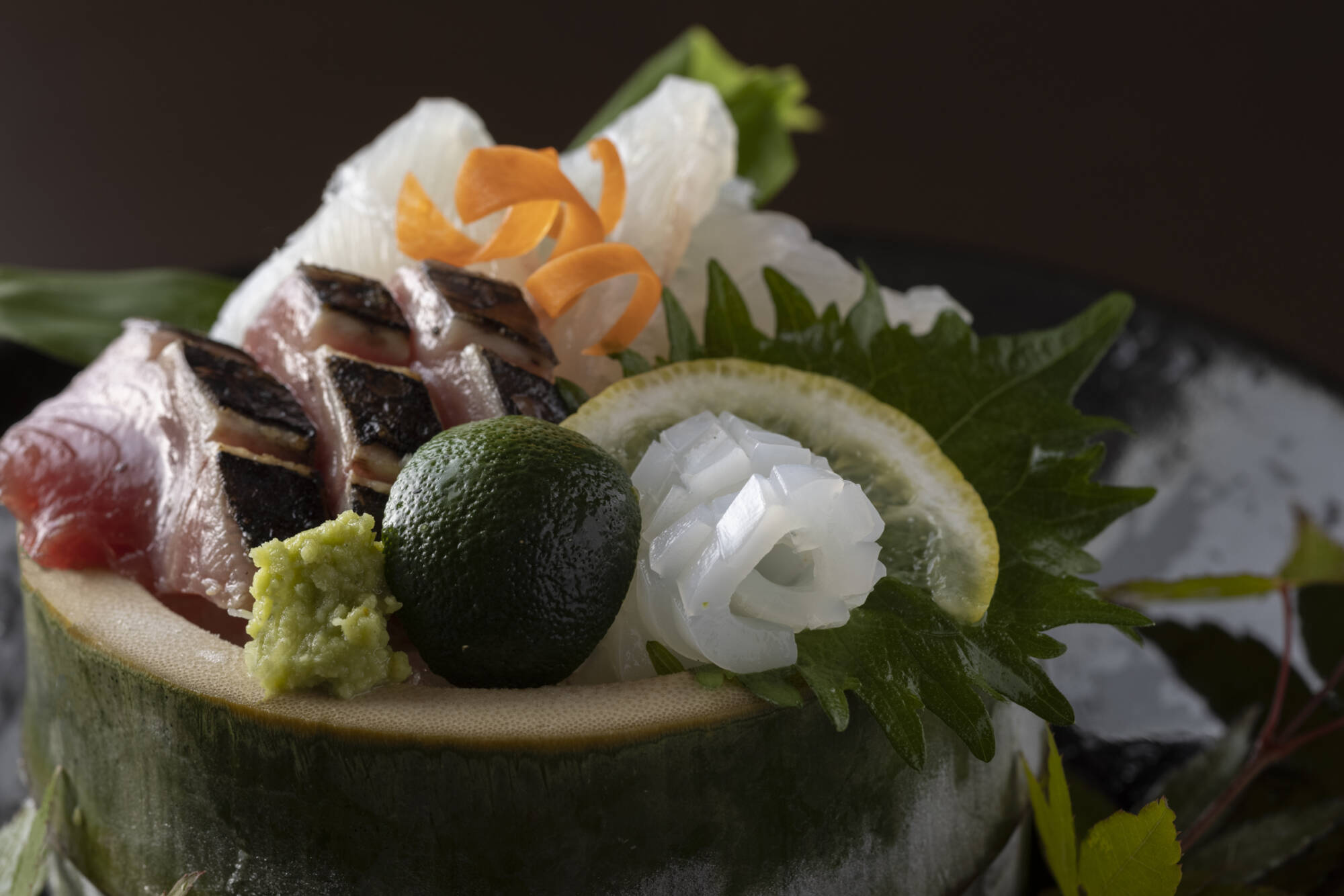
Taste of the Island
A feast from the Genkai Sea and the land
Iki is a treasure house of ingredients, blessed not only with abundant seafood but also with beef, vegetables, rice and barley.
Sea urchin from spring to early summer, swordtip squid in summer, fatty yellowtail in winter. Iki beef, raised on the island, is another specialty well worth tasting.
Iki is also the birthplace of barley shochu. Made from barley, rice koji and the island’s fine water, a distinctive method has been passed down over the years, and seven distilleries still craft their own flavors today.
Learn about the work of fishermen and distillers, and taste ingredients nurtured by the land. Iki’s cuisine is also a journey into nature and the lives of its people.
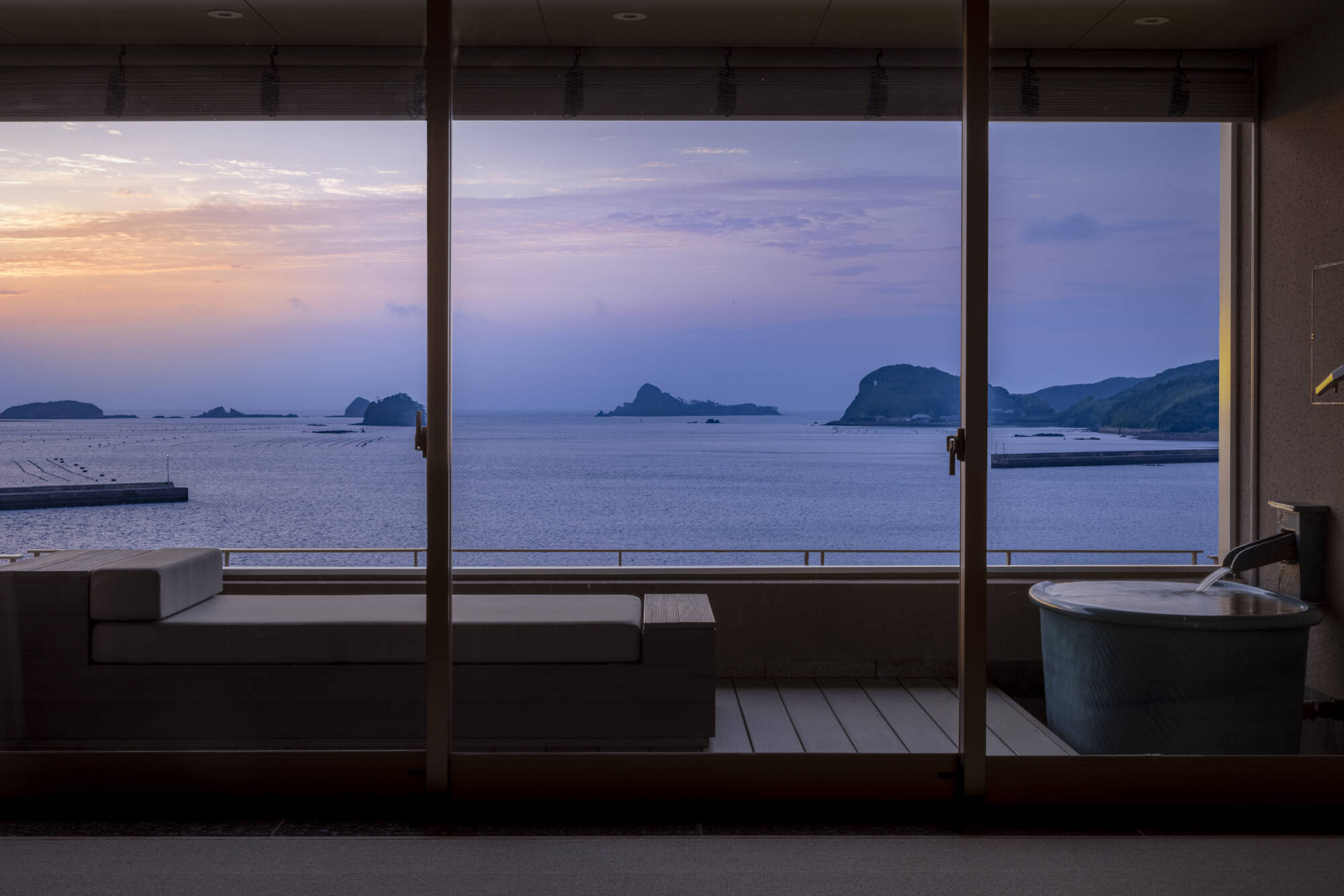
Where to Stay
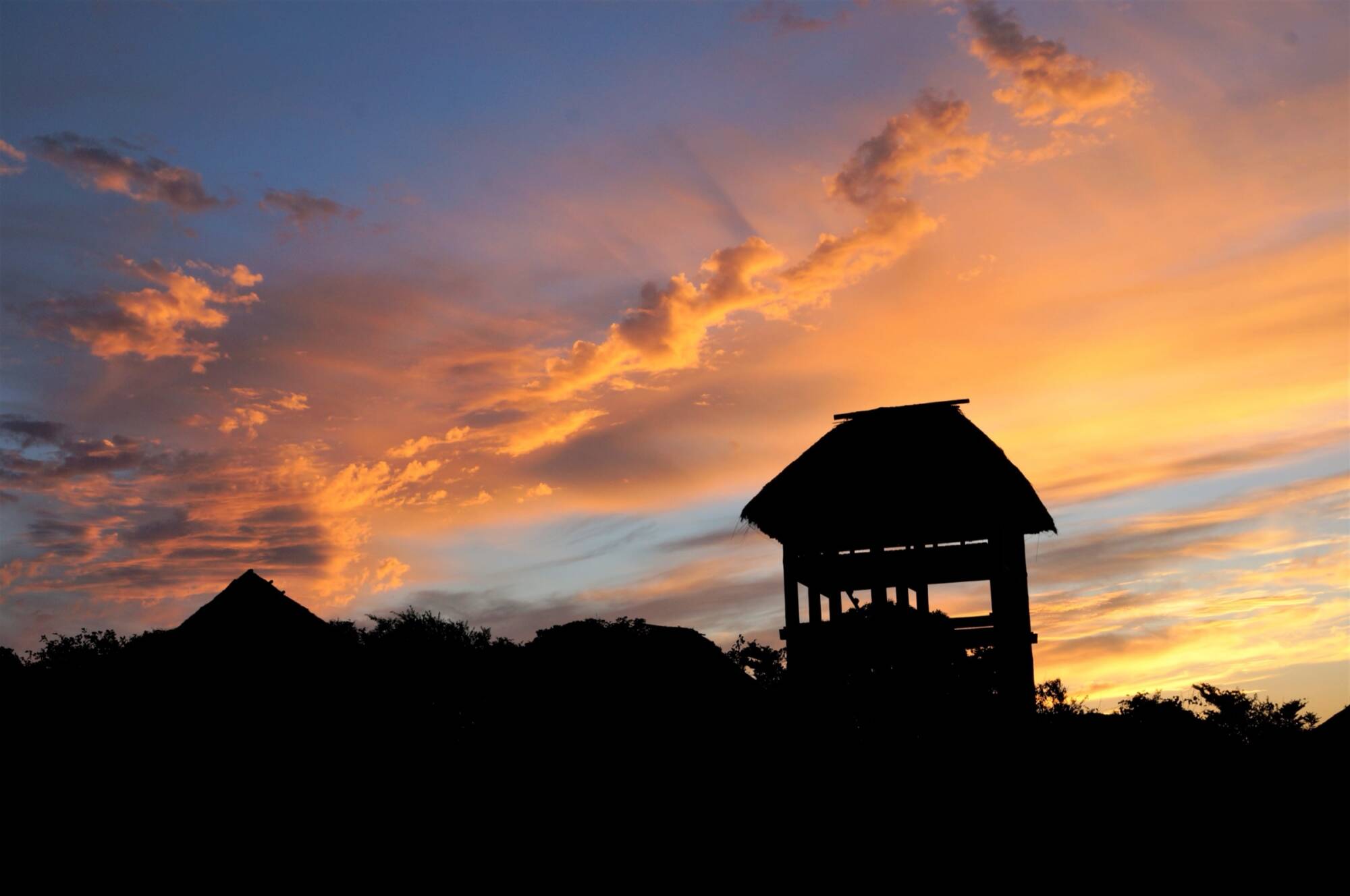
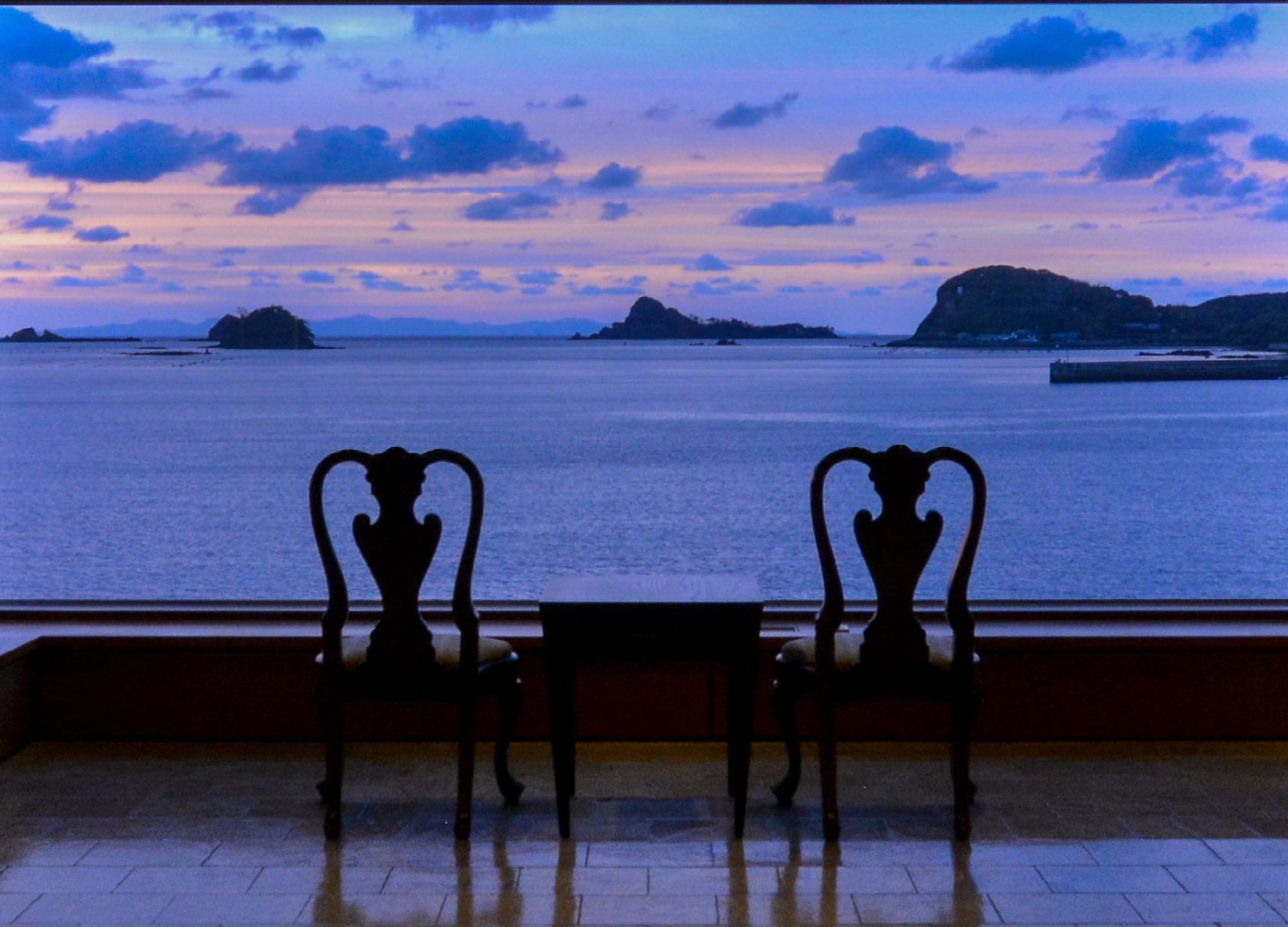
A small inn of 12 rooms watching the sunset over Yunomoto Bay
IKI RETREAT KAIRI MURAKAMI by Onko Chishin
A retreat of 12 rooms overlooking calm Yunomoto Bay. Every room has an open-air bath of free-flowing natural hot spring water that turns golden on contact with air, to enjoy together with the sea view.
Meals are led by Executive Chef Seiichi Ota, a native of Iki. He visits the fish market and selects ingredients himself, and his cooking, which draws out their character, carries deep respect for the island’s nature and its producers.
Savoring the gifts of Iki you met on your travels, slowly, at this inn at the end of the day. That, too, is part of the pleasure of traveling the island.
Getting There
Getting to Iki
Iki is an island relatively easy to reach from Fukuoka and Nagasaki.
From Fukuoka
- Hakata Port → Iki (Ashibe Port or Gonoura Port)
- High-speed ship (jetfoil): about 1 hour to 1 hour 10 minutes
- Ferry: about 2 hours 10 minutes to 2 hours 20 minutes
From Nagasaki
- Nagasaki Airport → Iki Airport, by air: about 30 minutes
Getting around the island
A rental car or sightseeing taxi is convenient for touring the island. IKI RETREAT KAIRI MURAKAMI offers complimentary pickup and drop-off from each port and the airport, by reservation only.
* Please check ferry schedules and the deadline for requesting transfers when you book.
Goto Islands, Nagasaki
GotoIsland of prayer and volcanoes
Beyond a church’s white walls, black lava runs down to the sea.
The Goto Islands float in the East China Sea. Fukue Island, at their southwest, has long welcomed people crossing the sea.
A church in a small cove, the black lava coast left by the eruption of Mt. Onidake, a blue horizon that never ends. Just a short drive, and the scenery changes remarkably.
The prayers of people who survived the era of the ban on Christianity, and the workings of the earth since time immemorial. In Goto, history and nature shaped over long years still live quietly.
The Story of the Island
At the edge of the sea, a faith that was kept alive.
In the Edo period, when Christianity was banned in Japan, the Hidden Christians who kept their faith began crossing to Goto as pioneer farmers from the late 18th century, building their lives in remote mountain valleys and small coves.
Despite the harsh environment and persecution, they passed on their prayers in secret. When the ban was lifted in 1873, those who had gained freedom of faith began building small churches in their own villages.
The churches scattered across the islands today are not merely historic buildings but places where people’s prayers and lives have accumulated. In 2018, villages on Hisaka Island and the Egami settlement on Naru Island, among others, were inscribed as component parts of the World Heritage site “Hidden Christian Sites in the Nagasaki Region.”
Seeing a church standing in the sea breeze, you cannot help but think of what the people of this island have protected.
Discover the Island
Three journeys to know Goto
Visiting the history of prayer and seaside churches
Fukue Island has churches built after the ban was lifted, still standing in many places. Set beside coves or on green hills, they convey the memory of people who lived through hard times and passed their faith to the next generation.
Places to visit
- Dozaki Church
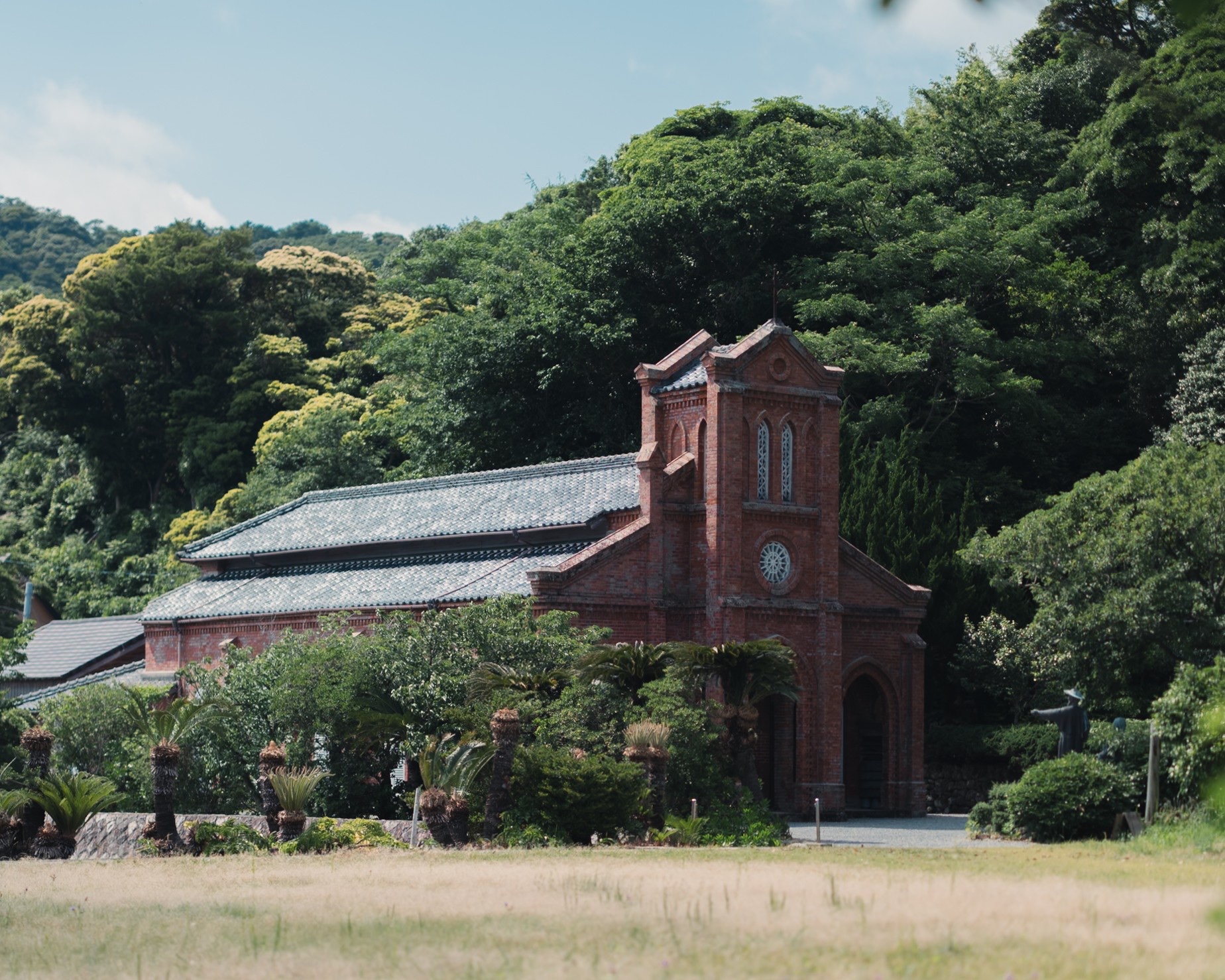
- A red-brick church facing a quiet cove. A symbol of the revival of faith after the ban was lifted, it now displays historical materials on the Christians inside.
- Mizunoura Church
- A white church on a hill overlooking the sea. Its beautiful appearance, blending Western architectural style with Japanese timber construction techniques, is striking.
- Imochiura Church and the Lourdes grotto
- A church with Japan’s first Lourdes grotto, built by parishioners who gathered stones from all over the island. It is still carefully kept as a place of prayer.
Touring views shaped by volcanoes and the sea
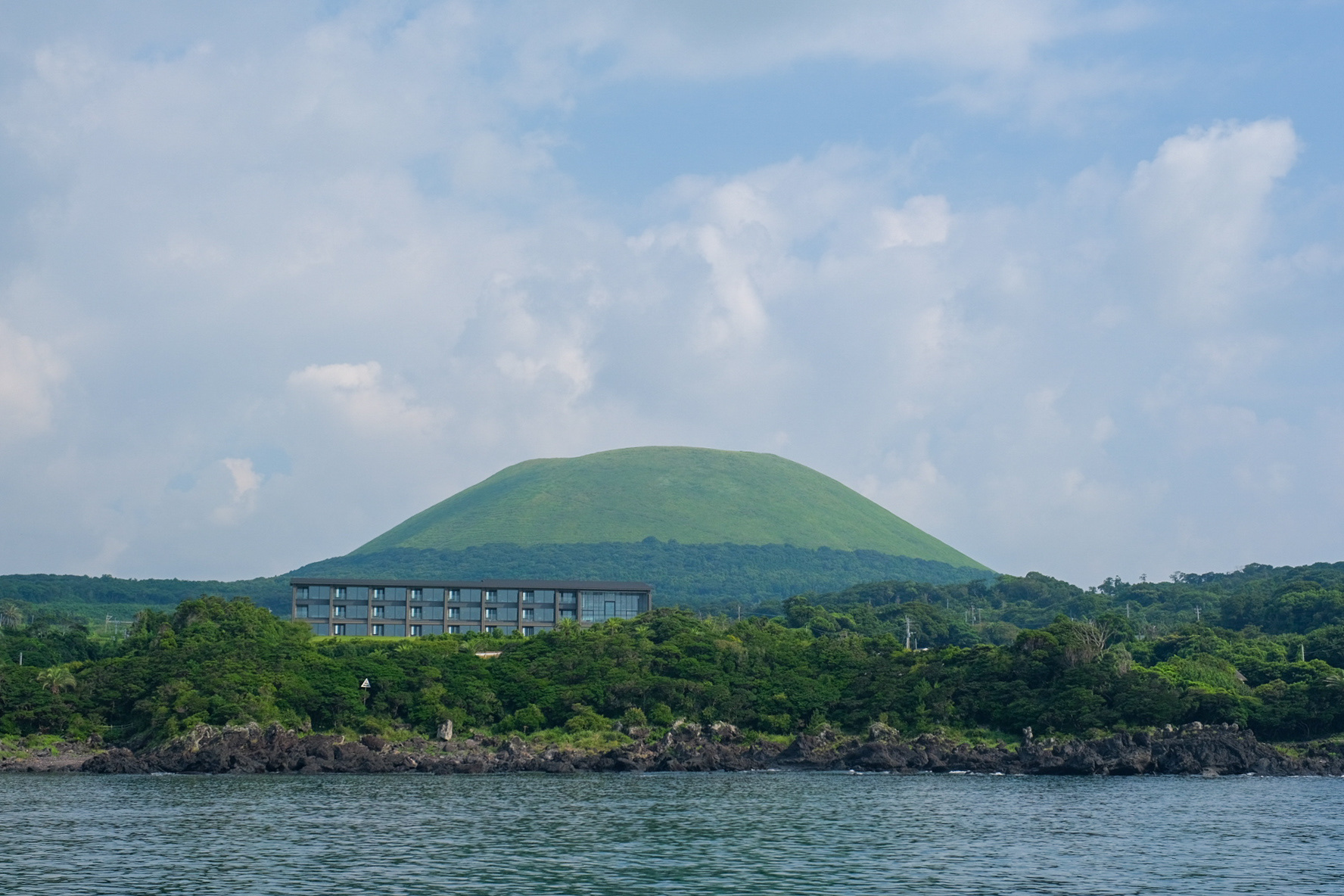
Mt. Onidake, which looks like a gentle meadow, was once a volcano that spewed lava from deep within the earth. The black rock left by its activity, cliffs carved by waves over long years, and clear seas: the landscape of Goto bears the marks of the earth’s workings.
Places to visit
- Mt. Onidake
- A volcano covered in green grass, with gently curving lines. It offers sweeping views of the surrounding sea and islands, and under a starry sky at night.
- Abumize Lava Coast
- A rugged black coastline formed by lava that flowed out in volcanic activity about 50,000 years ago. It makes a vivid contrast with the blue sea.
- Takahama Beach
- White sand and highly transparent emerald-green water. A beautiful cove ringed by green mountains and one of Goto’s signature sea views.
- Osezaki Lighthouse
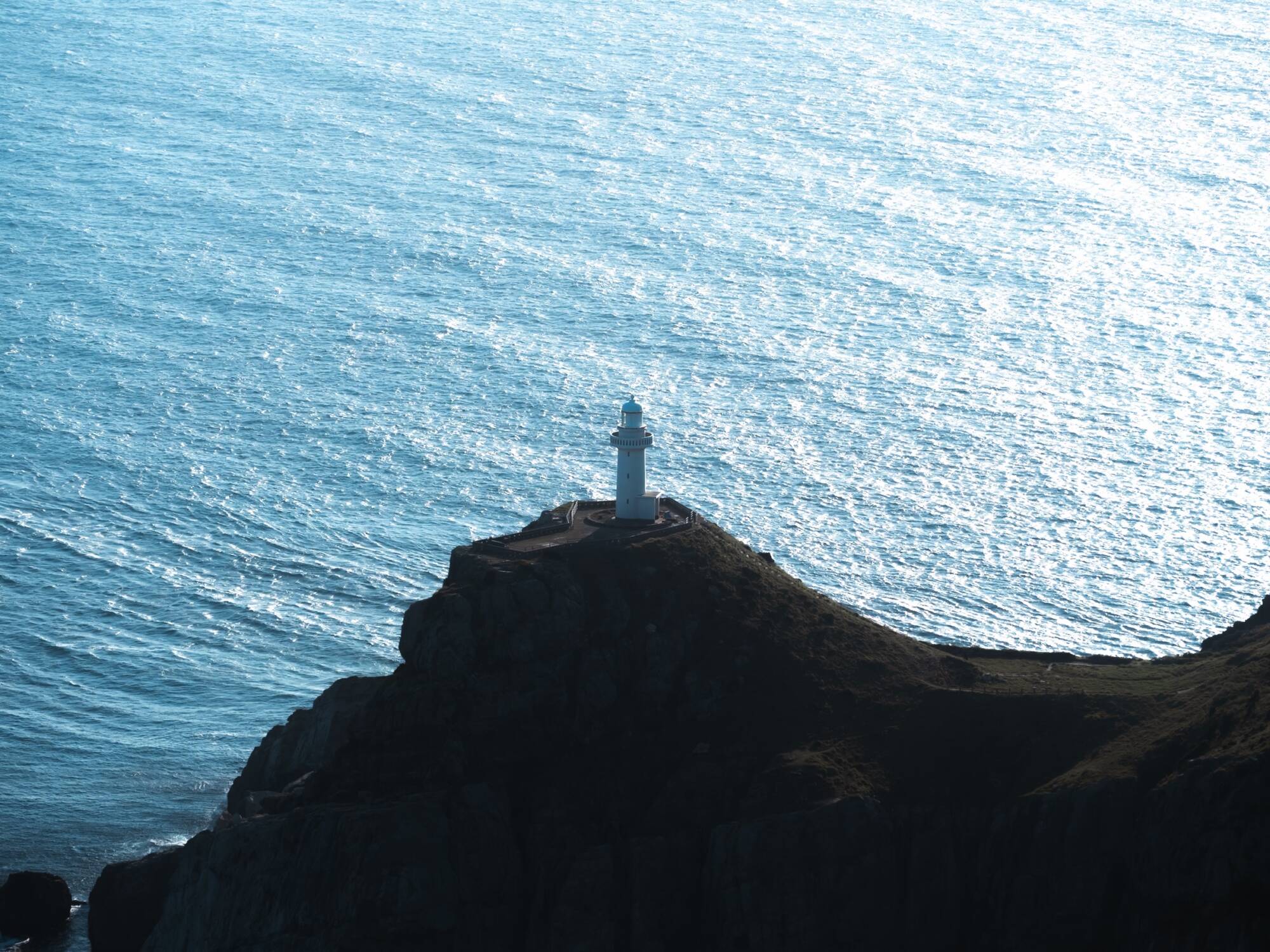
- A white lighthouse at the end of a cliff jutting into the East China Sea. The grand scenery shaped by rough waves and wind, and the sun setting on the horizon, are beautiful.
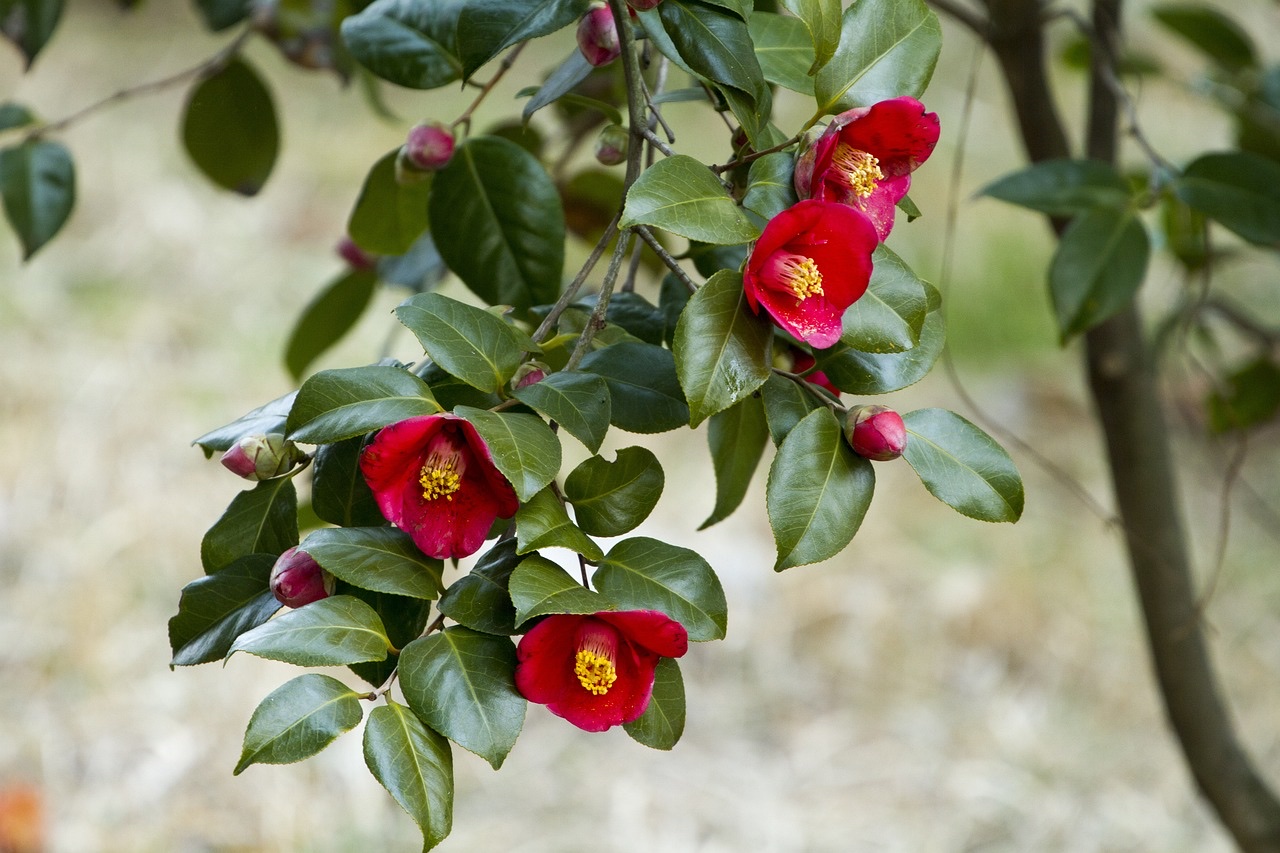
Touching camellias and the handcrafts passed down on the island
Life in Goto holds the wisdom of people who have made use of nature’s gifts. Oil pressed from camellias that grow wild on the island, and traditional kites flown in hopes for children’s healthy growth. Through handcrafts, you can feel the island’s culture up close.
Things to do
- Camellia oil pressing
- Crack the seeds of camellias that have grown wild in Goto since long ago and press the oil. Experience how golden camellia oil is made and learn how the island’s nature is tied to daily life.
- Baramon kite flying
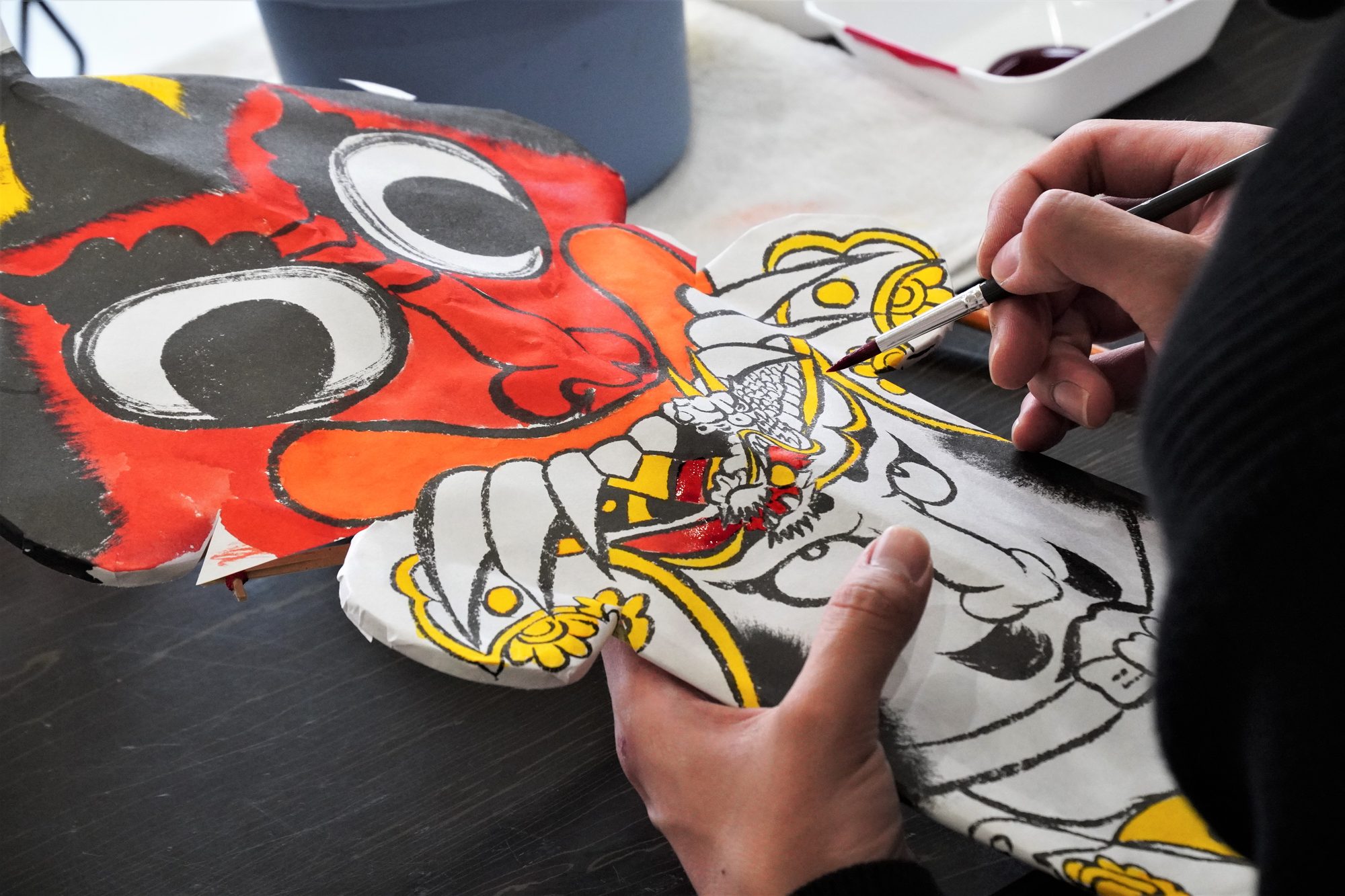
- Traditional Goto kites painted with heroic images of warriors and demons. A custom handed down in hopes for children’s growth, they can be flown under the wide sky of Mt. Onidake.
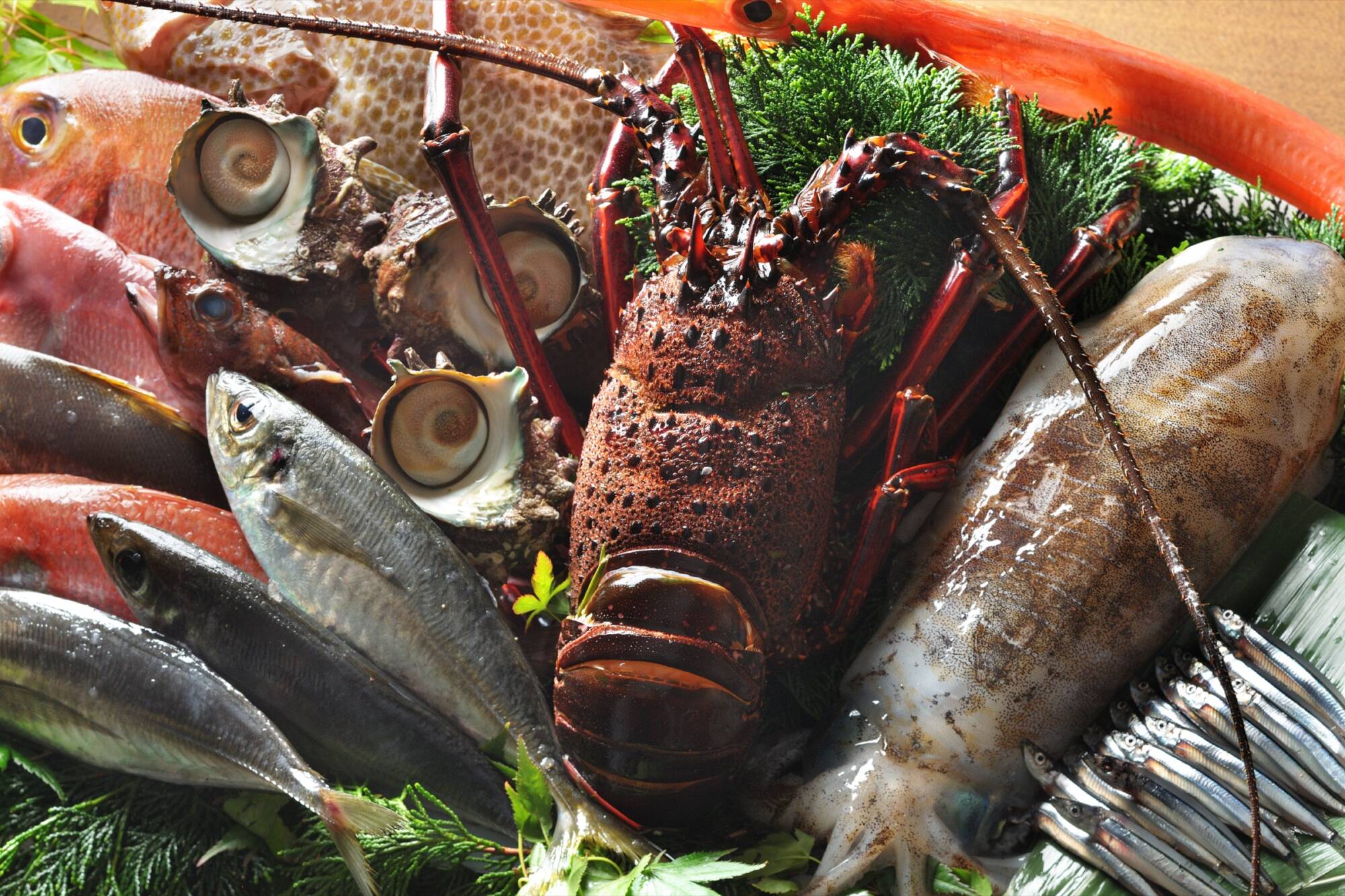
Taste of the Island
Tasting the gifts of the tide and the island’s earth.
Where complex ocean currents meet, the sea of Goto is a treasure trove of seafood. A wide variety of fish is landed through the seasons: striped jack in summer, grouper and spiny lobster from autumn to winter, and other seasonal delights.
The land, too, has a rich food culture. Rare Goto beef raised in the sea breeze, island vegetables, and Goto hand-pulled udon stretched thin with camellia oil. Kanko mochi, made from dried sweet potato, is also a local taste born of island life.
Farmers who raise the island’s ingredients, fishermen who catch the fish, artisans who keep to old methods. Tasting the food of Goto is also touching the wisdom and work of the people who live here.
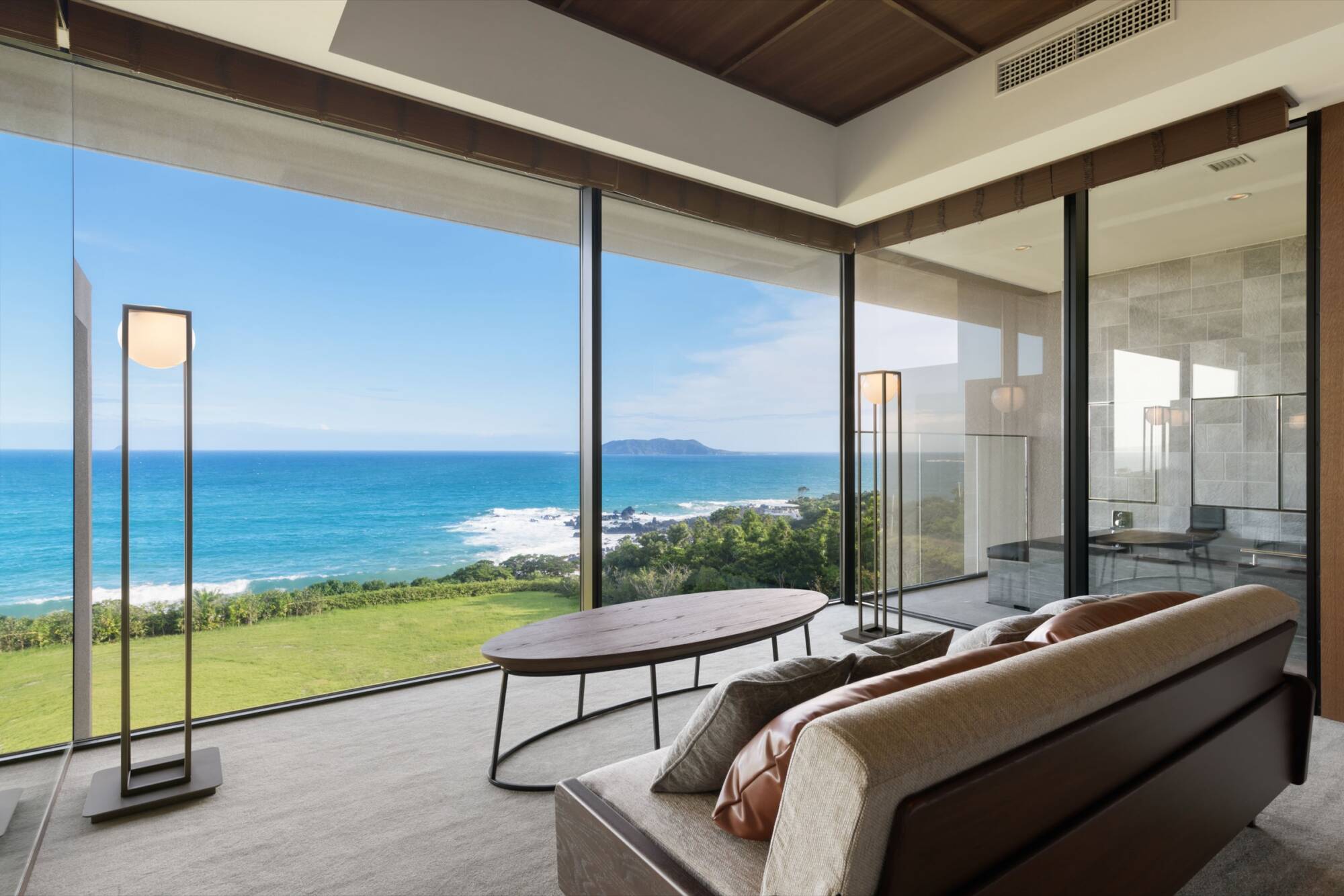
Where to Stay
A retreat of 26 rooms bathed in the light of sea and sky.
GOTO RETREAT ray by Onko Chishin
A retreat of 26 rooms on a rise overlooking the Abumize Lava Coast, born of the eruption of Mt. Onidake. In the space designed by Yukio Hashimoto, the light of sea and sky is drawn in, and every room has a view of the horizon. Guest rooms also have open-air hot spring baths.
Meals are led by Executive Chef Yusuke Yamamoto. He visits the island’s markets and fields himself, and, working closely with local producers, shapes the seasonal bounty of Goto into each dish.
The scent of the tide, light that changes moment by moment, a sea that never ends. Feeling the history and nature of an island of prayer, time flows slowly as you face yourself.
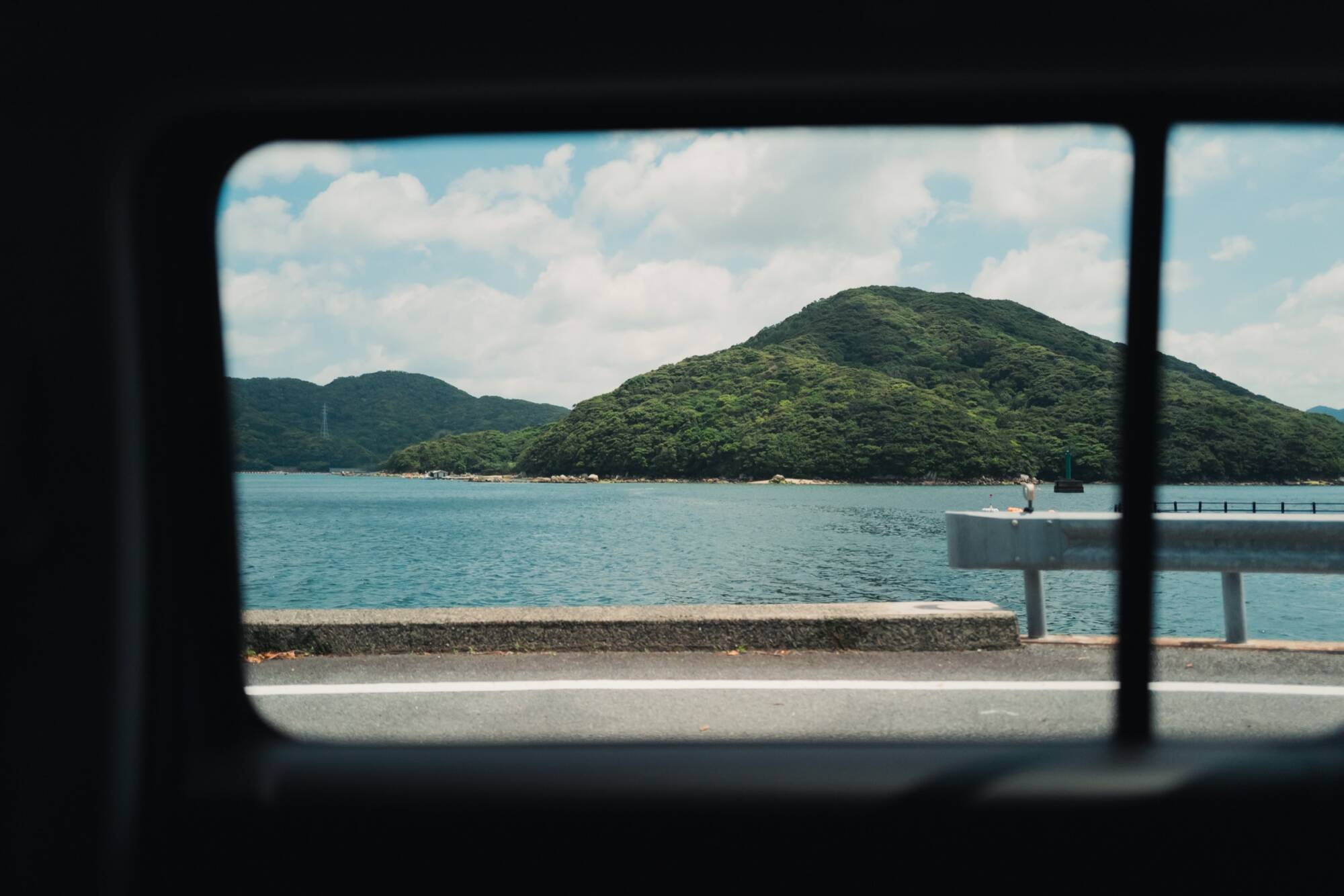
Getting There
Getting to Goto
Fukue Island, home to GOTO RETREAT ray, can be reached from Fukuoka and Nagasaki by air or by sea.
By air
- Fukuoka Airport / Nagasaki Airport → Goto Tsubaki Airport (Fukue Airport): about 40 minutes
- Goto Tsubaki Airport → hotel: about 10 minutes by car
By sea
- Nagasaki Port → Fukue Port: about 1 hour 30 minutes by jetfoil
- Fukue Port → hotel: about 15 minutes by car
- Overnight ferries also run from Hakata Port
Getting around the island
A rental car or sightseeing taxi is recommended for touring Fukue Island. GOTO RETREAT ray does not offer complimentary transfers, but can advise on arranging taxis and rental cars.
* Please check ferry schedules, transfers and transport arrangements in advance. Traveling to other islands such as Naru and Hisaka requires a separate boat.
Rebun Island, Hokkaido
RebunThe floating island of flowers
After a two-hour boat ride, flowers begin to bloom right beside the sea.
At the northern tip of Hokkaido, across the sea beyond Wakkanai, lies Rebun Island.
Step off the ferry into cold wind and a wide sky. Grasslands roll toward the sea, and in early summer flowers that on Honshu you would find only high in the mountains begin to bloom at your feet. Look up, and beyond the blue sea stands the graceful form of Rishiri-Fuji.
Here, rather than hurrying through famous sights, the joy of travel lies in walking on your own feet, learning the names of flowers and noticing the changing scenery.
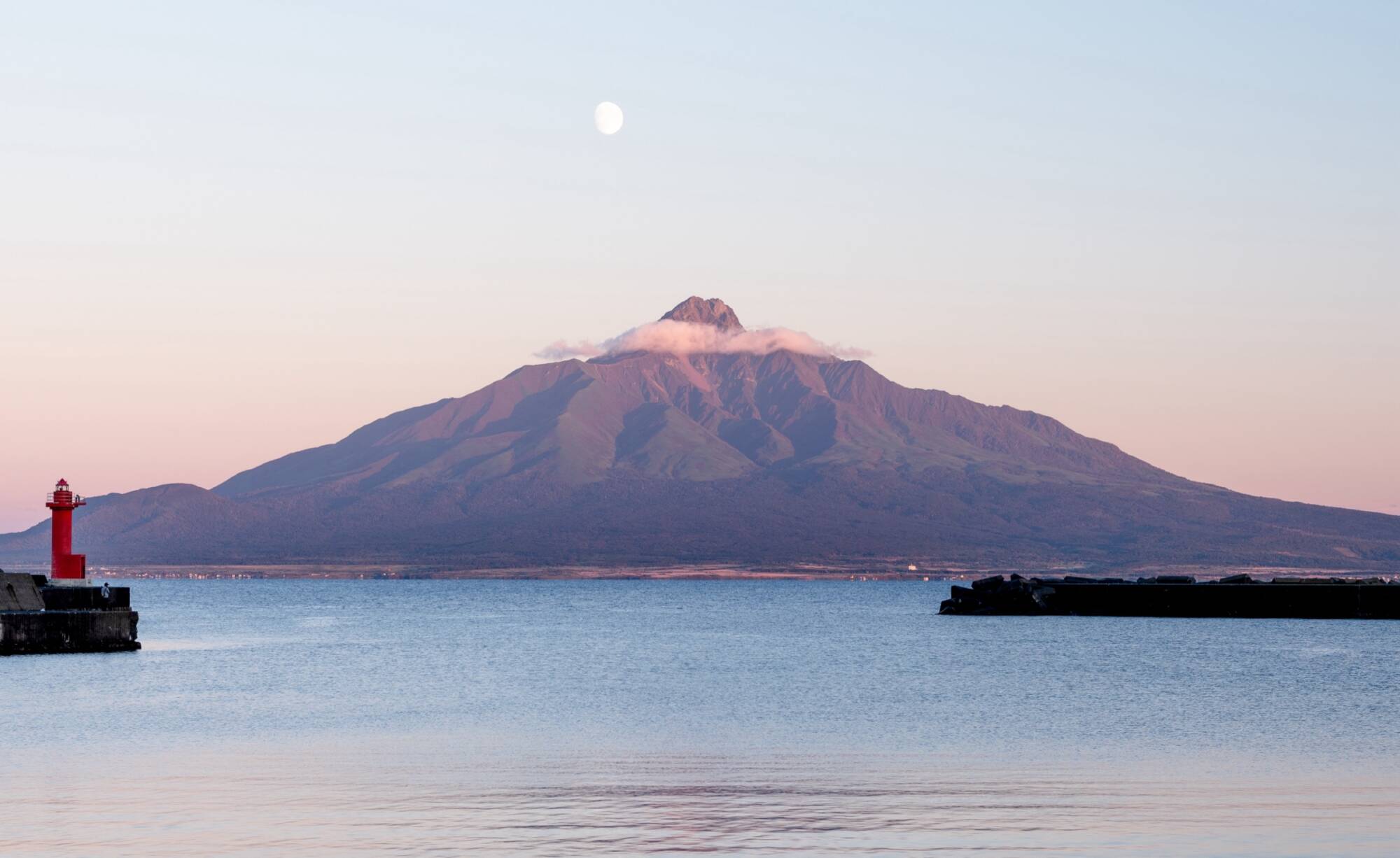
The Story of the Island
Time layered many times over on an island of flowers.
On the east side of Rebun, gentle hills roll on; on the west, cliffs stand exposed to the harsh winter wind and waves. Differing terrain and a cool climate have let plants that grow in the alpine zone on Honshu bloom near the sea.
About 300 species of alpine plants can be seen on the island, including the Rebun atsumori-so (Rebun lady’s slipper orchid), which grows nowhere else, and other flowers protected by limited land and season.
Yet the island’s story is not only about flowers. Artifacts excavated at sites such as the Funadomari Ruins show that people of the Jomon period lived here with the gifts of the sea. Later, the lives and trade of the Ainu people were also recorded here.
People who have long made their living from the sea, and small flowers that bloom against the wind. On this island, known as the farthest edge, a way of life has continued unbroken.
Discover the Island
Three journeys to know Rebun
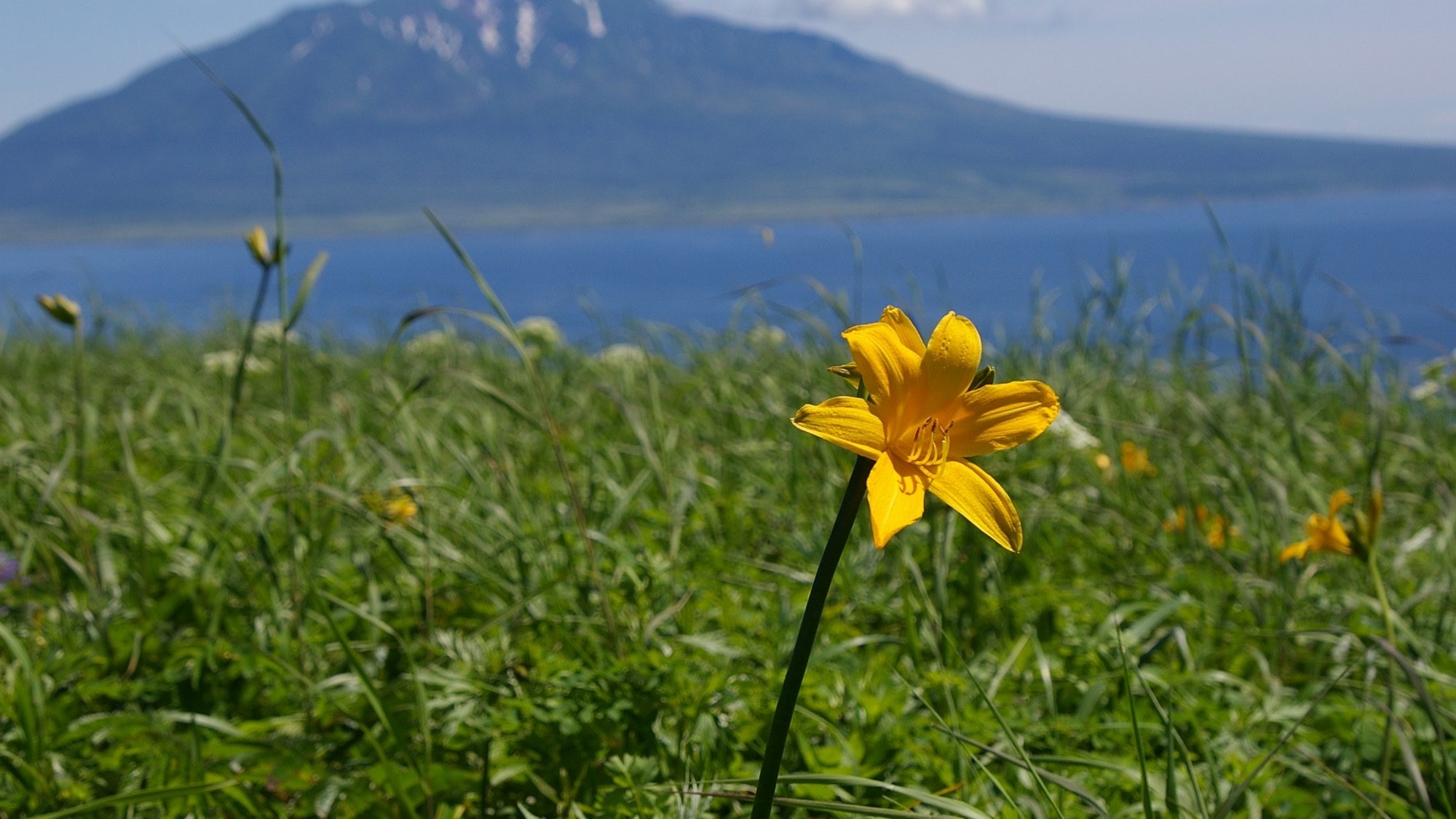
Chasing flowers along ridgelines that run to the sea
When traveling Rebun, begin by walking. Delicate flowers like those found in Honshu’s alpine regions bloom on grasslands looking down on the sea. The flowering season and the wind that blows through show a slightly different face each time you walk the same path.
Places to visit & things to do
- Momoiwa Observatory Course
- Rebun’s signature trekking route, walking a ridge that drops toward the sea. Rishiri-Fuji comes into view beyond the flowers.
- Rebun Atsumori-so Colony
- A place to meet the rare orchid native to Rebun, which blooms only during a limited period in early summer. Check the opening period and flowering conditions.
- Alpine Botanical Garden
- A facility where you can observe the island’s flowers up close. The species you see change with the season.
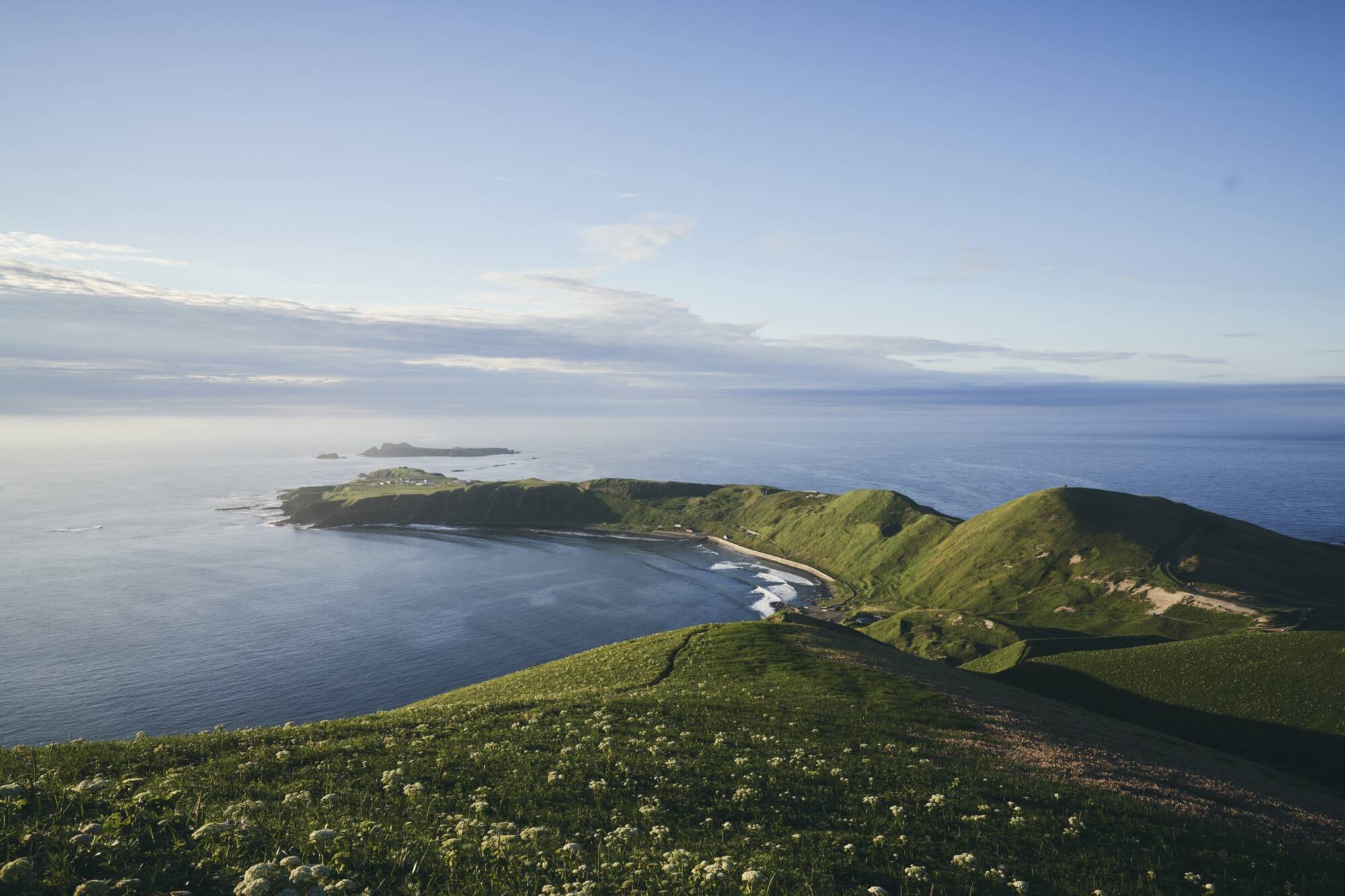
Touring windswept capes and blue coves
The farther north you go on the island, the wilder the scenery becomes. Deep coves, capes jutting into the sea, an endless horizon. You can drive to them or walk from cape to cape, a view found only in Rebun.
Places to visit
- Cape Sukoton
- The island’s northernmost cape. Looking across the sea to uninhabited Todo Island, you feel what it is to stand at the northern edge.
- Cape Sukai
- A viewpoint with a curving cove and highly transparent water. A blue surface opens out between the cliffs.
- Cape Goro
- A rise on the northern cape-touring course. From the undulating path, take in a panorama of sea and cliffs.
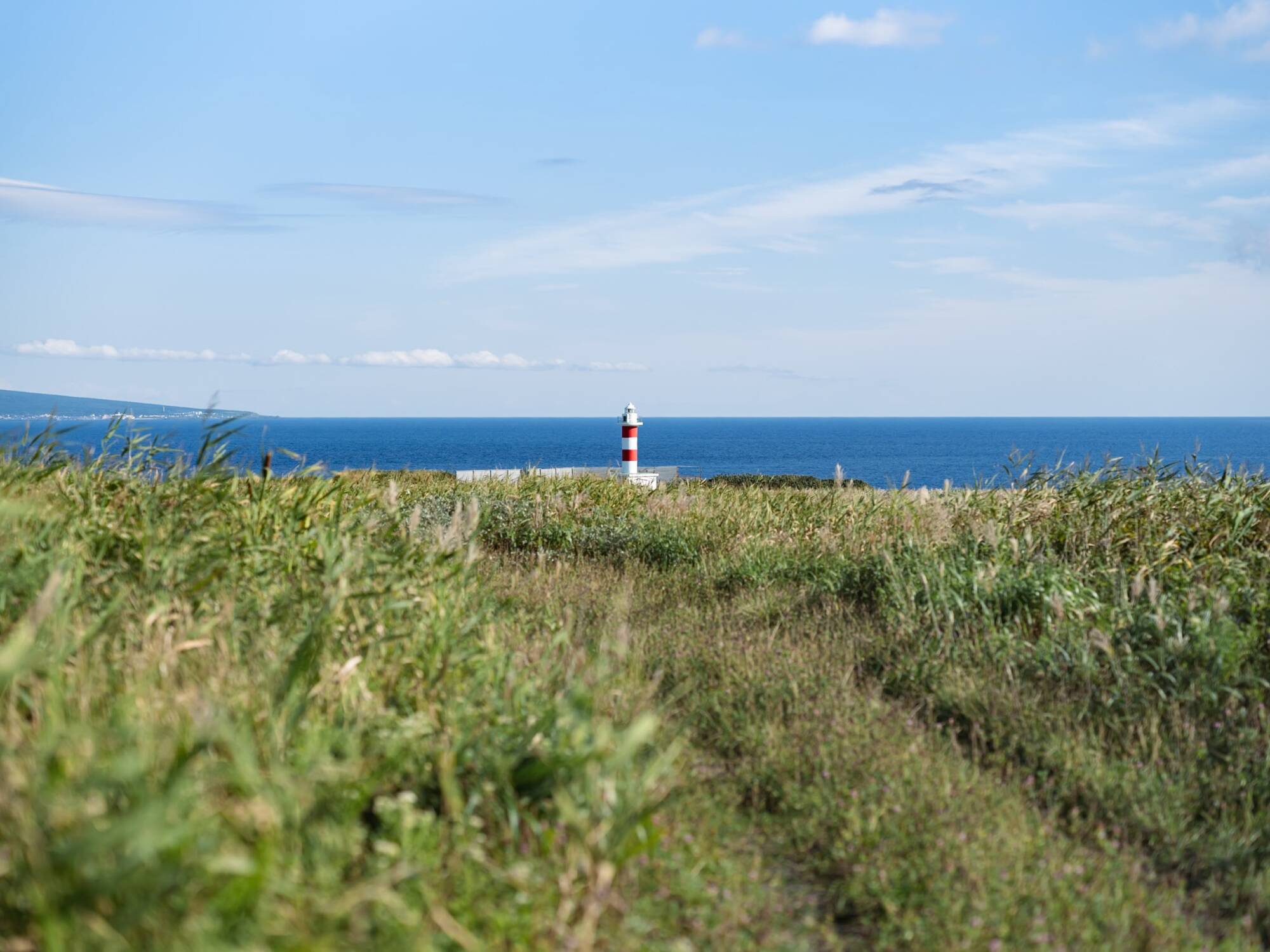
Touching seaside life and the island’s memory
People who protect the island’s nature and have lived with the sea. Looking at their way of life, Rebun appears not only as an island of beautiful scenery but also as a place of living with a long history.
Places to visit
- Rebun Town Local History Museum
- Through archaeological materials such as those from the Funadomari Ruins, learn about island life and history stretching back to the Jomon period.
- Kita no Canary Park
- A seaside park where a schoolhouse used in a film shoot remains. It also offers a view unique to Rebun, with Rishiri-Fuji floating straight ahead.
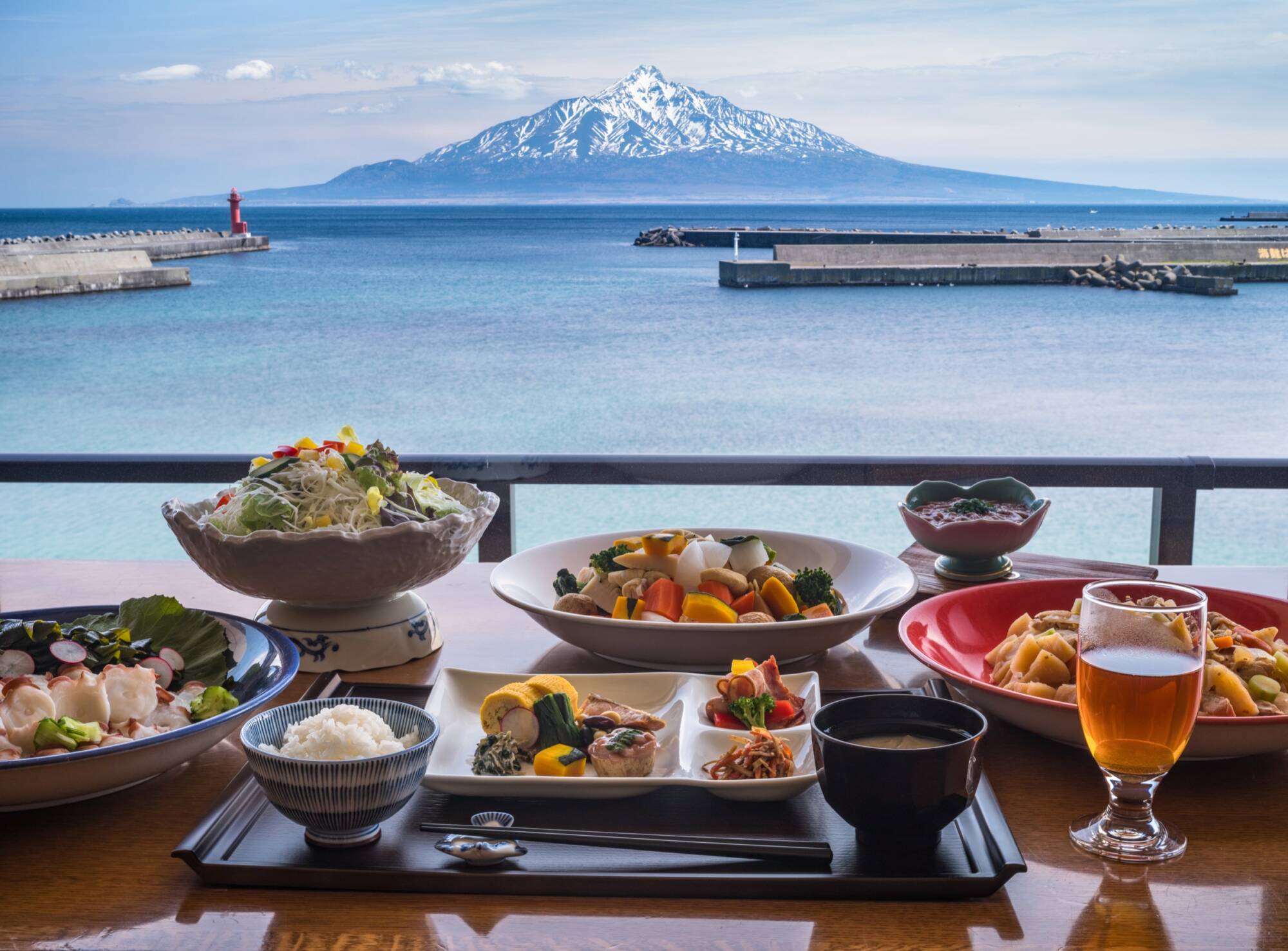
Taste of the Island
A short-season feast raised by the northern sea.
Surrounded by cold seas, Rebun has long been sustained by the gifts of the northern sea, such as sea urchin, hokke (Atka mackerel) and kelp.
Summer sea urchin, in particular, is a highlight of any trip. In the rich waters where kelp grows, seasonal flavors reach the table in step with the fishing season. Fatty hokke and kelp carefully dried on the shore are also essential to the island’s food culture.
Look at the gear piled in the fishing harbors and the houses of seaside villages, and you begin to see the work behind a single dish. In Rebun’s food lives the life of people who face a harsh sea.
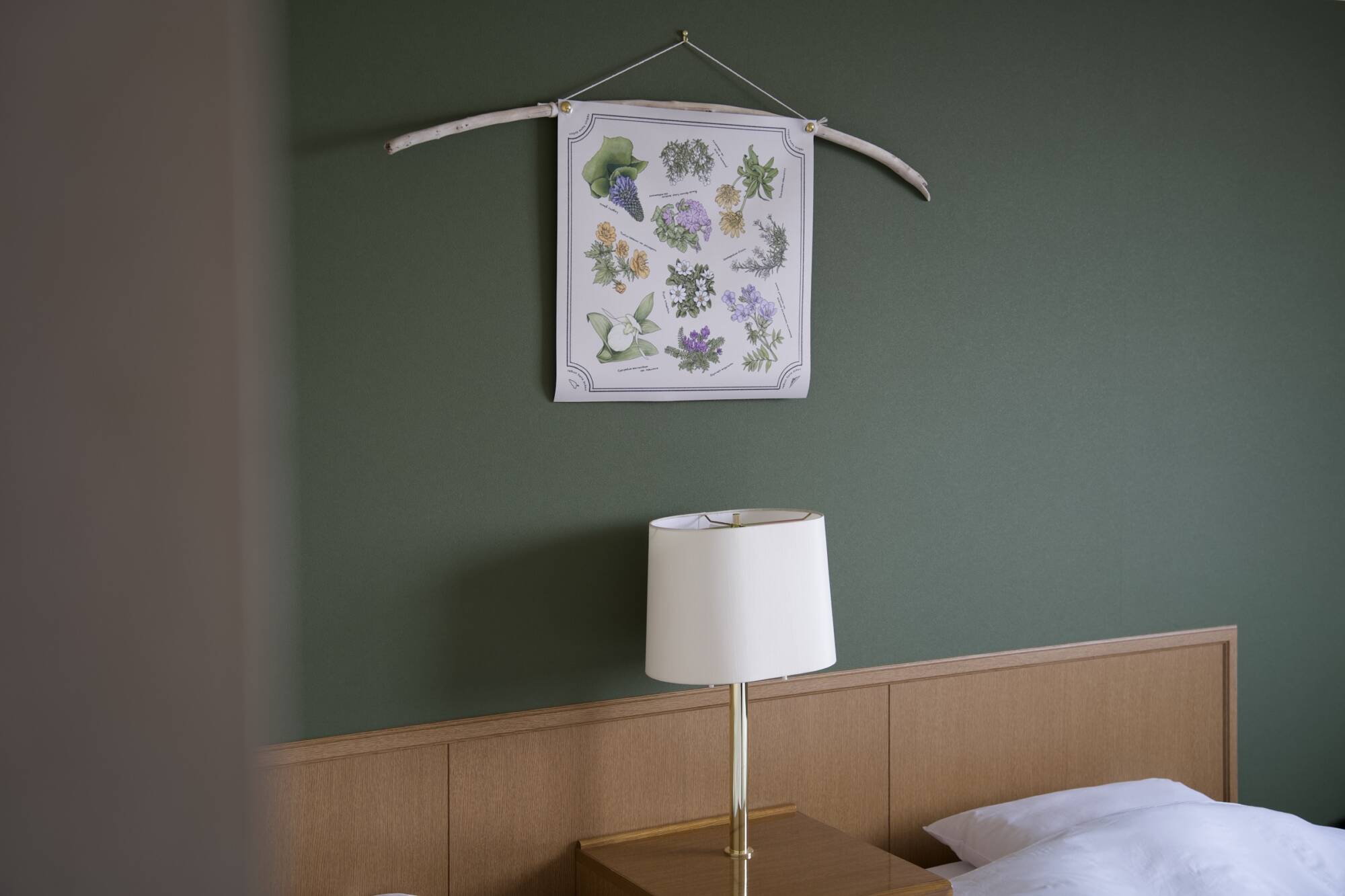
Where to Stay
An inn at the far edge, with Rishiri-Fuji across the sea.
REBUN HOTEL SARYO
A seasonal hotel of 100 rooms, close to Kabuka Port, with a view of Rishiri-Fuji across the sea. With Western-style and Japanese-style rooms as well as some renovated rooms, it is a familiar base for traveling Rebun Island.
Meals are served buffet style, featuring Rebun seafood and Hokkaido local dishes. Enjoy northern flavors such as hokke and kelp, then warm tired legs in the island’s natural hot spring.
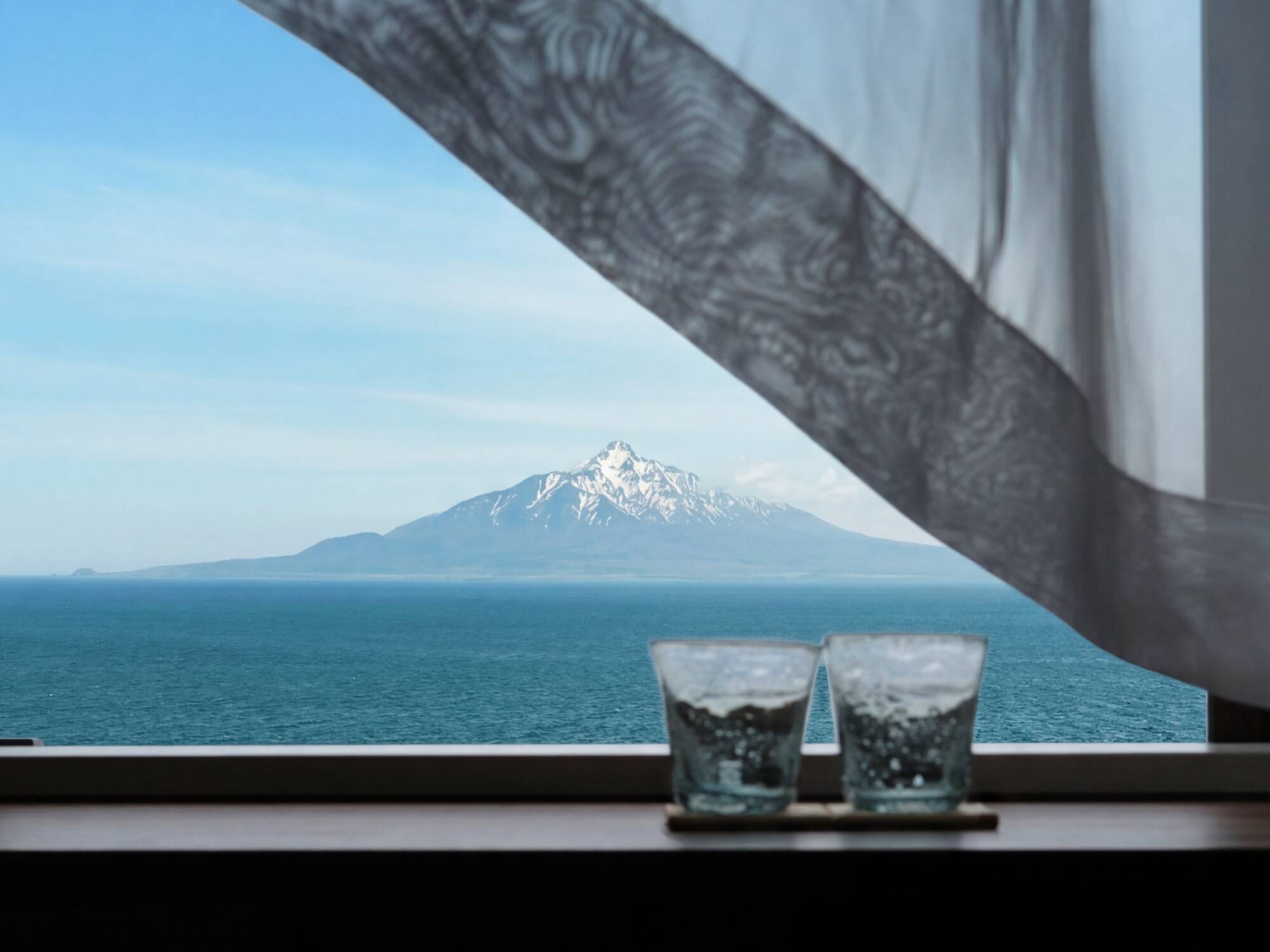
On clear mornings, look out at the outline of the mountain; by day, head to the ridges of flowers. Having a place to return to after walking the island is part of the richness of traveling to the far edge.
Getting There
Getting to Rebun
Rebun Island has no airport with scheduled passenger flights, so the ferry from Wakkanai is the main way in.
From Wakkanai
- Wakkanai Ferry Terminal → Kabuka Port, Rebun Island: about 1 hour 55 minutes to 2 hours by ferry
- Wakkanai Airport → Wakkanai Ferry Terminal: by bus, taxi or similar
From Rishiri Island
- Oshidomari Port, Rishiri Island → Kabuka Port, Rebun Island: about 45 minutes by ferry
- A route from Kutsugata Port, Rishiri Island to Kabuka Port also operates seasonally
Getting around the island
Main viewpoints are reached by car or local bus, and trekking courses on foot. REBUN HOTEL SARYO is about 2 minutes by car or about 10 minutes on foot from Kabuka Port. Transfers from the port are also available by reservation.
* Please check ferry times, inter-island routes and the opening status of trekking courses in advance. The hotel operates seasonally, from May to October.
Rishiri Island, Hokkaido
RishiriA volcanic island around a single peak
Even after crossing the sea, your eyes keep returning to a single peak.
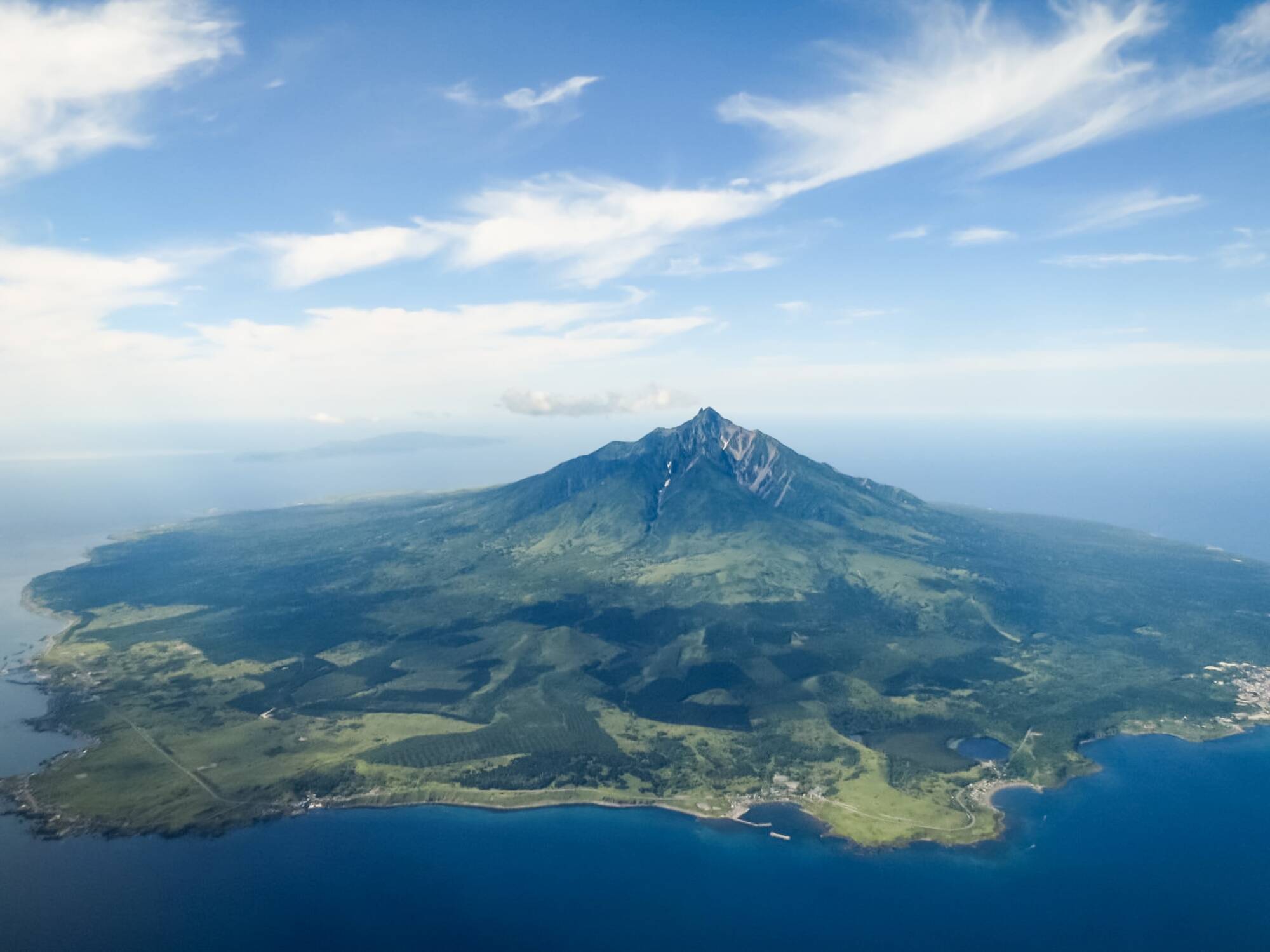
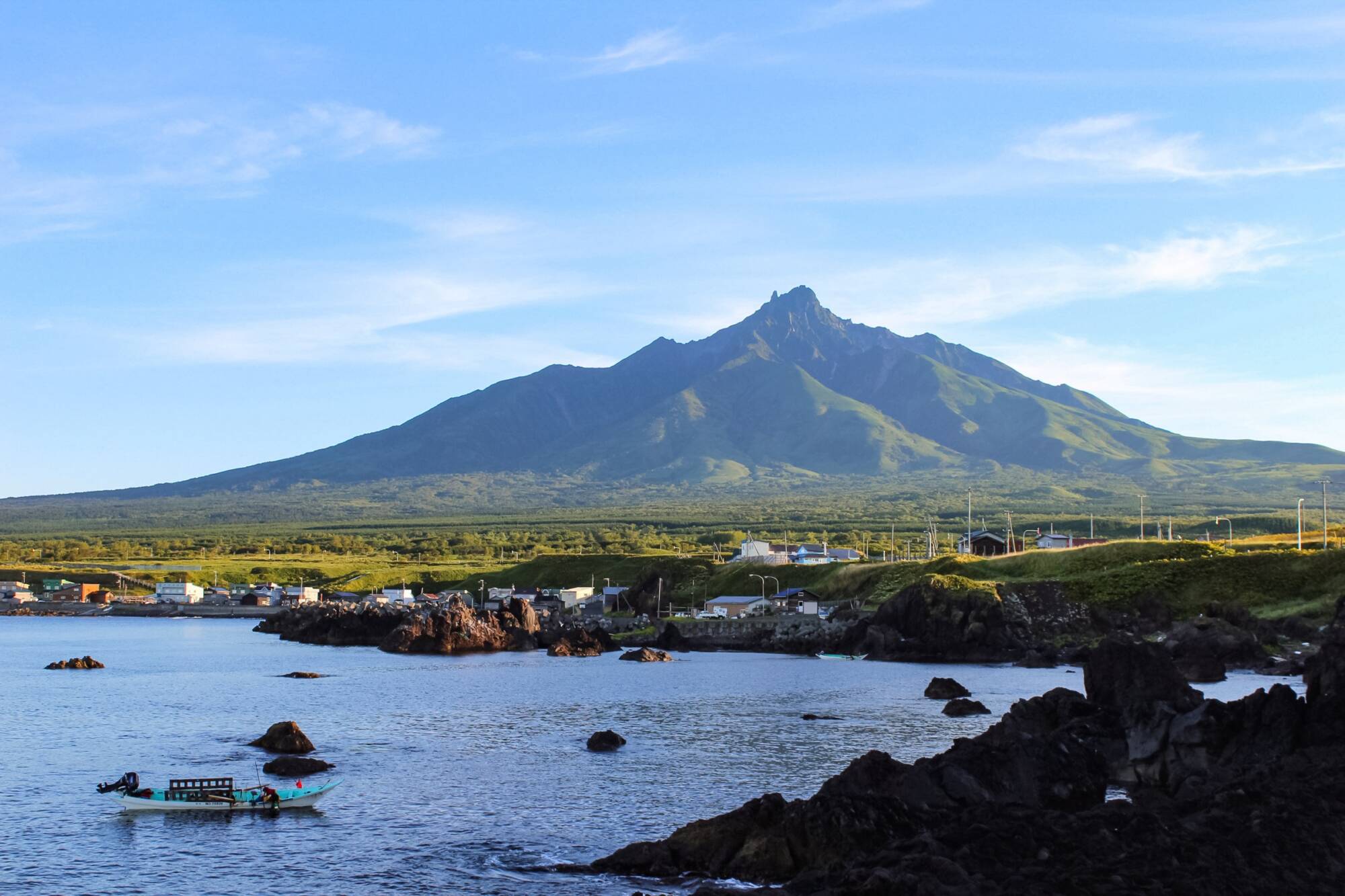
Rishiri Island floats in the Sea of Japan off Wakkanai. At its center rises Mt. Rishiri, 1,721 meters high.
Follow the coastal road and the mountain that looked sharp becomes a gentle curve, appearing on the surface of a lake and over the roofs of villages. Wherever you are on the island, a single mountain stands at the center of the view.
Walk forest paths, ride bicycles along the shore, and meet the people who dry kelp. In Rishiri, you can feel nature’s workings, linking mountain to sea, as you travel around the island.
The Story of the Island
The shape of an island made by one mountain.
Rishiri is a volcanic island that spreads around Mt. Rishiri, rising from the sea. The ridge running from the 1,721-meter summit to the coast forms the very outline of the island.
Snow and rain that fall on the mountain pass through forest and earth to become spring water, nurturing rich scenery in lakes and wetlands. Turn to the sea, and the bounty that supports fishing spreads out, including Rishiri kelp and sea urchin.
Travel around the island, about 60 kilometers in circumference, and you can see the mountain’s form change little by little. In the morning it is reflected in a lake; at dusk its shadow deepens along with the western sea. Using that view as a landmark, islanders have lived between sea and mountain.
Mt. Rishiri is not simply something to look at. It is an irreplaceable presence that ties together the island’s nature and people’s daily lives.
Discover the Island
Three journeys to know Rishiri
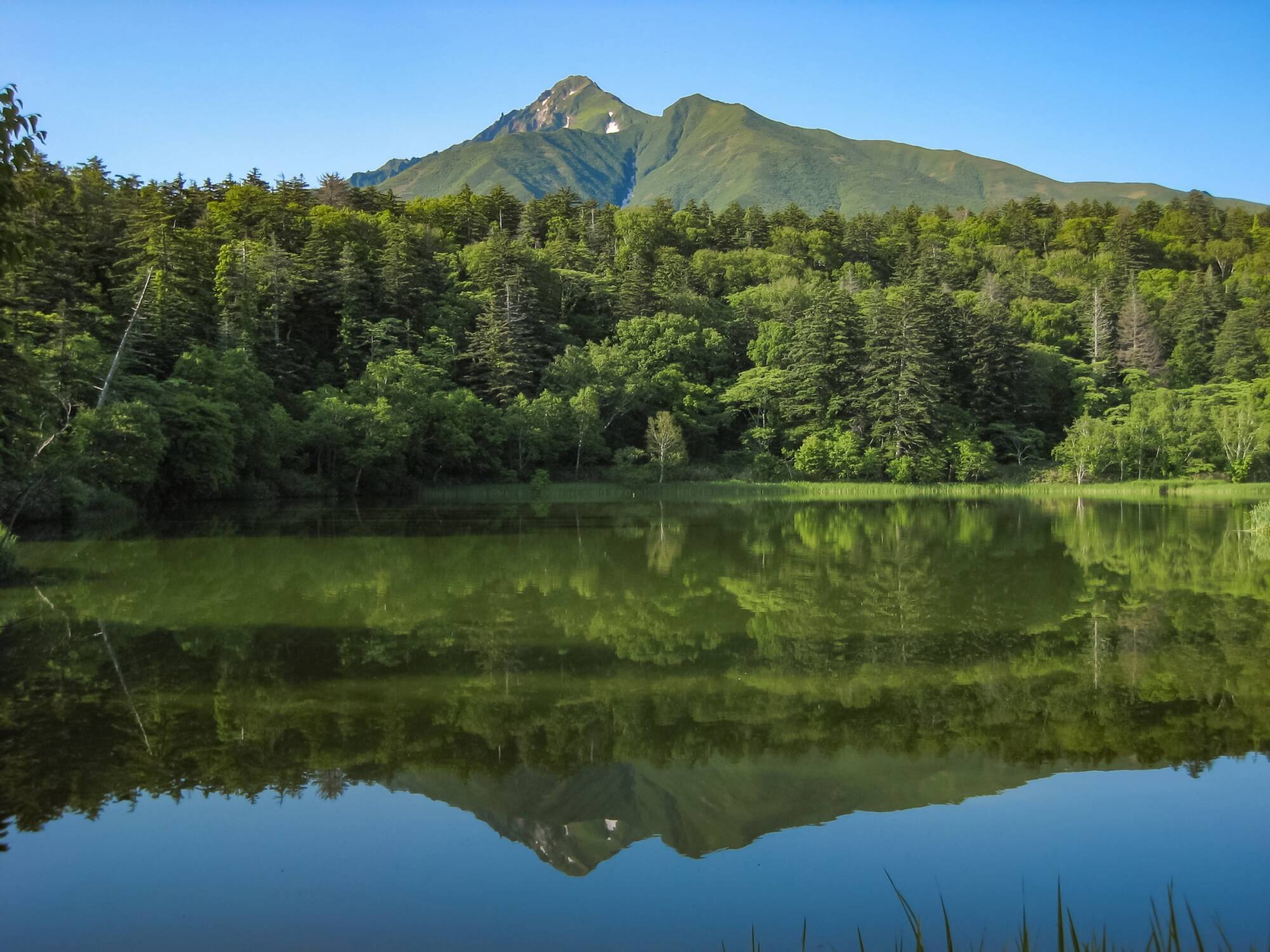
Searching for Rishiri-Fuji in the water’s mirror
Mt. Rishiri, the symbol of the island, shows a completely different face depending on where you view it. Its reflection on a quiet lake, its shadow rising beyond a wetland. Even a short walk lets you feel the island’s terrain and changing seasons.
Places to visit
- Himenuma Pond
- A quiet pond surrounded by forest. On windless days Mt. Rishiri is reflected in the water, and you can stroll the path along the shore.
- Otatomari Pond
- A scenic spot in the southeast of the island. Across the wide water, you see the majestic Rishiri-Fuji.
- Minamihama Wetland
- A wetland ringed by Sakhalin spruce woods. Walk the boardwalk and meet rare plants and waterside scenery.
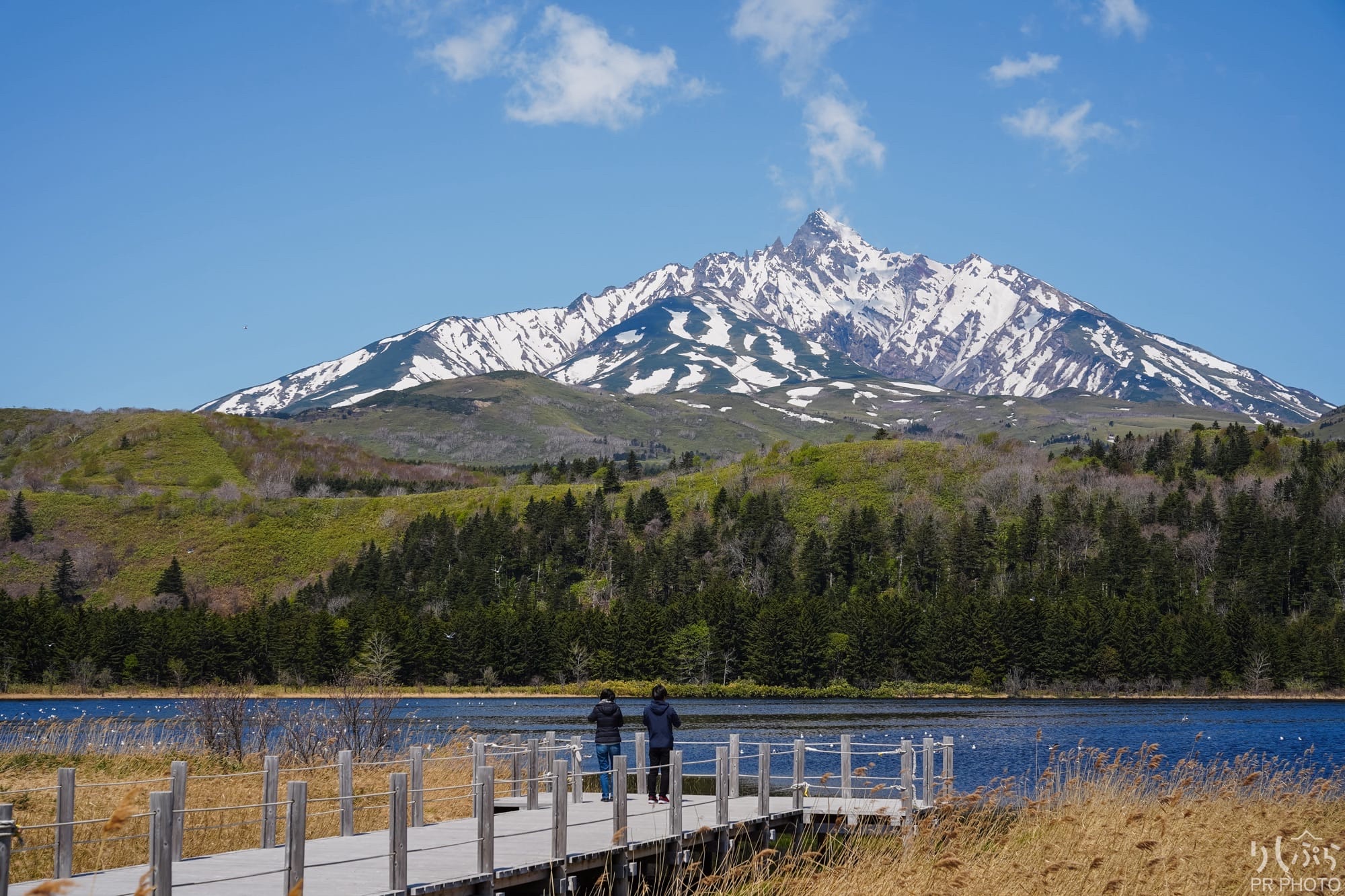
Feeling the mountain and wind with your body
Rather than only viewing the mountain from afar, walk its foothills and ride the coastal roads. Rishiri is an island where the more you move, the more interesting the terrain becomes. If you aim to climb, allow ample preparation and time to face this mountain.
Places to visit & things to do
- Mt. Rishiri
- A fine peak of 1,721 meters. The climb takes many hours and includes steep slopes, so plan according to your climbing experience, equipment and the weather.
- Cycling
- Ride around the island on roads with views of sea and mountain together. At the speed at which the scenery slowly changes, you see things you would otherwise miss.
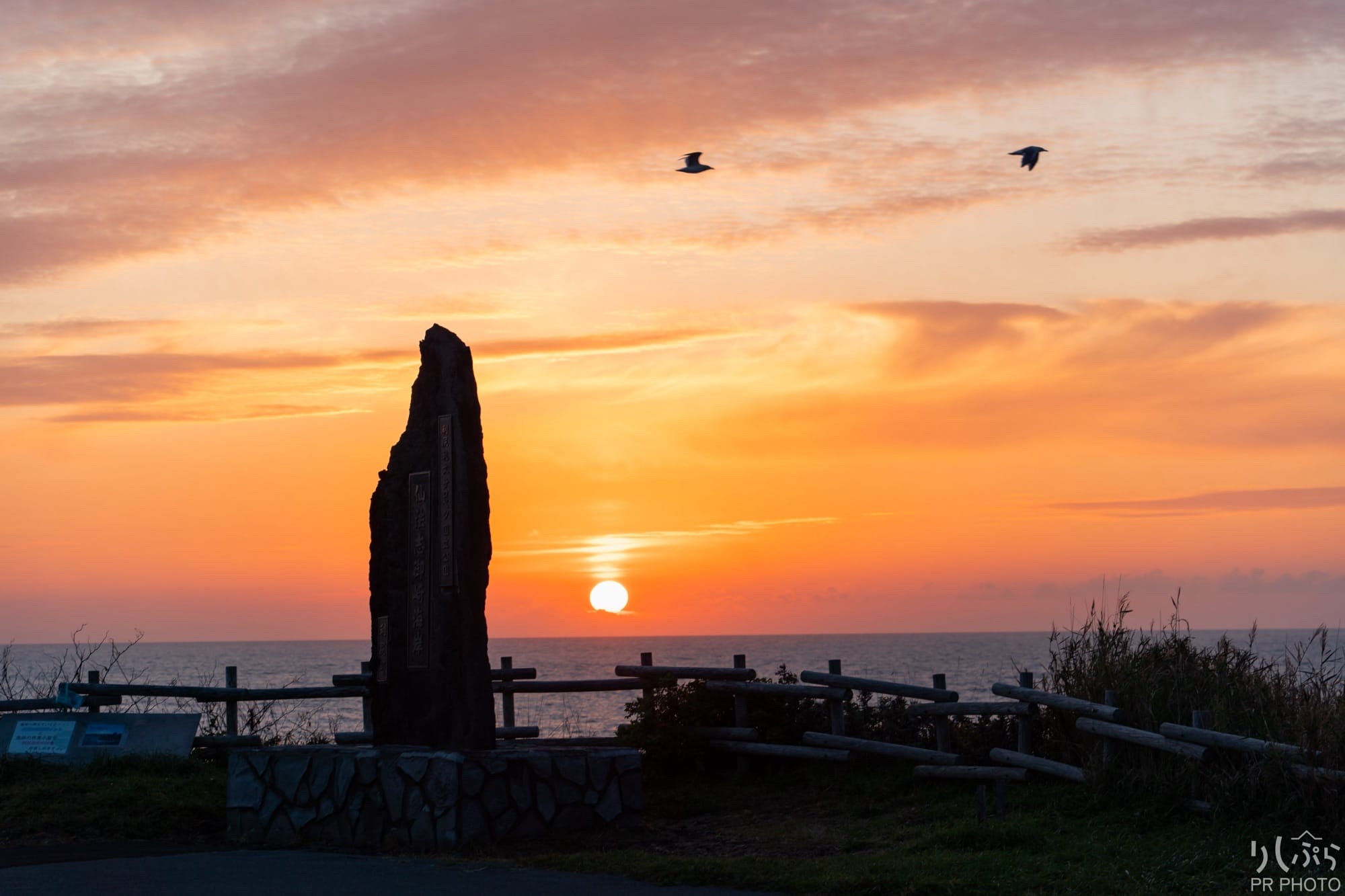
Touching fishermen’s wisdom and the sea’s bounty
In the seas of Rishiri, kelp and sea urchin have supported the island’s food culture. Touch fishermen’s tools, learn about kelp, and taste the freshly caught. Seaside experiences bring the joy of learning the work behind fine food.
Things to do & places to visit
- Kamui Coast Park
- An experience facility where you can touch the island’s work at sea, with sea urchin shucking using real fishing tools and making Rishiri kelp souvenirs.
- Kutsugata Cape Park
- A cape park on the island’s west coast. Across the horizon you see Rebun Island, and at dusk the sea is stained madder-red.
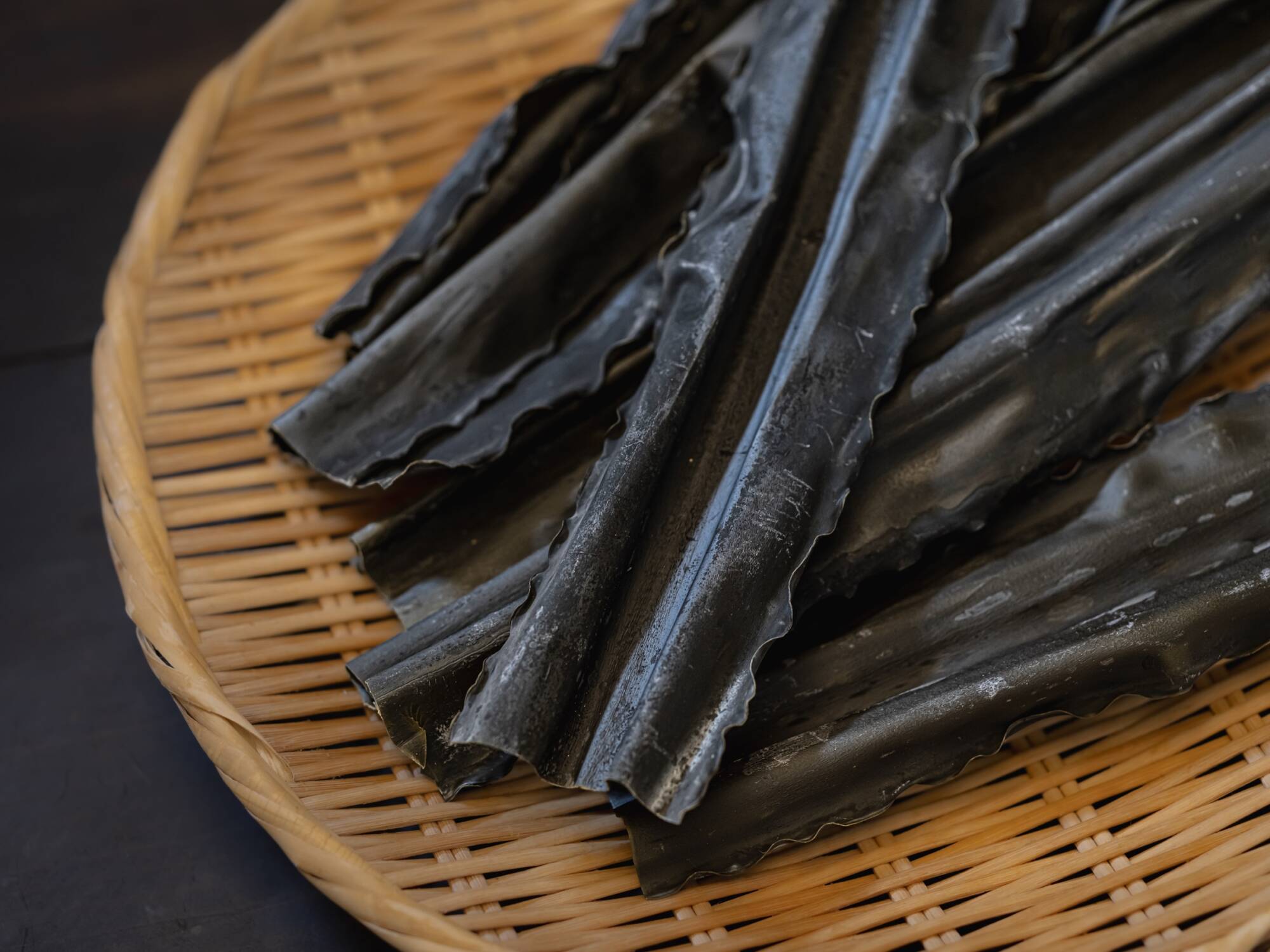
Taste of the Island
From a single piece of kelp, the richness of the northern sea.
Essential to the food of Rishiri is Rishiri kelp, known to chefs across the country. The kelp, which yields a clear dashi, grows in the sea and is carefully harvested and dried by fishermen.
In the rich sea where that kelp grows, sea urchin and other seafood gather too. Summer sea urchin is one of the great pleasures of visiting the island. Tasting freshly opened urchin or meeting dishes made with kelp, you feel how close the sea is.
No local specialty is unrelated to the state of the sea, the fishing season and people’s handwork. A dish in Rishiri holds the time of people who live with the sea at the foot of the mountain.
Where to Stay
Rishiri-Fuji and the sunset, from the same inn.
Island Inn Rishiri
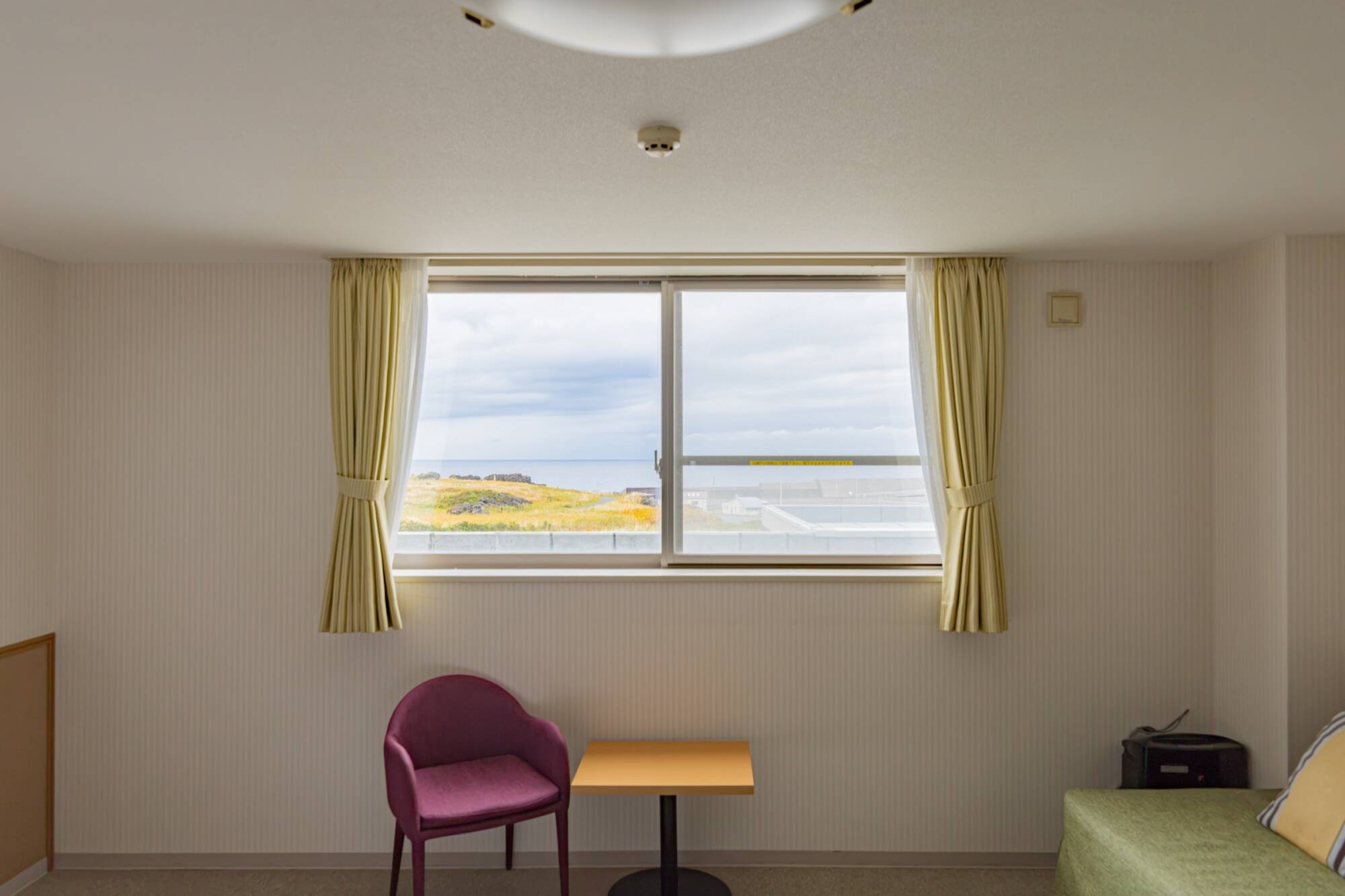
A hotel in Kutsugata on Rishiri’s west coast. It is blessed with a location from which you can see both the sun setting into the Sea of Japan and Rishiri-Fuji rising at the island’s center.
At day’s end, enjoy a meal with the island’s seafood and rest your body in natural hot springs and open-air baths. Beyond the window lie the mountain you walked by day and, across the sea, Rebun Island.
On a trip to Rishiri, the mountain is your guide wherever you go. You can spend a quiet night recalling the scenery you met around the island.
Getting There
Getting to Rishiri
Rishiri Island can be reached by ferry from Wakkanai or by air from airports in Hokkaido.
By air
- New Chitose Airport → Rishiri Airport: about 1 hour by air (check operating days and seasons)
- Rishiri Airport → Island Inn Rishiri: about 15 minutes by car
By ferry
- Wakkanai Ferry Terminal → Oshidomari Port, Rishiri Island: about 1 hour 40 minutes
- Oshidomari Port → Island Inn Rishiri: about 20 minutes by car
From Rebun Island
- Kabuka Port → Oshidomari Port: about 45 minutes by ferry
- A Kabuka Port → Kutsugata Port route also operates seasonally. From Kutsugata Port, the hotel is about 5 minutes on foot.
Getting around the island
Rental cars, sightseeing taxis and cycling are convenient for touring the island. Hotel transfers from the airport and Oshidomari Port are by advance reservation (details for next year’s operation to be confirmed).
* Inter-island routes and flights vary by season. Island Inn Rishiri operates seasonally, and for 2027 is scheduled to open on May 22.
Tamano / Uno Port, Okayama
SetouchiA sea for traveling between islands
Here, the sea becomes the road.
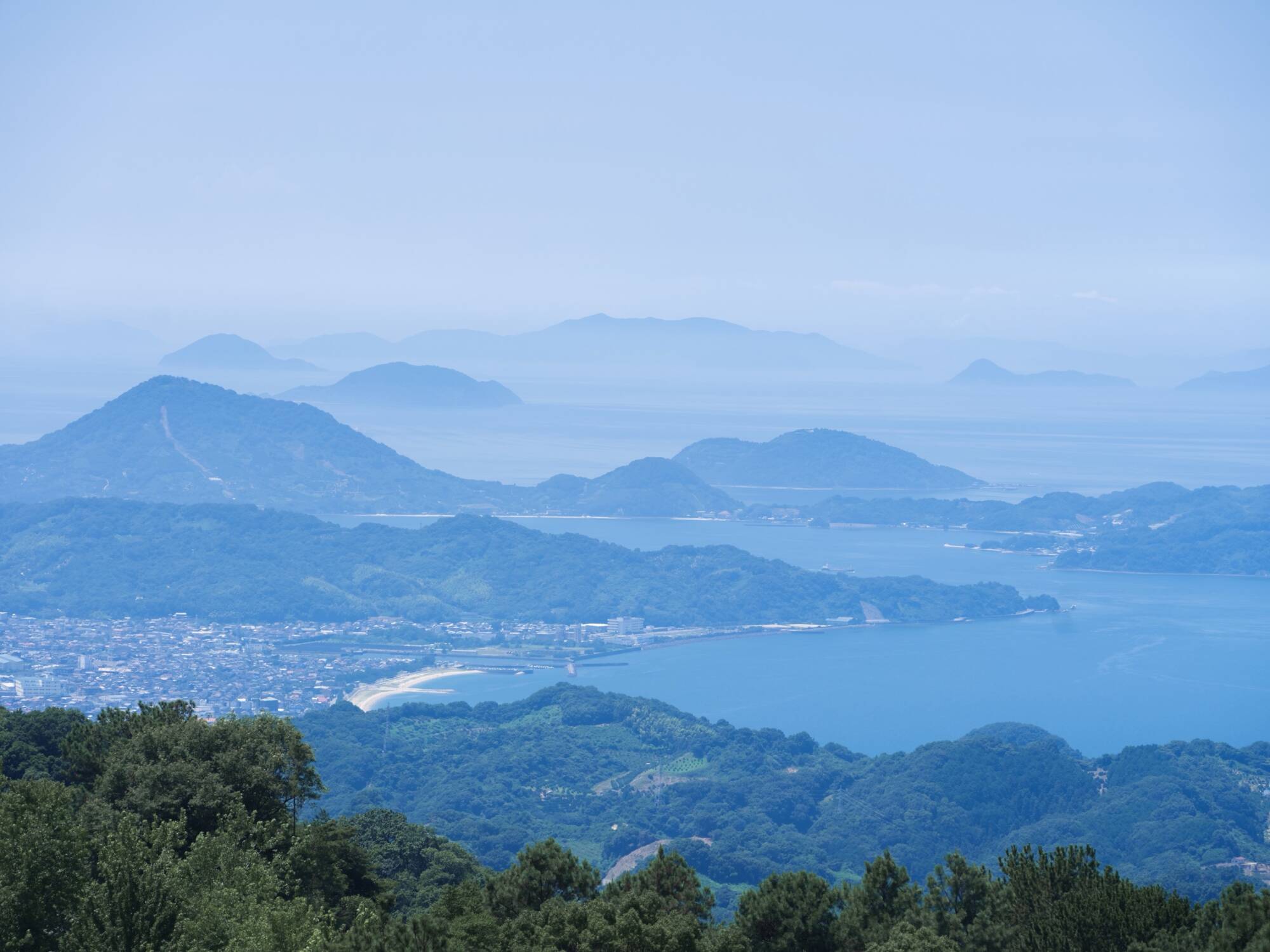
On the morning the ferry leaves Uno Port, island silhouettes overlap beyond the quay.
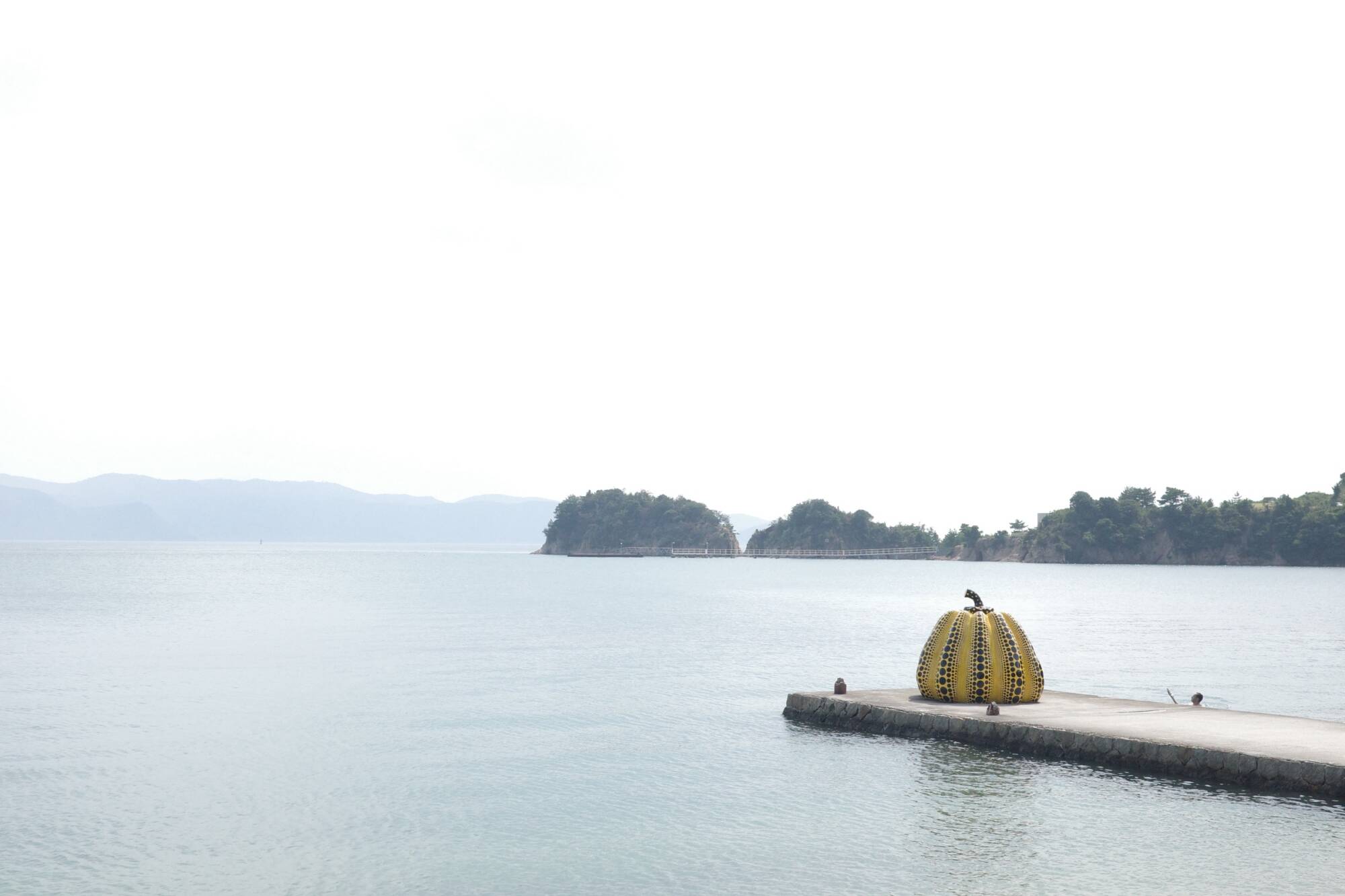
Cross by boat to Naoshima, where Tadao Ando’s architecture and contemporary art gather. A little farther, Teshima has a museum that blends into a terraced hillside. Leave the museum and walk the village, and everyday life goes on as usual.
A journey among the Setouchi islands is not only about viewing works one by one. Even the time spent crossing the sea becomes part of the scenery of the trip.
The Story of the Island
A story of islands and art that begins at the port.
The Seto Inland Sea has long been a sea where people, goods and culture came and went. In 1910, Uno Port on the Honshu side became an important gateway to Shikoku with the start of the Uko ferry service, and many travelers boarded boats here.
Now, what draws people across the sea is art nurtured together with the islands’ climate and culture. On Naoshima, efforts linking the community and art began in the 1980s, and architects and artists have created works using old houses and the island’s nature as their stage. On Teshima and Inujima too, expressions that confront each island’s history have spread.
The Setouchi Triennale, which began in 2010, became one of the catalysts for sharing the appeal of these islands with the world. Beyond museums, to ports, villages, fields and shores. Here is a journey to visit island life beyond the art.
Discover the Island
Three journeys from Uno Port
Meeting architecture and contemporary art on Naoshima
On Naoshima, works by world-renowned architects and artists blend into seaside scenery and old streets. Museums whose impression changes with natural light, art spaces made from former private homes. Beyond viewing the works, the time spent in the place itself becomes the experience.
Places to visit
- Chichu Art Museum
- A museum designed by Tadao Ando, with most of the building buried underground. Face works by Claude Monet, James Turrell and Walter De Maria in natural light.
- Art House Project
- A project that has revived old houses and a shrine in the Honmura district as contemporary art spaces. Walk alleys where daily life remains and feel the relationship between the works and the town.
- Benesse House Museum
- A museum designed by Tadao Ando. Works are scattered not only indoors but also along the shore and in the surrounding nature.
- Naoshima New Museum of Art
- A museum designed by Tadao Ando that opened in 2025. Encounter contemporary art centered on Asian artists.
Walking the border between nature and art on Teshima
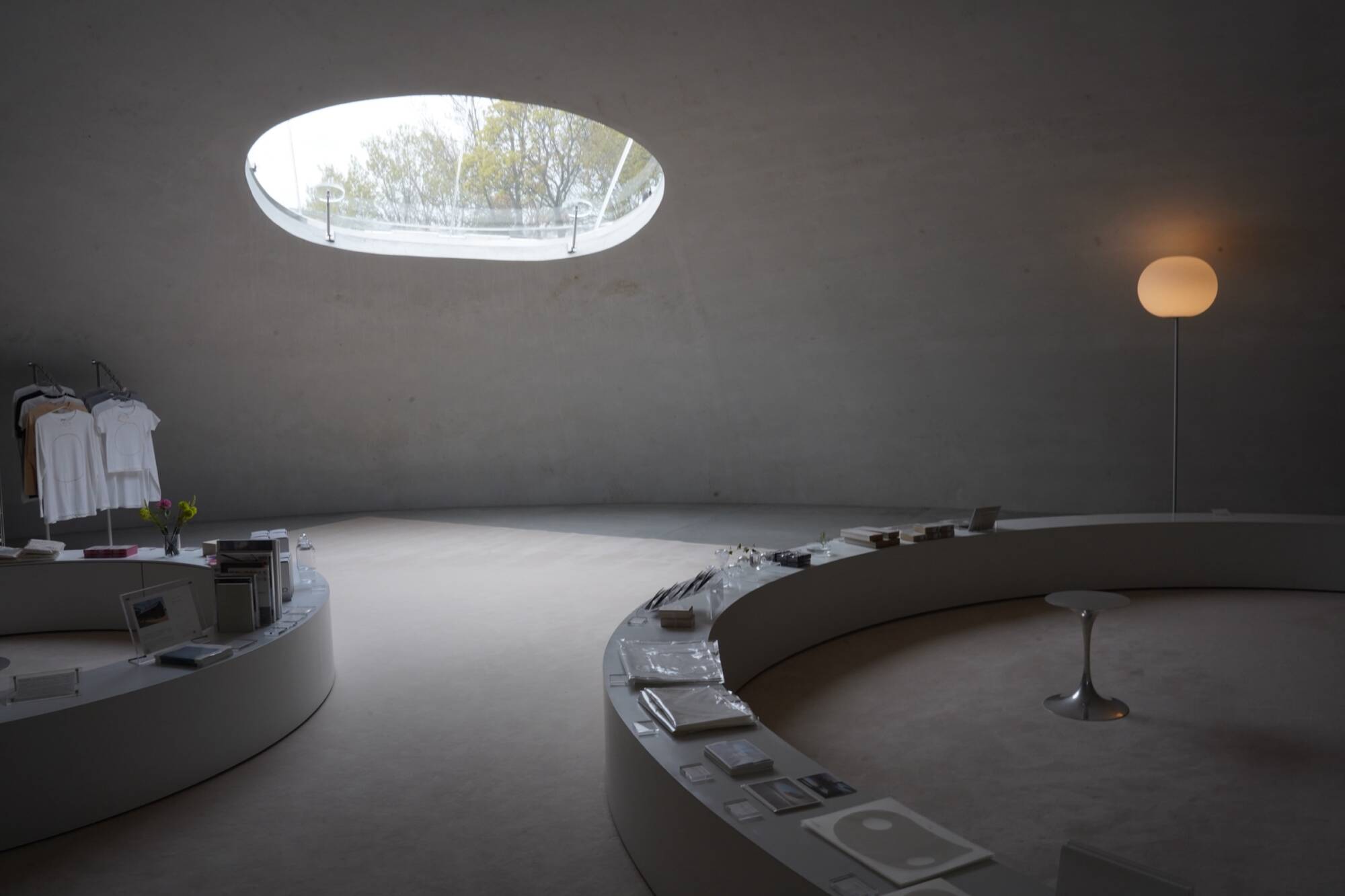
Terraced fields and villages, a calm sea. On Teshima, works seem to melt into the landscape. Step outside the museum and fields and houses continue, reminding you that nature and human life cannot be separated. The island’s history of experiencing a serious industrial waste problem and working to restore its environment is also an important part of understanding it.
Places to visit
- Teshima Art Museum
- A museum on a terraced slope by Rei Naito and Ryue Nishizawa. Wind, light, sound and water resonate, a space where you can feel nature’s changes themselves.
- Karato Terraced Fields
- A farming landscape spreading over a slope overlooking the sea. Walk slowly around the Teshima Art Museum and touch the island’s land and the lives of its people.
- Teshima Yokoo House
- A museum made from a renovated old house in the Ieura district. The work of Tadanori Yokoo meets the space of architect Yuko Nagayama within the village.
Walking Uno Port, and on to another island
Before heading to the islands and after coming back. At Uno Port you find a harbor scene with ferries coming and going, and art scattered through the town. Waiting for a boat is itself a rich moment on a sea journey. Go a little farther and you can reach Inujima, which links industrial memory to art.
Places to visit & things to do
- Art around Uno Port
- Works are scattered on sidewalks and plazas in the port town, including “Uno no Chinu” by Yodogawa Technique, made from driftwood. Enjoy them along with a stroll around the port.
- Inujima Seirensho Art Museum
- A museum that makes use of the ruins of a former copper refinery. Industrial heritage, environmentally conscious architecture and contemporary art coexist.
- Private cruising
- With a sea taxi from Uno Port or a hotel cruise plan, you can enjoy an island journey that combines time on the boat with your destinations.
Taste of the Island
The gifts of the tide, and the tables of a port town.
The calm-looking Seto Inland Sea is a rich fishing ground nurtured by tidal currents and the changing seasons. Spanish mackerel in spring, sea bream and octopus, and small fish such as mamakari: the towns along the coast keep flavors unique to the place.
In Okayama, barazushi, scattered sushi piled colorfully with fish and vegetables, has long graced tables on festive days. Crossing to the islands, simple plates of local vegetables met in local eateries are also part of the pleasure of travel.
Stop by a harbor eatery on your way around the art. Watch the fishing boats return and taste the day’s catch. The food culture of Setouchi lives in the everyday lives of people who live with the sea.
Where to Stay
A base for crossing the sea, inside a velodrome.
SETOUCHI KEIRIN HOTEL 10 by Onko Chishin
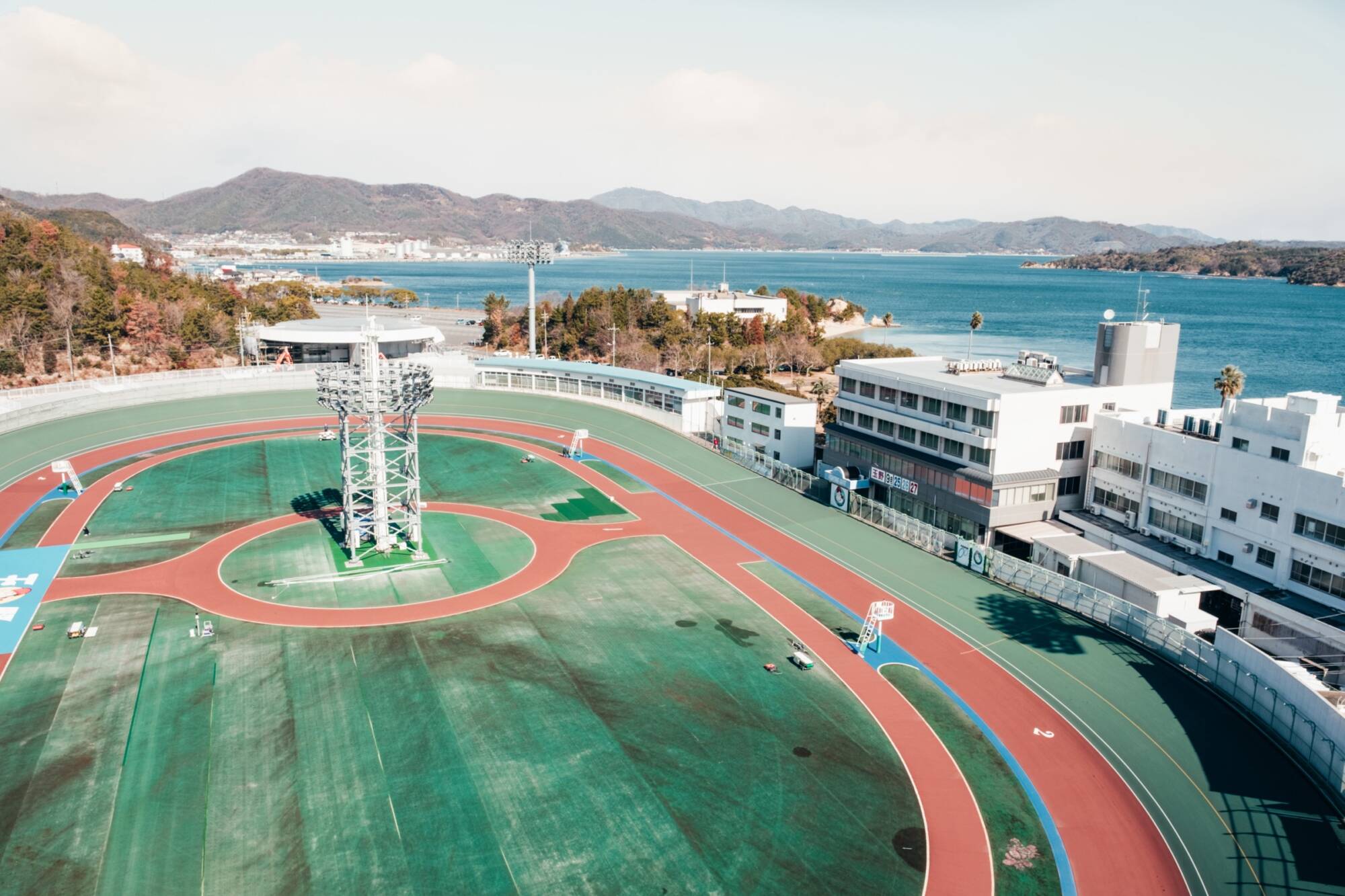
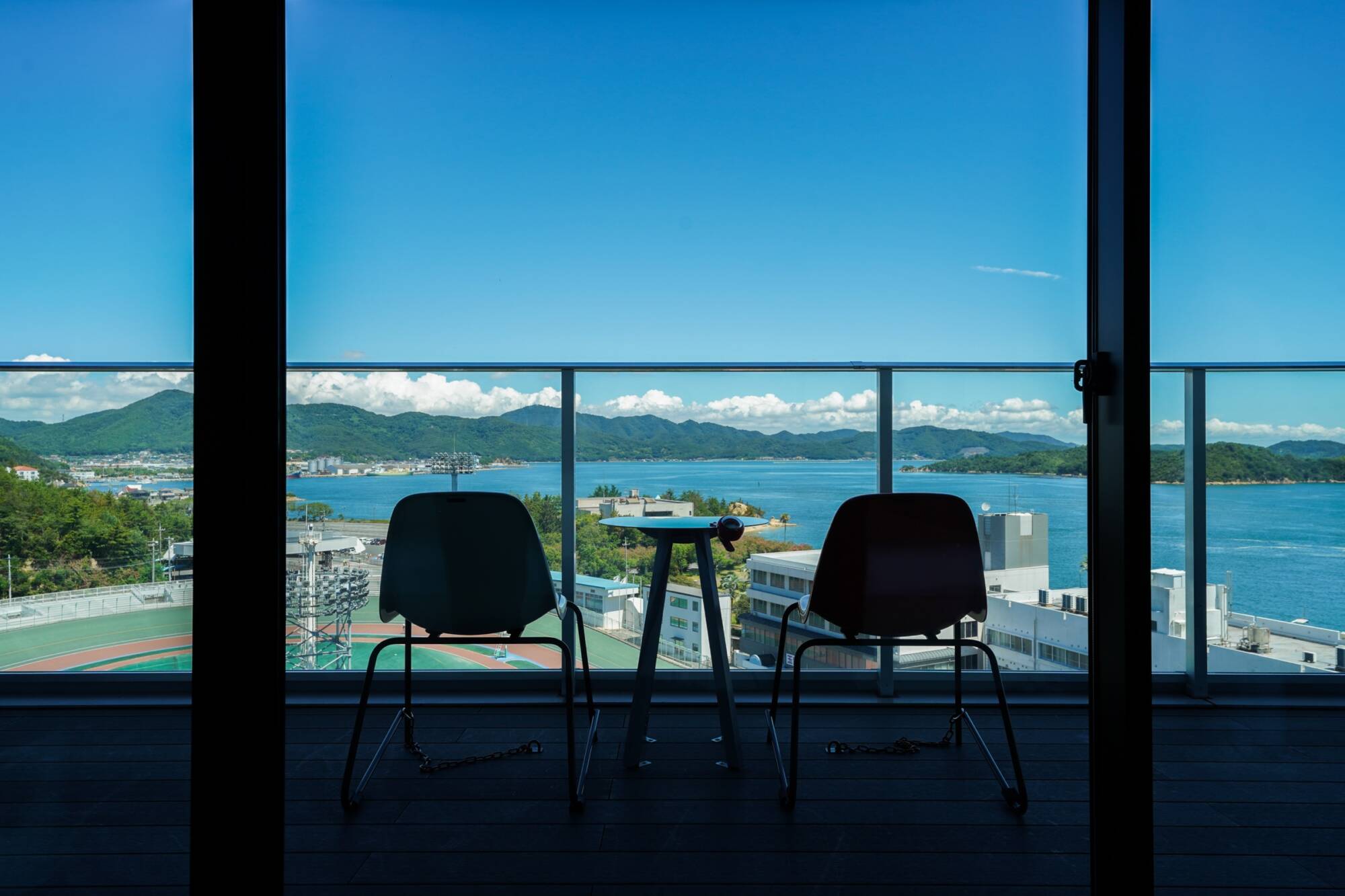
About 5 minutes by car from Uno Port, the gateway to Naoshima and Teshima. Japan’s first stadium-integrated hotel, joined to the Tamano Keirin velodrome. Its 149 guest rooms include rooms overlooking the keirin banking and rooms with terraces looking over the Seto Inland Sea.
A playful design inspired by keirin and bicycles, and a space that reuses scrap material from the old stadium as furniture. Inside are a gallery introducing keirin culture and a large public bath. Experiences that extend your journey into local culture are also available, such as Bizen ware making, cycling and private cruising.
Board a boat from Uno Port in the morning to the islands. Return to the port town at dusk, and tomorrow visit another island. Curiosity about what lies across the sea brings the next day.
Getting There
Getting there from Uno Port
Uno Port is in Tamano, Okayama Prefecture, the gateway to Setouchi islands such as Naoshima and Teshima. The hotel is on the Honshu side, near Uno Port.
From Okayama to Uno Port
- JR Okayama Station → JR Uno Station: about 50 minutes to 1 hour on the JR Uno Minato Line and others
- JR Uno Station → Uno Port: about 5 minutes on foot (varies with the pier of the boat you use)
- SETOUCHI KEIRIN HOTEL 10 → Uno Port: about 5 minutes by car / about 20 minutes on foot
From Uno Port to the islands
- Naoshima (Miyanoura Port): about 15 to 20 minutes by regular boat or ferry
- Teshima (Ieura Port and Karato Port): about 25 to 40 minutes by regular boat (depending on the sailing and port of call)
- Shodoshima (Tonosho Port): about 1 hour (depending on the route and sailing)
- Inujima: about 45 minutes by sea taxi from Uno Port. If you use regular boats, access is generally from a different port.
Getting around the islands and preparing for the trip
On Naoshima, local buses and rental bicycles are convenient, and on Teshima too, local buses and rental bicycles. Besides regular boats from Uno Port, you can also choose a sea taxi by reservation.
* Some museums require advance reservations for a specific date and time, and closing days differ. Departure ports, arrival ports and last sailings differ by island, so please check your reservations together with the ferry timetable.
Other experiences
Read next
After island journeys, themes your heart turns to next.
Scenic Views
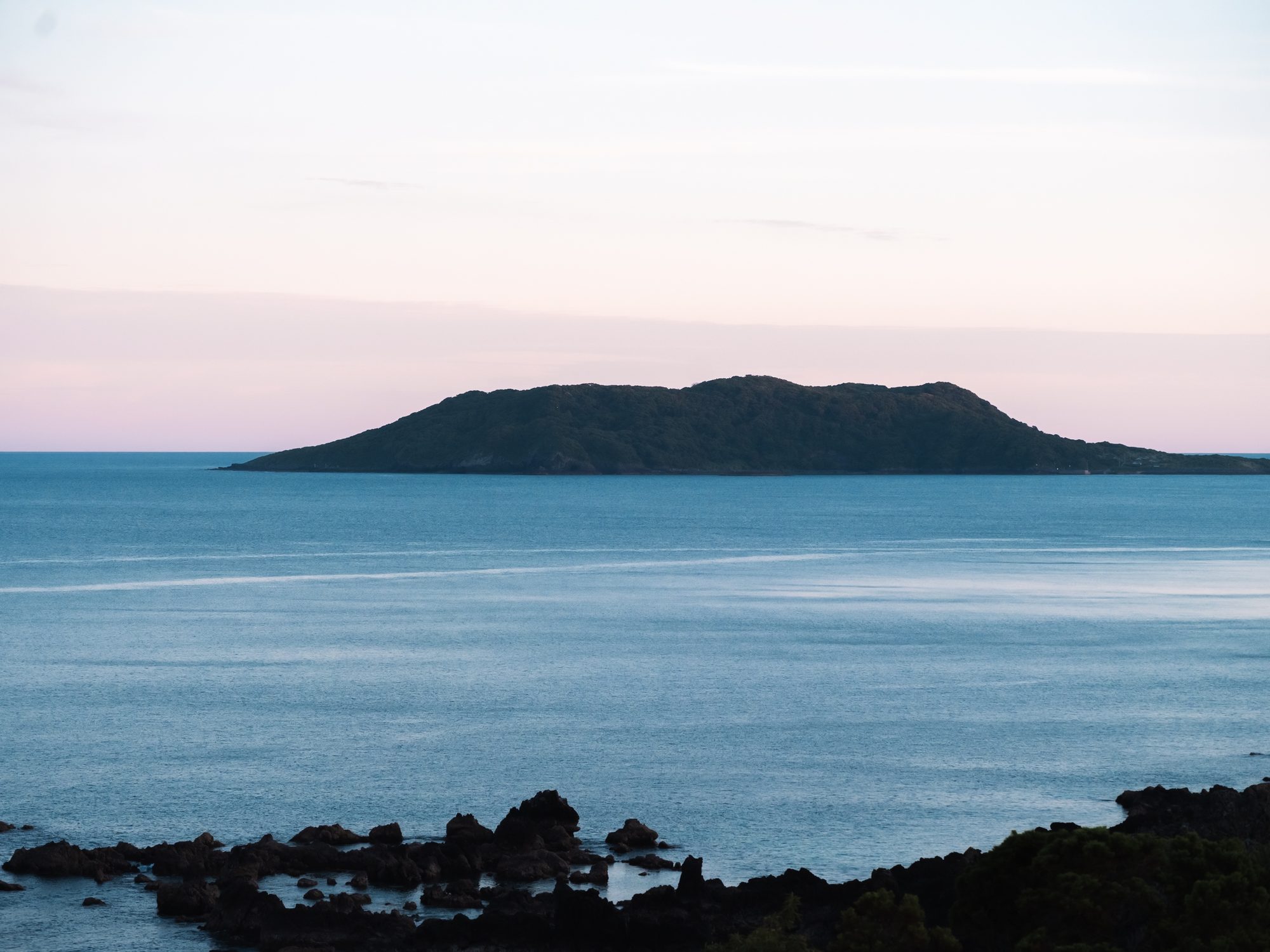
From morning to night, season to season. From island inns where the color of the sea tells the time to windows looking onto the five peaks of Aso and the Northern Alps, stay within shifting scenery.
Culinary
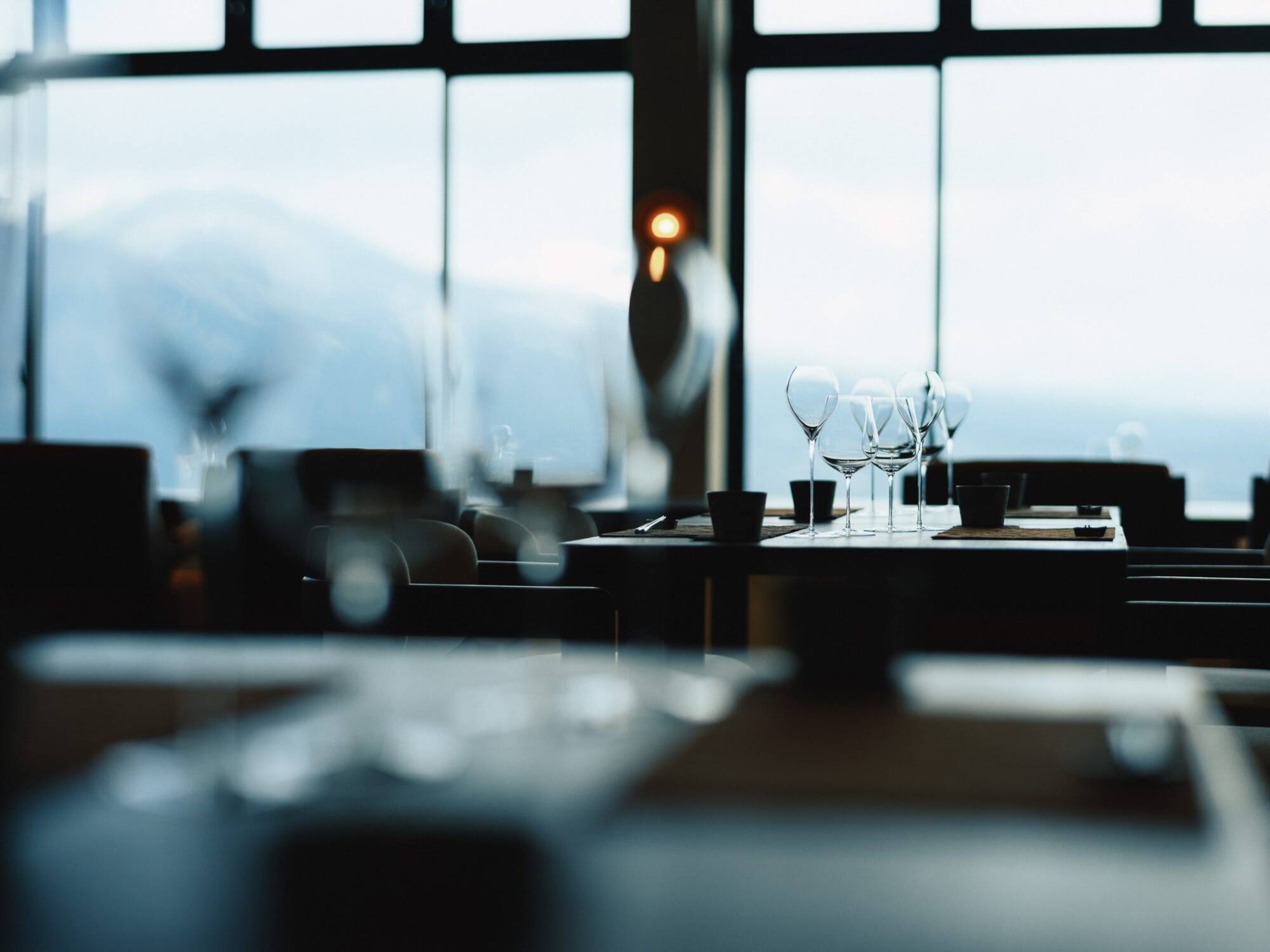
“The bounty of the land, enjoyed in its place.” Local gastronomy and respect for producers, from kaiseki and French cuisine to sushi paired with champagne.
Arts & Culture
Camellia oil pressing, coloring oni kites, Bizen ware, glassblowing. Beside those who make and those who pass down stories, meet the time of the place.