
Experiencing Keirin Up Close: SETOUCHI KEIRIN HOTEL 10, Born from the Novel Idea of Watching Races While Staying
2026 - 06 - 01
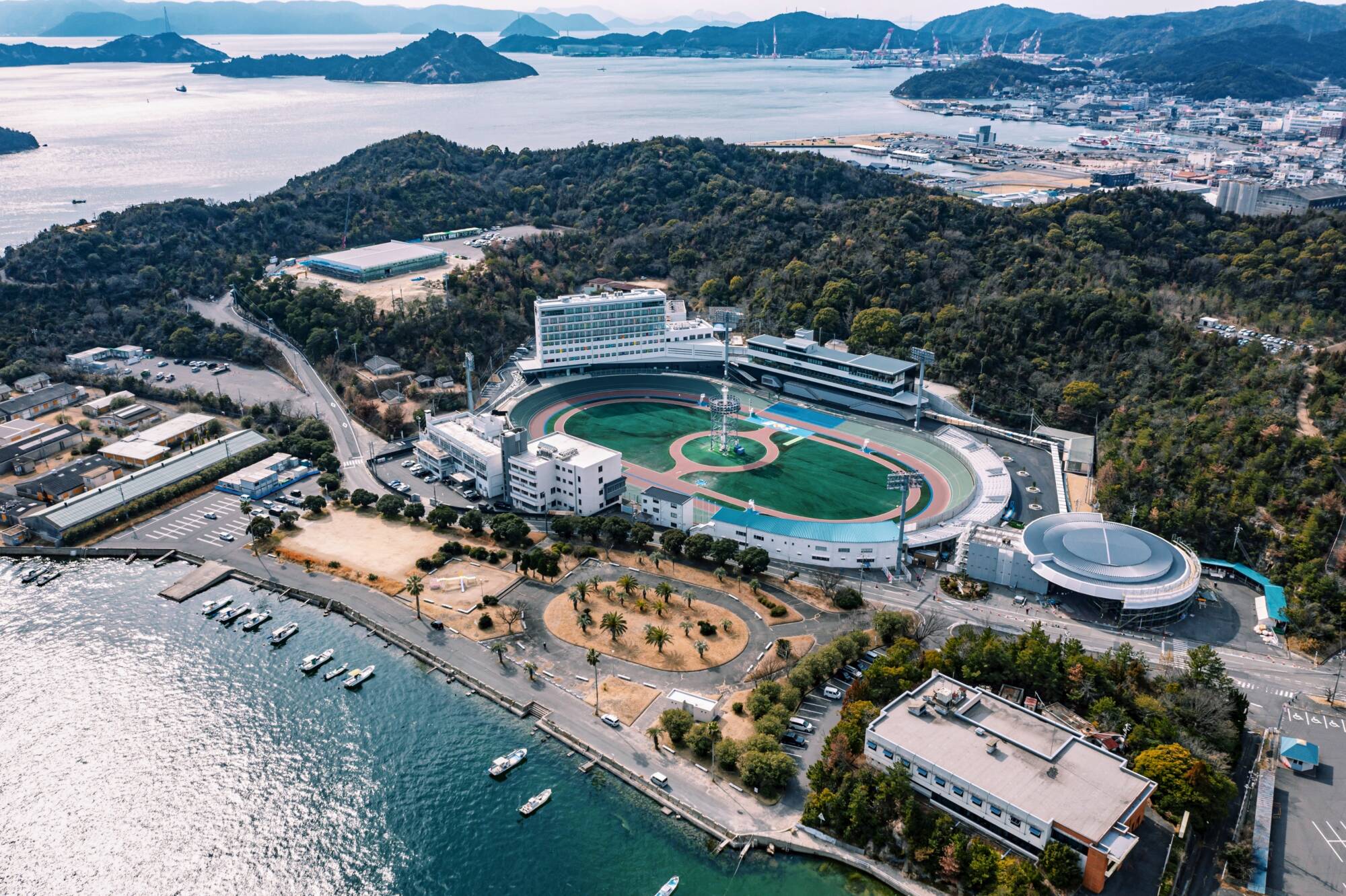
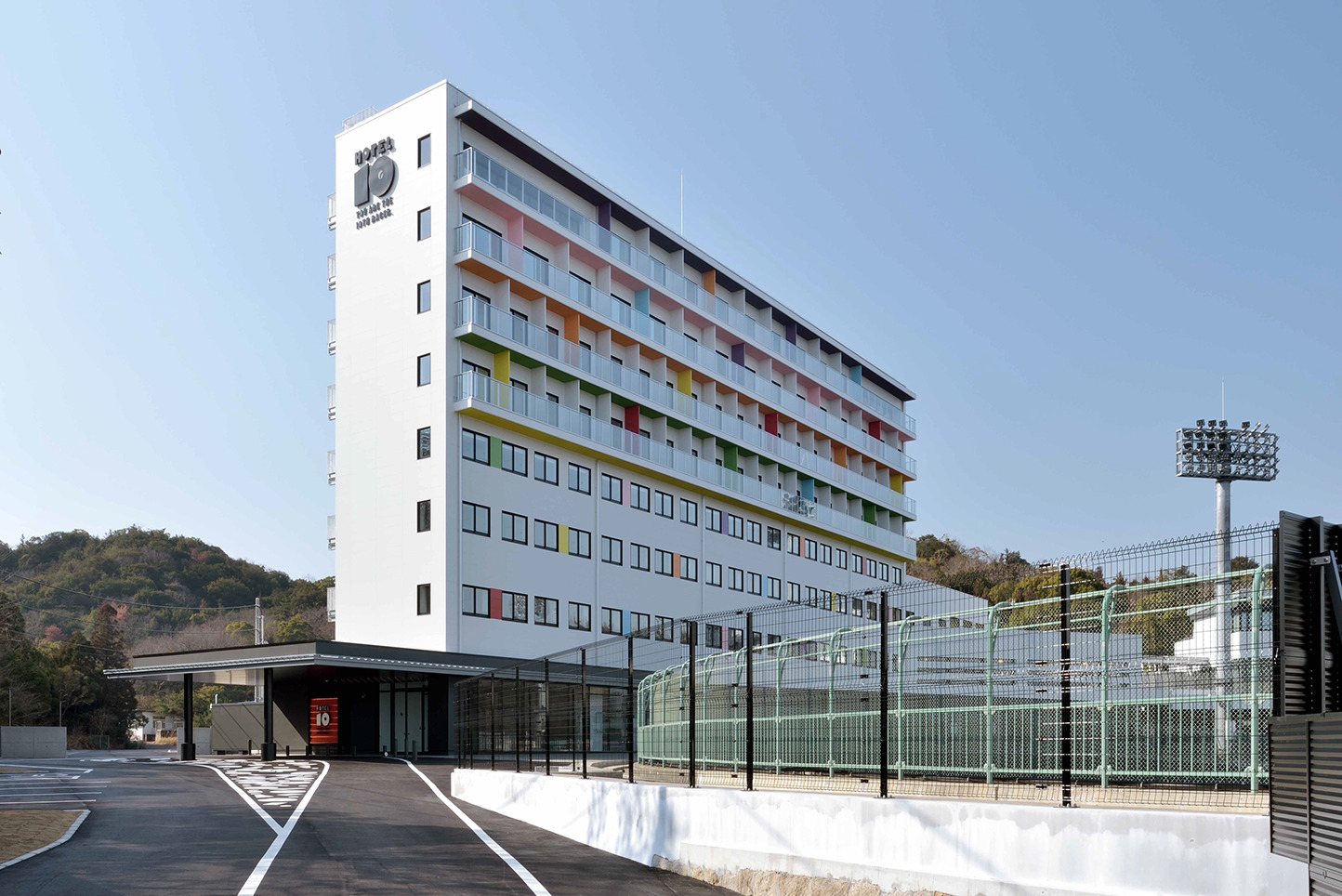
Tamano, Okayama. In this port town overlooking the Seto Inland Sea stands SETOUCHI KEIRIN HOTEL 10 by Onko Chishin, known as Japan’s first stadium-integrated hotel.
Before it lies Tamano Keirin Velodrome. Why build a hotel next to a velodrome, a place usually seen as somewhere to watch races? Behind it was the idea of opening up keirin culture in a new form.
Keirin memories built up in a port town
Keirin is a public racing sport born in Japan in 1948, and over a long span of time it has taken root in communities through velodromes across the country. Tamano Keirin Velodrome, opened in 1950, has stayed alongside the history of this port town for more than 70 years.
Still, keirin has carried something of an image as a “culture only for those in the know.” SETOUCHI KEIRIN HOTEL 10 set out to open up that image: a place that people unfamiliar with keirin can visit naturally, and a hotel that carries keirin culture into the next era. That is the idea from which this place was born.
Translating keirin culture into space
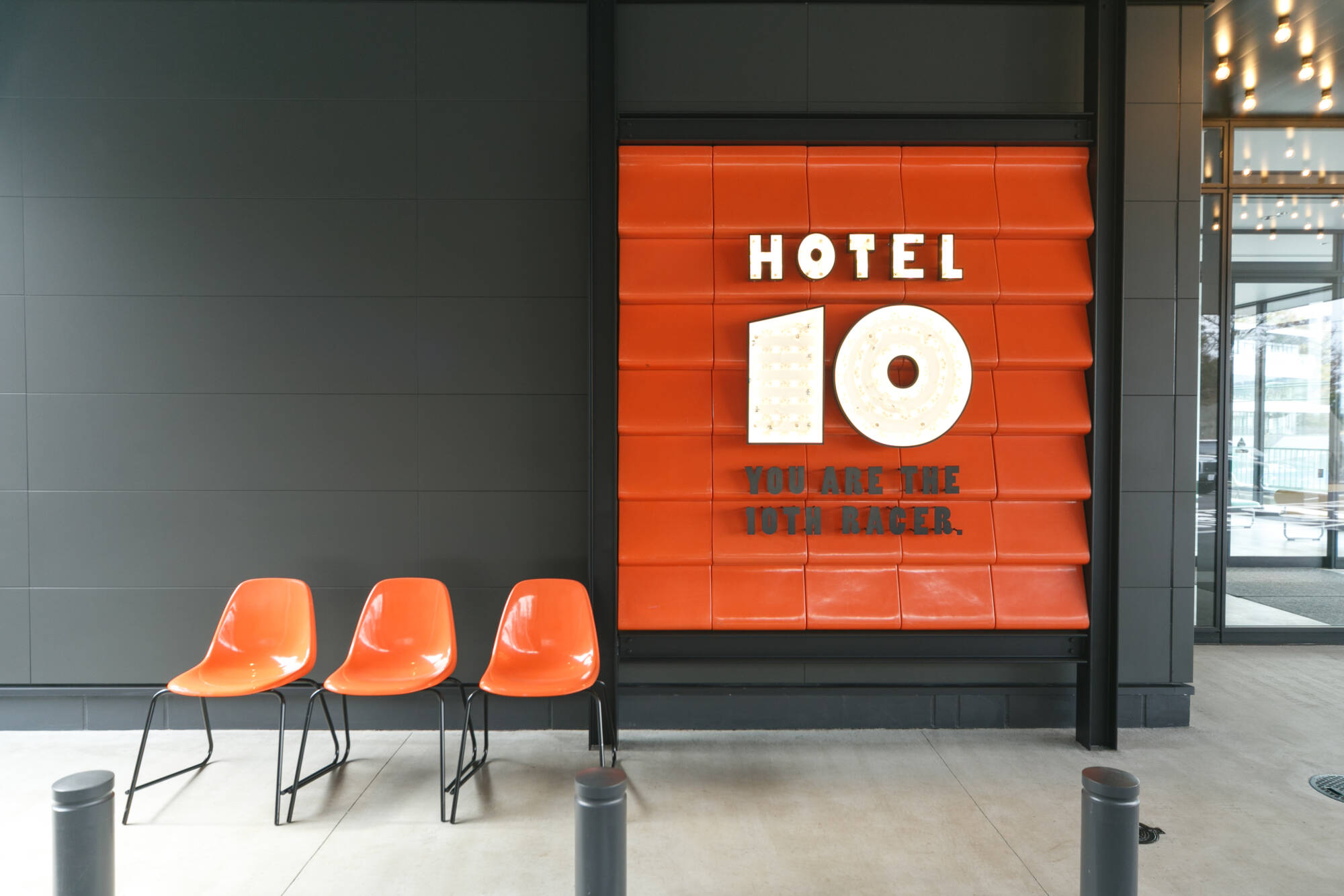
Stepping inside, the first thing you notice is a light, keirin-inspired design. There is a reason for the “10” in the hotel’s name. Keirin is mainly raced by nine riders, and guests stay as if they were the tenth. The concept “YOU ARE THE 10TH RACER” is contained in that number.
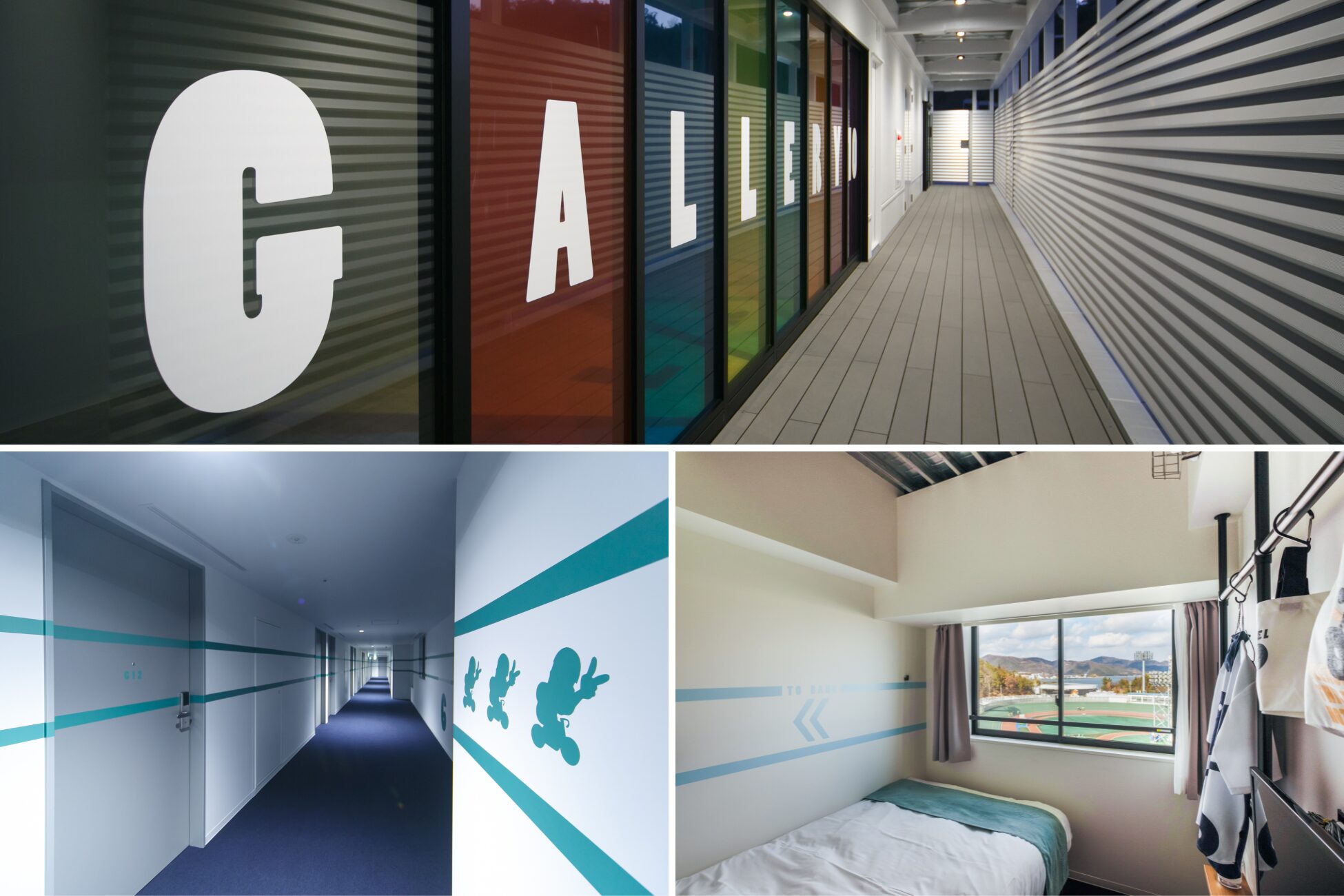
Each guest room floor is colored after one of the nine keirin rider-number colors. Graphics recall the lines of the track, and details convey the speed of a bicycle.
Rather than reproducing keirin as a sport, the hotel re-edits it as a hotel space, giving it a pop, approachable world. The reason even people who do not know keirin can enjoy it naturally lies in the accumulation of such “translations.”
Things that have finished their role are reorganized into new stories
One of the hotel’s defining features is the upcycling of materials that have finished their service at the velodrome.
Stadium seats have become hotel signage and furniture for the public spaces. The mascot of Tamano Keirin Velodrome, “Gutsu Tama-chan,” now appears as a silhouette on a large signboard that serves as a marker for the bathhouse. Seating charts from the paid stands have become restaurant tables. From the former Tamano Keirin Velodrome, bicycle frames and handlebars now cast new light as chandeliers and lamps.
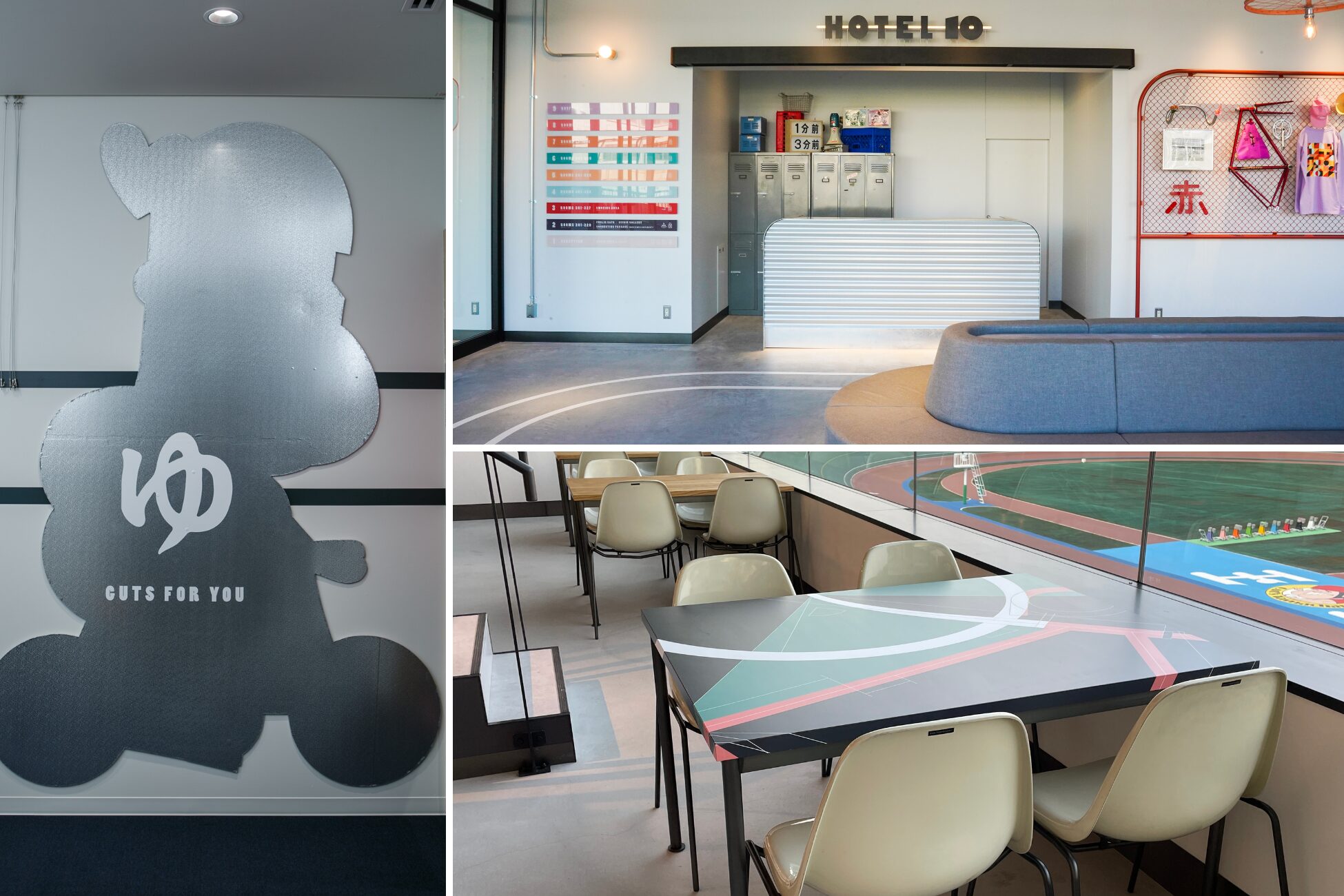
These are not mere decorations. Materials that supported countless races over many years are drawing breath again as part of the space.
Not “breaking the old to make something new,” but “inheriting and turning it into new value.” This philosophy also echoes the stance that Onko Chishin has long cherished.
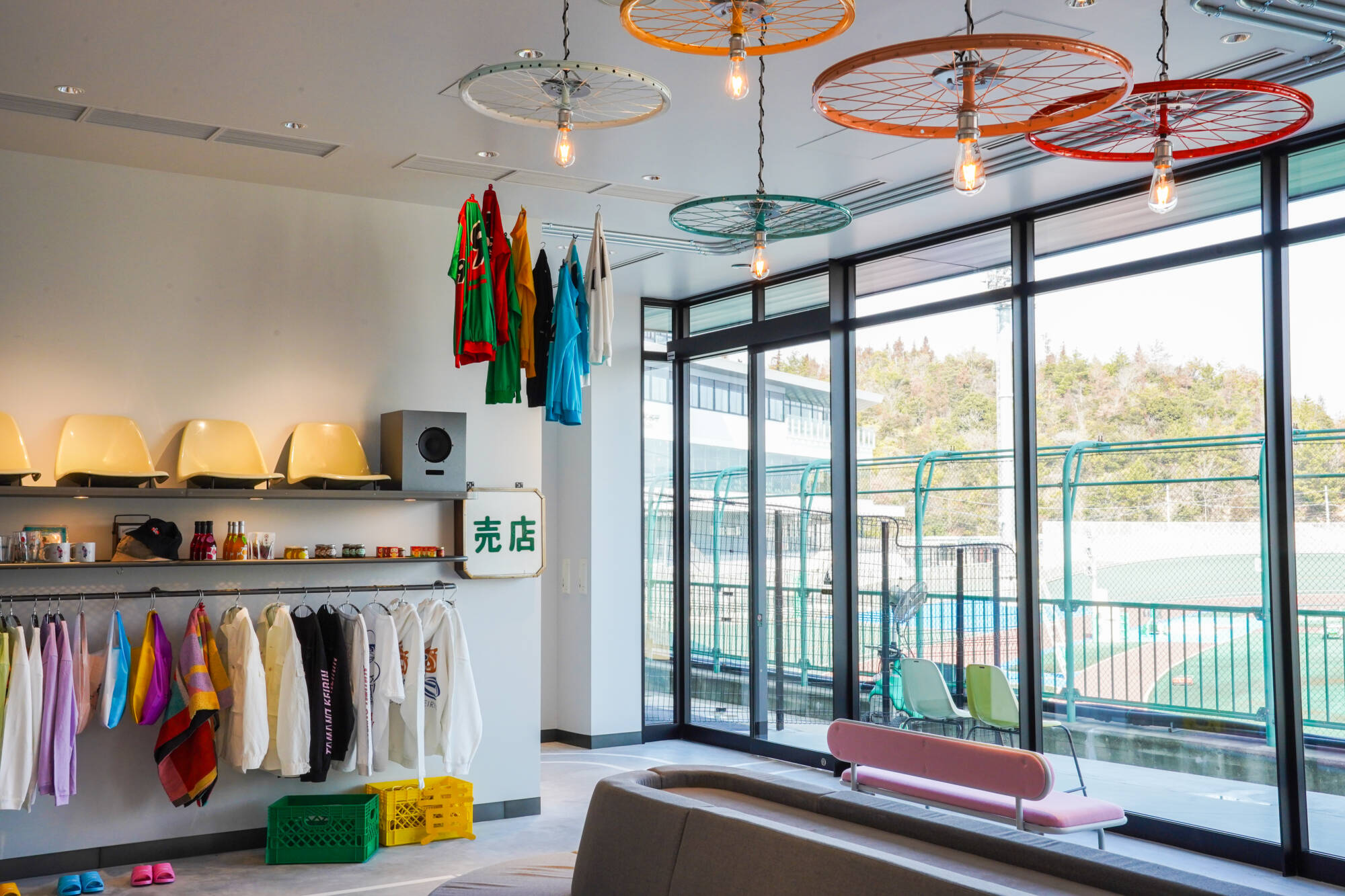
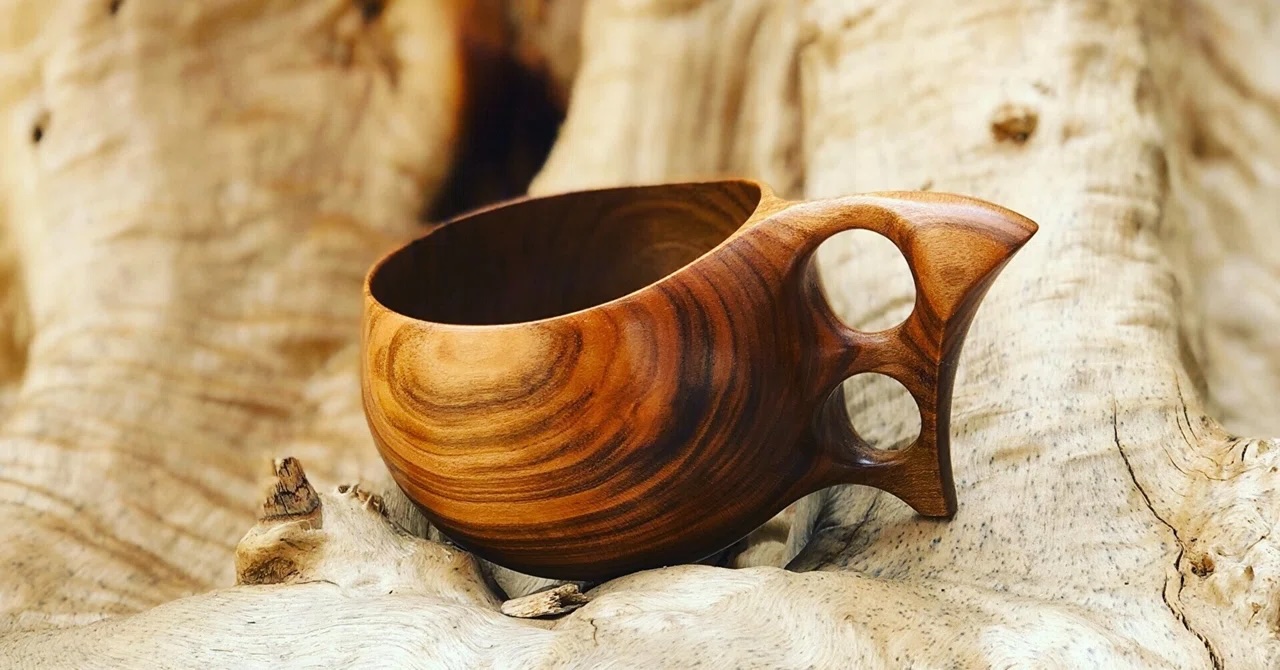
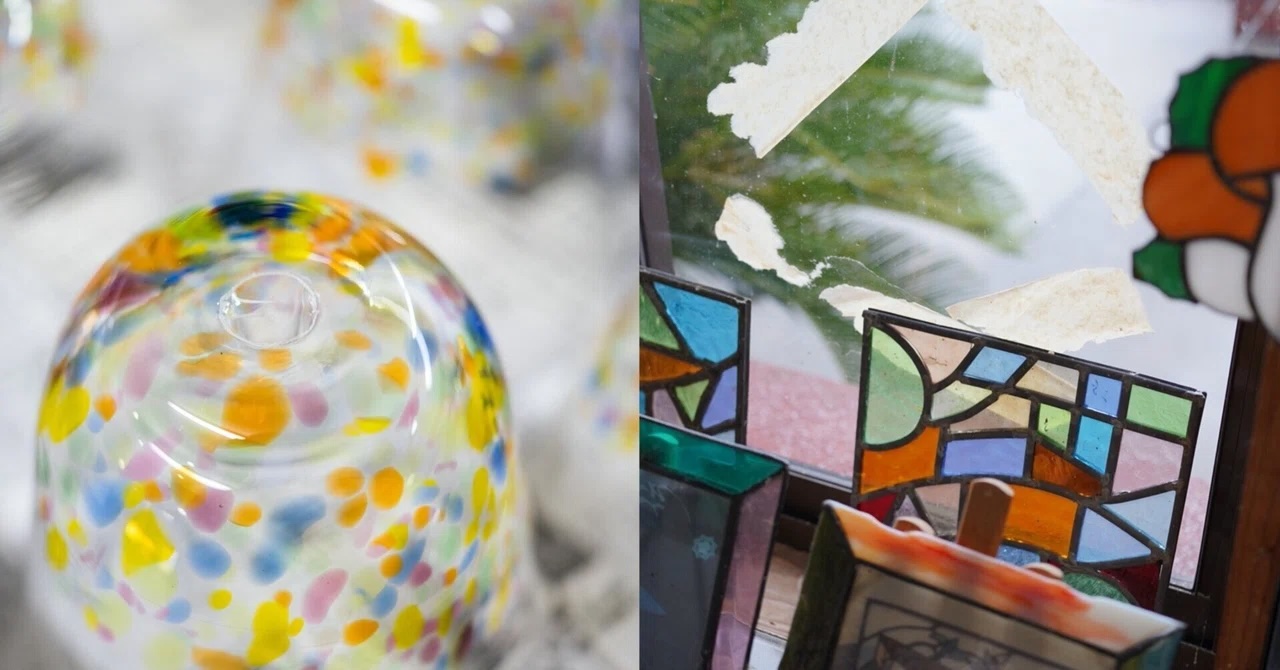
In recent years, events and exhibitions themed on upcycling have also been held.
Rather than “preserving” keirin culture, the hotel renews it into new expressions by combining it with contemporary sensibilities. That accumulation is cultivating a culture unique to this place.
▶︎Summer 2025: Indigo dyeing experience and pop-up event with three local brands
A stay found only here, surrendering to the time of the velodrome
From the guest rooms, the lounge and the terrace, you can look out over the actual velodrome.
On race days, the riders’ speed and the crowd’s cheers reach you directly. You feel the fleeting tension of the track from your room, at a distance never before possible. On days without races, stillness spreads across the vast track. The same view takes on an entirely different expression, and you can feel that change fully during your stay.
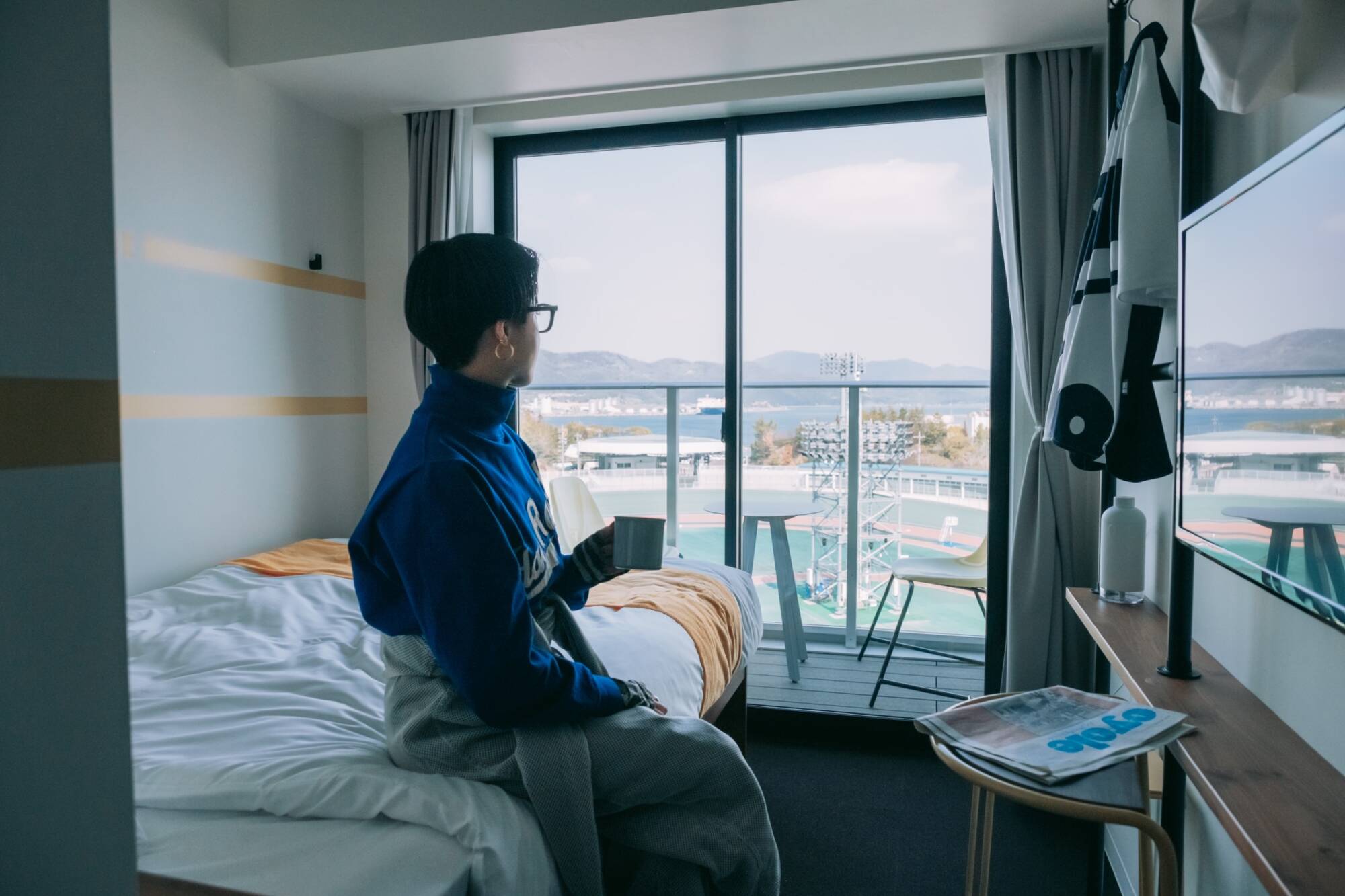
The hotel also has a restaurant and a bathhouse including a sauna. The bathhouse is open to guests and the general public only when no races are being held, because during race periods the keirin riders also use the hotel as their lodging. The everyday life of the sport is built right into the hotel’s operating rhythm. That, too, is part of what makes this hotel unique.
Toward a new destination for the region
SETOUCHI KEIRIN HOTEL 10 was never meant to be an inn only for keirin fans.
It aims to create a new reason to visit Tamano, to open up keirin as a regional asset to more people, and not only to protect an existing culture but to re-edit it as new value. This stance also echoes Onko Chishin’s belief: “Find the light of a place. Polish it, and deliver it.”
Whether you already know keirin or are encountering it for the first time, a stay reveals views that watching alone could not. That accumulation brings the culture of keirin closer to everyday life. SETOUCHI KEIRIN HOTEL 10 is expanding what a velodrome can be while creating a destination for a new kind of journey.