
[GOTO RETREAT ray by Onko Chishin] Discovering Local Crafts in the Goto Islands: Part 2
2022 - 10 - 20
In Part 1, we visited the glassmaking handed down in Nagasaki and the stained glass nurtured within Goto’s church culture.In Part 2, we meet a woodworker who makes vessels and cutlery from the trees of Fukue Island,Yoshihito Sakaguchi of “wan -made in Gotoislands-.”
Using trees that grew on the island, he reads the character of each piece and shapes it into tools for daily life. Following his work reveals what it means to make things alongside Goto’s nature.
Making tools for daily life from the island’s trees
The Goto Islands are home to a wide variety of trees, including shii, oak and camellia.
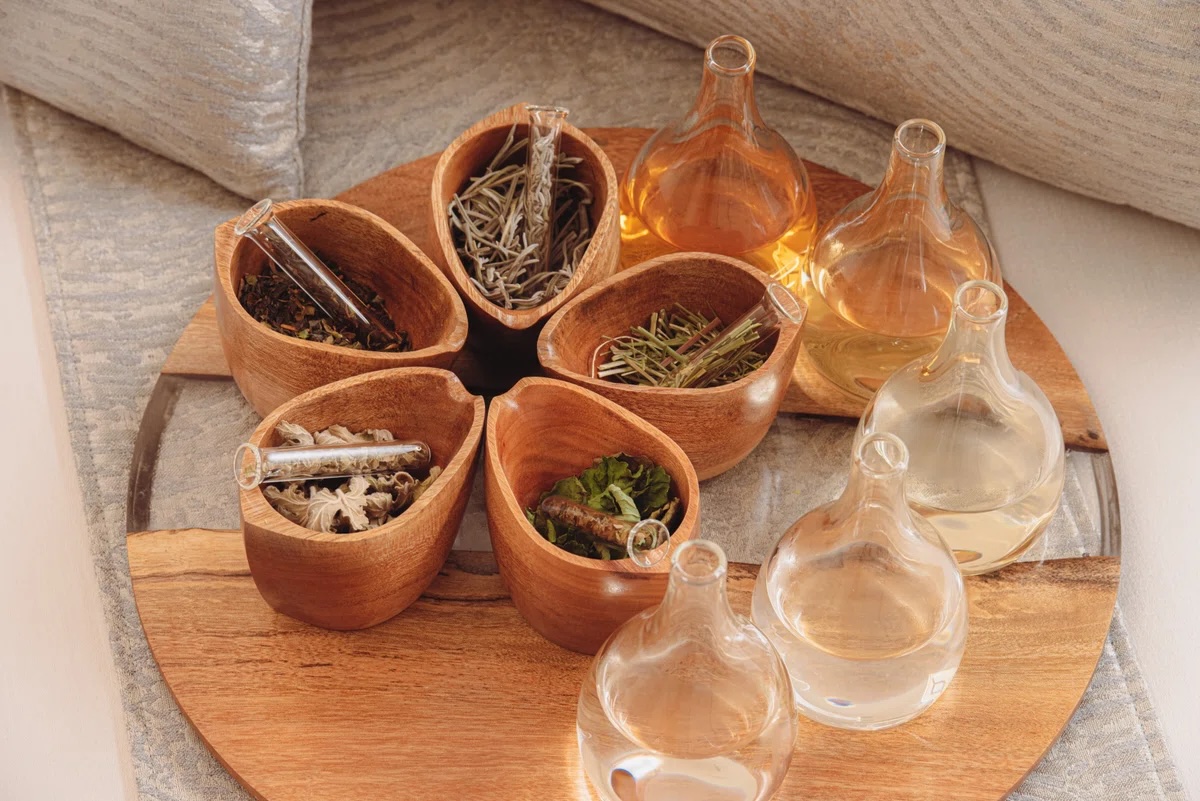
On Fukue Island, Yoshihito Sakaguchi of “wan -made in Gotoislands-” makes vessels, cutlery and more from the island’s trees.Mr. Sakaguchi’s pieces bring out the expression of the wood while pared down to clean, refined forms. GOTO RETREAT ray carries some of them in its spa and shop.
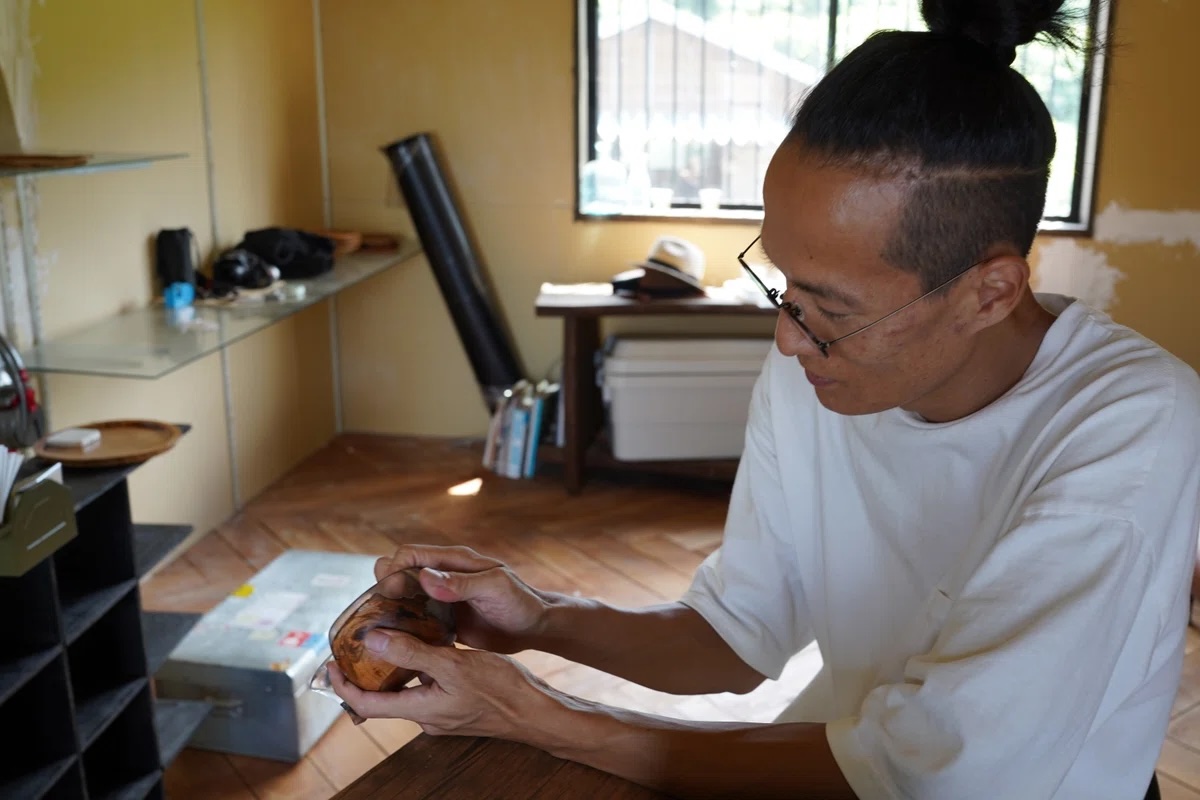
Yoshihito Sakaguchi of “wan -made in Gotoislands-”
Mr. Sakaguchi returned to Goto about nine years ago. He had left the island after high school and lived in Nagoya before coming back to his hometown.What caught his eye then was the thinned wood that had nowhere to go on the island.
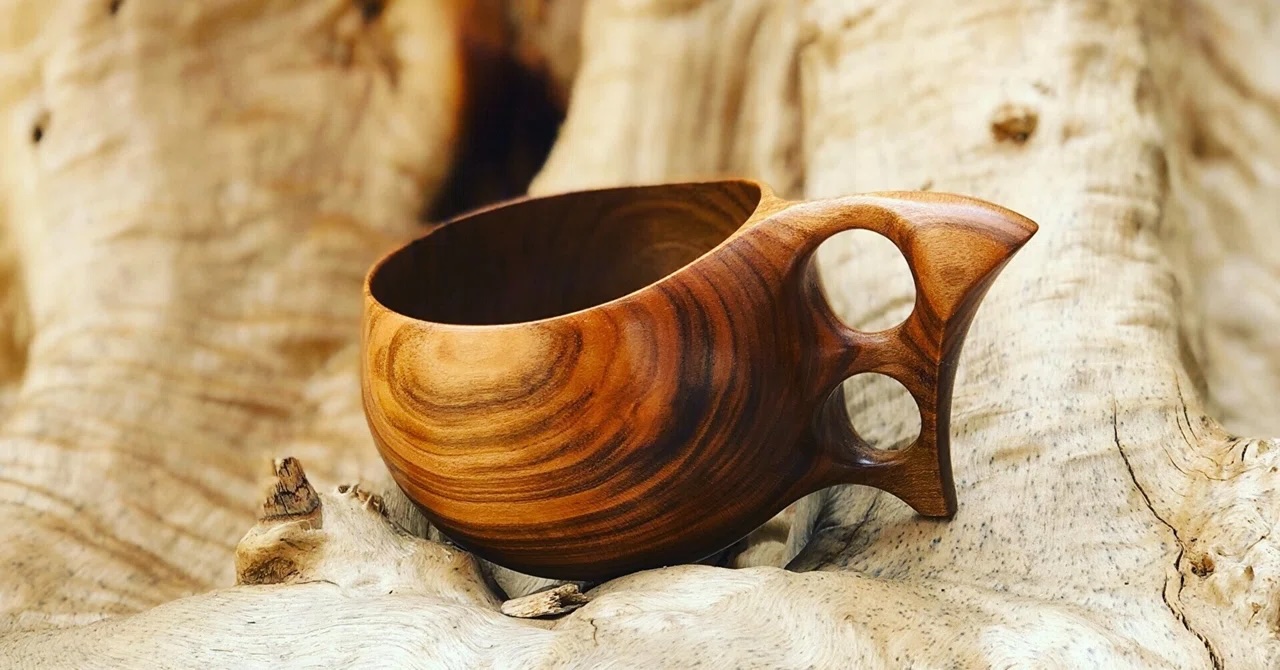
“Thinned wood that no one would take could only be thrown away, which seemed wasteful. I wondered whether it could be put to use somehow. It was while I was thinking about that that I came across the traditional Finnish wooden cup, the kuksa.”
At first he began making while keeping another job, gradually widening where he worked, from exhibiting at local markets to selling on consignment at cafes.He later took up woodworking in earnest, learning a range of techniques and building his own style.
“The Finnish kuksa is made from a birch burl and has a very wild feel, but I wanted to make it easier to use every day, something that blends into daily life. Tableware that is essential to people’s lives, simple and strong, yet suited to any occasion.”
Keeping the expression of the material itself while shaping it into a form that is easy to use as an everyday vessel. In Mr. Sakaguchi’s work, which he handles from design to making, both the character of the wood and a clean form are evident.
A phone call to the studio after a typhoon
What Mr. Sakaguchi mainly uses now is thinned wood from the island and timber left without a place to go after demolition and similar work.He does not process the wood he gathers right away. He lets it air-dry in the studio for about three to five years, then mills it according to its condition and carves out each form one by one.
A kuksa is carved from a square block into a single vessel. By milling the logs himself, he says, he can read the grain and decide which part to use for which vessel.As he kept working, people on the island began to consult him about trees.
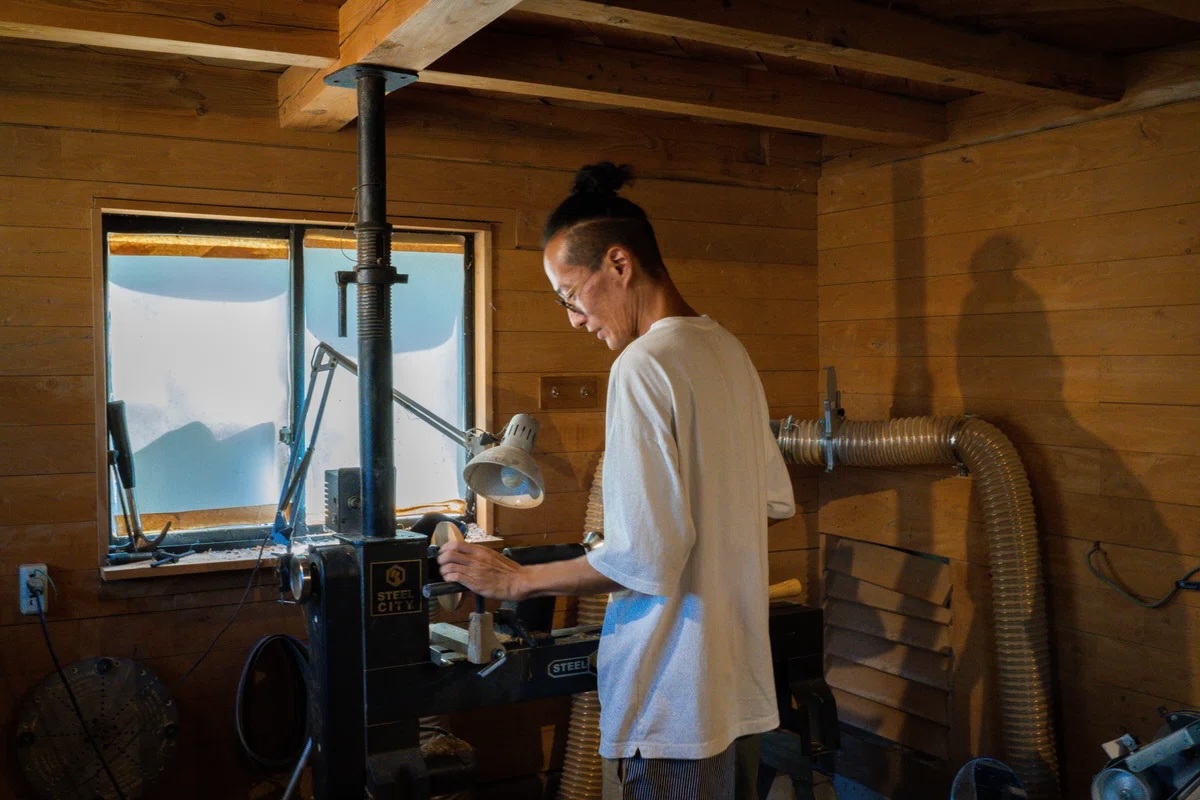
“After I had been at it for a while, I started getting calls from all sorts of places asking me to cut down trees. My father taught me how to cut, and I began going out to do it myself. The phone rings a lot after typhoons in particular. Trees often fall, and that is when people call me.”
Trees brought down by typhoons, and trees that have to be felled for management.
Wood that would otherwise have had no use is carried to Mr. Sakaguchi’s studio, dried over time and in due course passes into someone’s life as a vessel.His making is not complete at the point of crafting a piece; it begins with the relationship with trees that arises in island life.
Reading the character of each tree, one by one
“When I make things, I realize that wood is a living thing too. As I carve, I sometimes find insects living inside, and each piece differs in expression and softness, each with its own character. Occasionally I come across a piece of wood that gets me really excited, and I am surprised that a tree with such good grain existed on the island.”
Mr. Sakaguchi’s pieces now use a variety of woods, including cherry, ash, shii and maple.
Even within the same species, grain and hardness differ depending on where the tree grew and where it was cut. Rather than making the material uniform, deciding the form by looking at each difference is part of his work.Among his pieces is a series combining wood and resin. Carved from clear resin and wood, they express the sea of Goto.
Not limiting himself to wood, he asks what can be expressed from the material in front of him. That thinking, too, reflects the landscapes of Goto that Mr. Sakaguchi himself has seen.
Making alongside nature
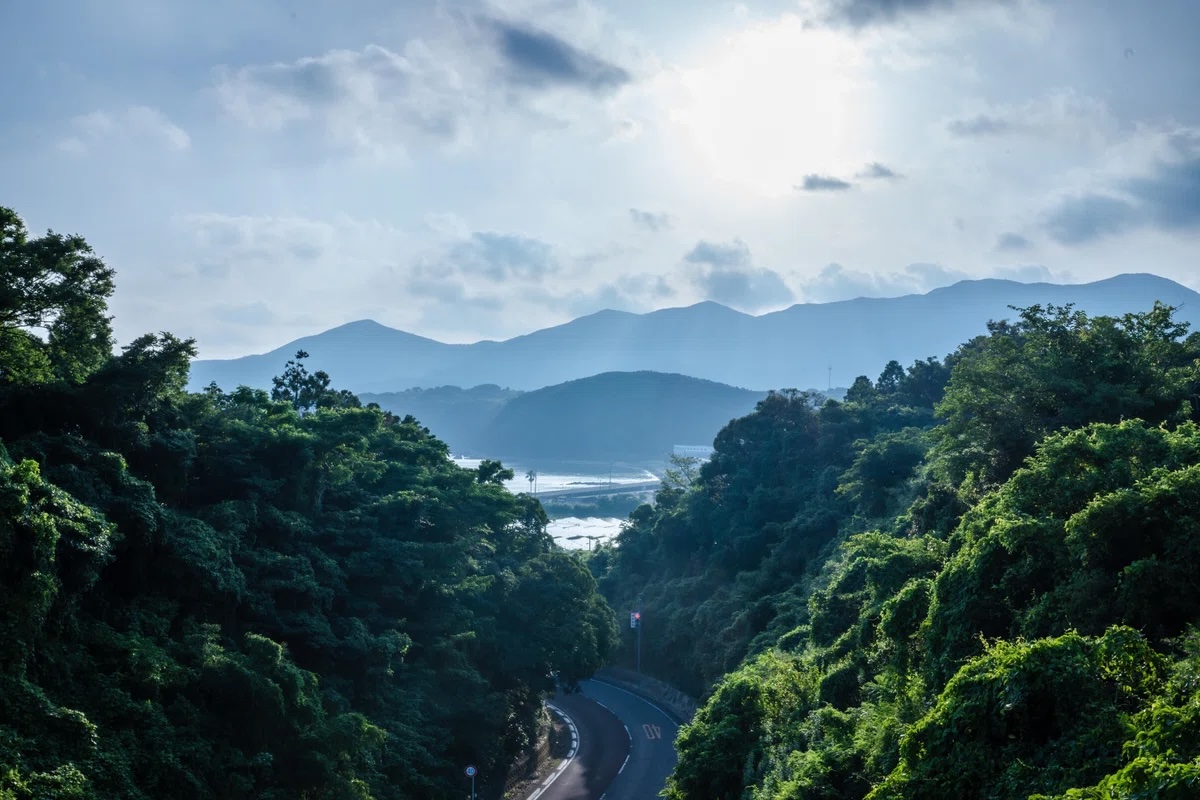
The wan studio sits at the foot of Mount Onidake, one of the symbols of Fukue Island.
There is no public water supply where the studio stands, so rainwater collected in an underground tank and filtered is used for daily water. In dry spells, he sometimes goes to fetch water from a nearby spring.Having nature close at hand does not mean only enjoying its blessings.
“We live receiving a great deal from nature, but in living there are inevitably sacrifices. For the resin series, part of the sales goes to a nature conservation group. I think of it as my own way of showing gratitude to nature and giving something back.”
Making things from wood, and protecting nature.
Rather than simply separating the two, he continues his work aware of both what he receives from the material and the burden that arises in return. That is Mr. Sakaguchi’s way of relating to the island’s nature.
———————————————–
wan -made in Gotoislands-
Address: 1737-1 Shimoozumachi, Goto, Nagasaki
———————————————–
Knowing a place through a single vessel
“Every object has a hometown, and a reason it was born in that place.”
These words from Mr. Sakaguchi resonate with the work of the makers we have visited across both parts.Rurian, which continues glassmaking in Nagasaki. The 538 Stained Glass Studio, which has walked alongside Goto’s church culture. And wan, which turns the island’s trees into tools for daily life.
Each works with different materials and techniques and began making for different reasons.Yet if we look beyond the finished piece and trace where the material came from, and who makes it with what feelings, we begin to see the scenery and life of each place behind every craft.
What GOTO RETREAT ray hopes to share through “local crafts” is not simply to line the property with things made in the region.It is that a vessel picked up during a stay, or a piece glimpsed in passing, becomes a doorway to the maker, the material and, beyond them, the land of Goto.
Holding one of Mr. Sakaguchi’s vessels, you learn that the wood once grew somewhere on the island. That alone may make the landscape of Goto before you look a little different.
Creating points of contact that connect the land, the makers and the traveler.Each craft at GOTO RETREAT ray is also a small doorway to knowing Goto more deeply.