
[REBUN HOTEL SARYO] “Wooden Bear” Art Project Breathes New Life into a Dormant Cultural Asset
2025 - 10 - 27
For years, wooden bears have slept quietly in a storeroom at REBUN HOTEL SARYO.
Carved wooden bears, a craft dating back to the Taisho era, are a folk art emblematic of Hokkaido, yet how they are regarded has changed with the times. Now, through the power of art, these bears have been given new life.
To learn the background and thinking behind this project, we spoke with General Manager Nishimura of SARYO and the creator, Ie’s CEO Mr. Ito.
Shining a light on wooden bears asleep in the storeroom
“Better to do it than not.”
That instinct gave General Manager Nishimura the push he needed. While considering how to make use of the precious cultural assets the hotel holds, he found himself thinking, “Rather than keeping them put away, I want to shine a light on them once more.”
Breathing life back into the sleeping bears and carrying the island’s culture and history into the future: this is the thinking at the heart of the project.
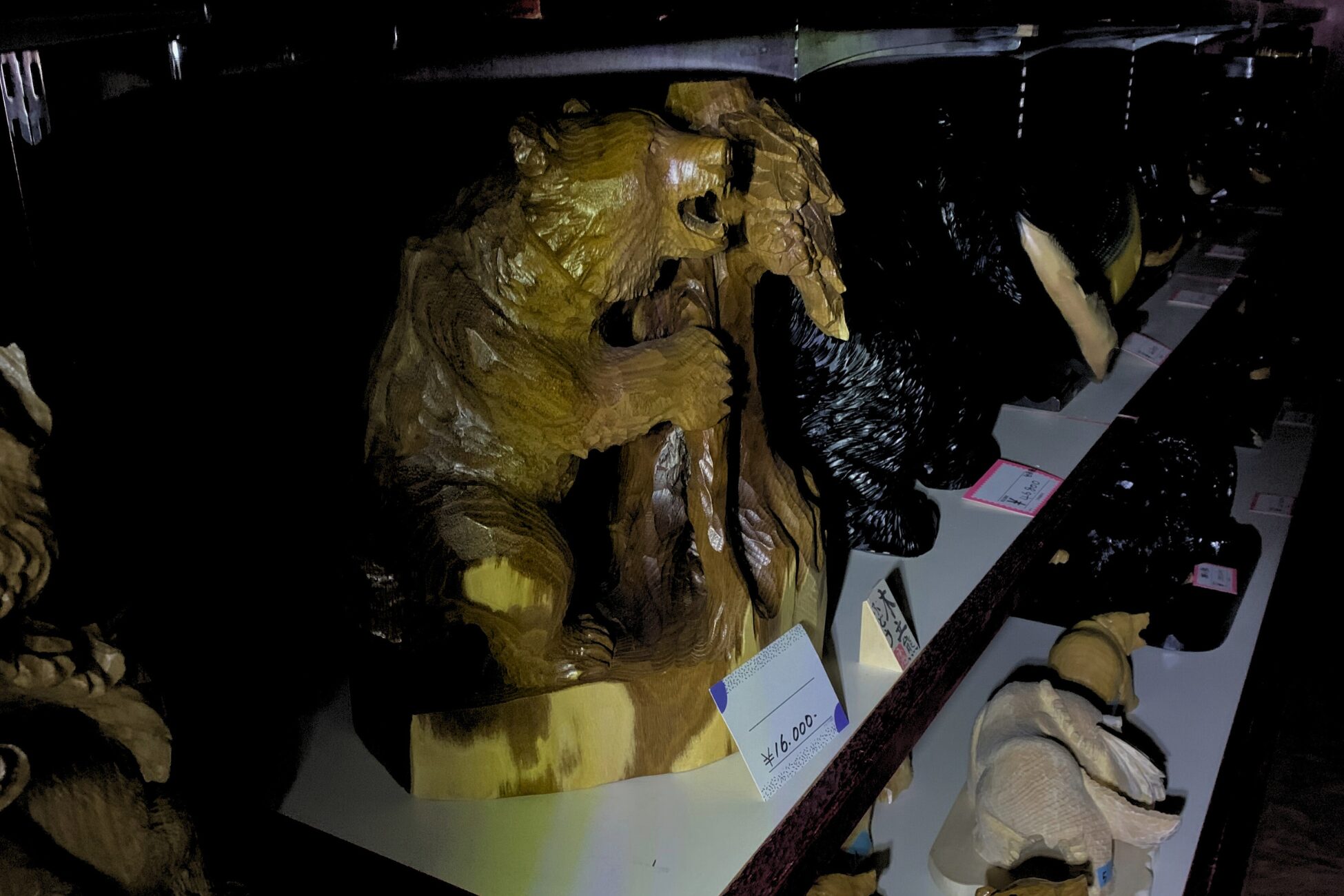
Wooden bears, a Hokkaido folk craft, kept in a storeroom at REBUN HOTEL SARYO
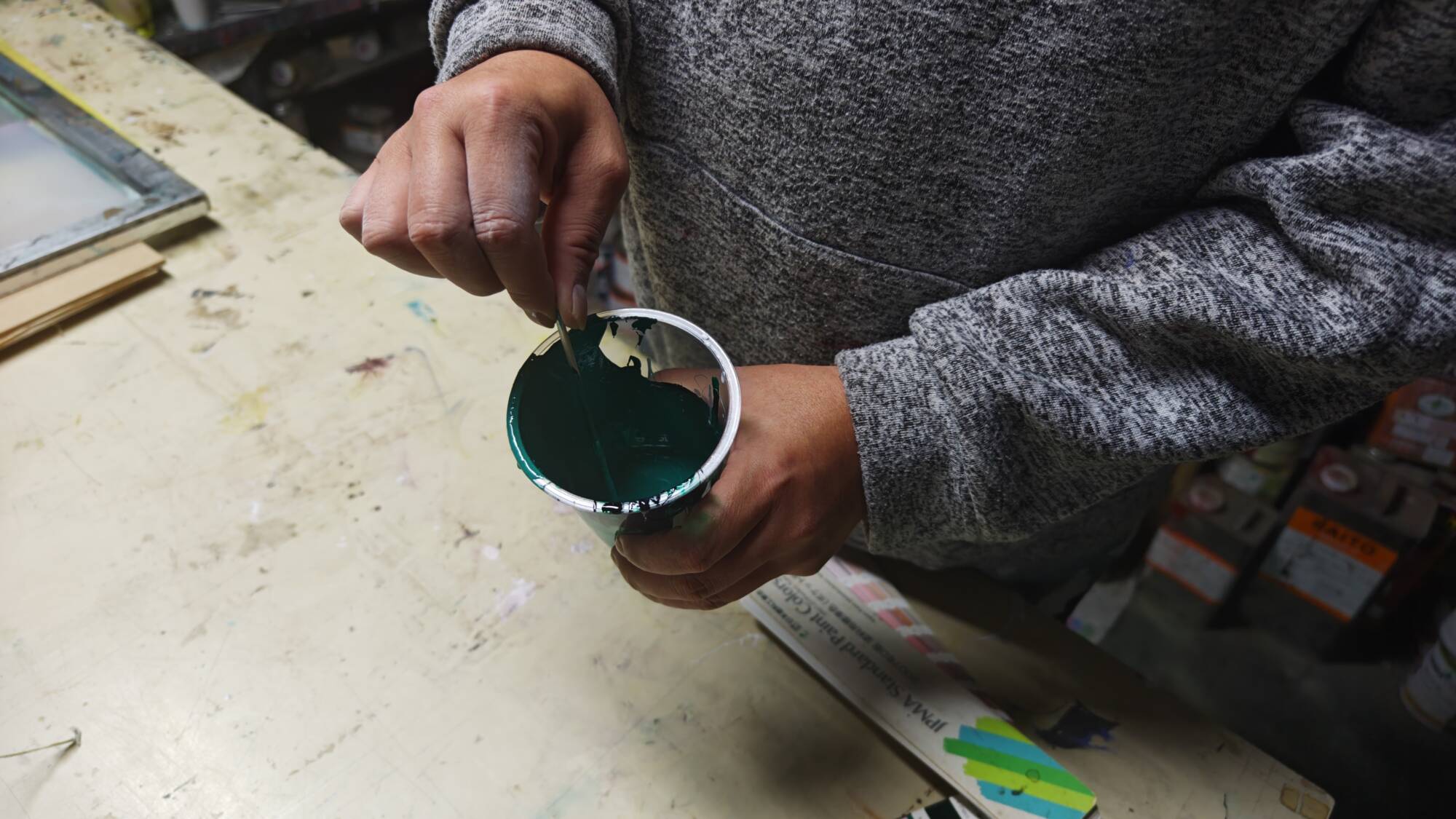
The artwork on these bears was created by the old-goods revival company based in Takaoka, Toyama, Ie’s. It is running the “Re-Bear Project” project, which revives wooden bears through art and has produced many artworks that fuse tradition with a contemporary sensibility. For this project, the bears were custom-painted in an original, haute couture finish to suit the world of SARYO.
Giving new character to what is old and good
“Sensing the significance of expressing a traditional craft in a new form, the artisans faced each bear’s distinct expression and texture and finished them with care,” says Mr. Ito.
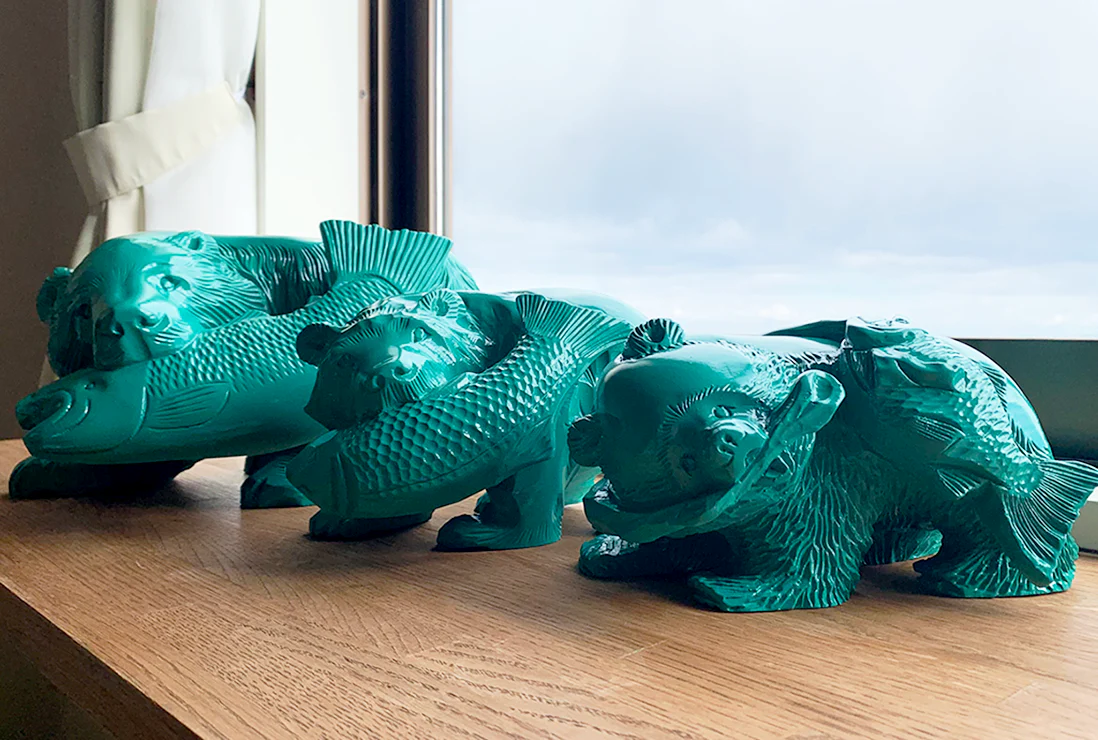
By dressing the bears in green, the hotel’s theme color, the project gave these good old cultural assets a new character and vitality. The paint was kept deliberately simple to let the warmth of the wood come through and draw out the bear’s own appeal.
Dressed in green, the hotel’s theme color
“Wooden bears are a cultural asset of Hokkaido. I am proud that we can convey their appeal with a contemporary sensibility,” says Mr. Ito. Facing each bear sincerely and creating new value through the warmth of handwork: this is how Ie’s embodies the “upcycling” spirit it holds dear.
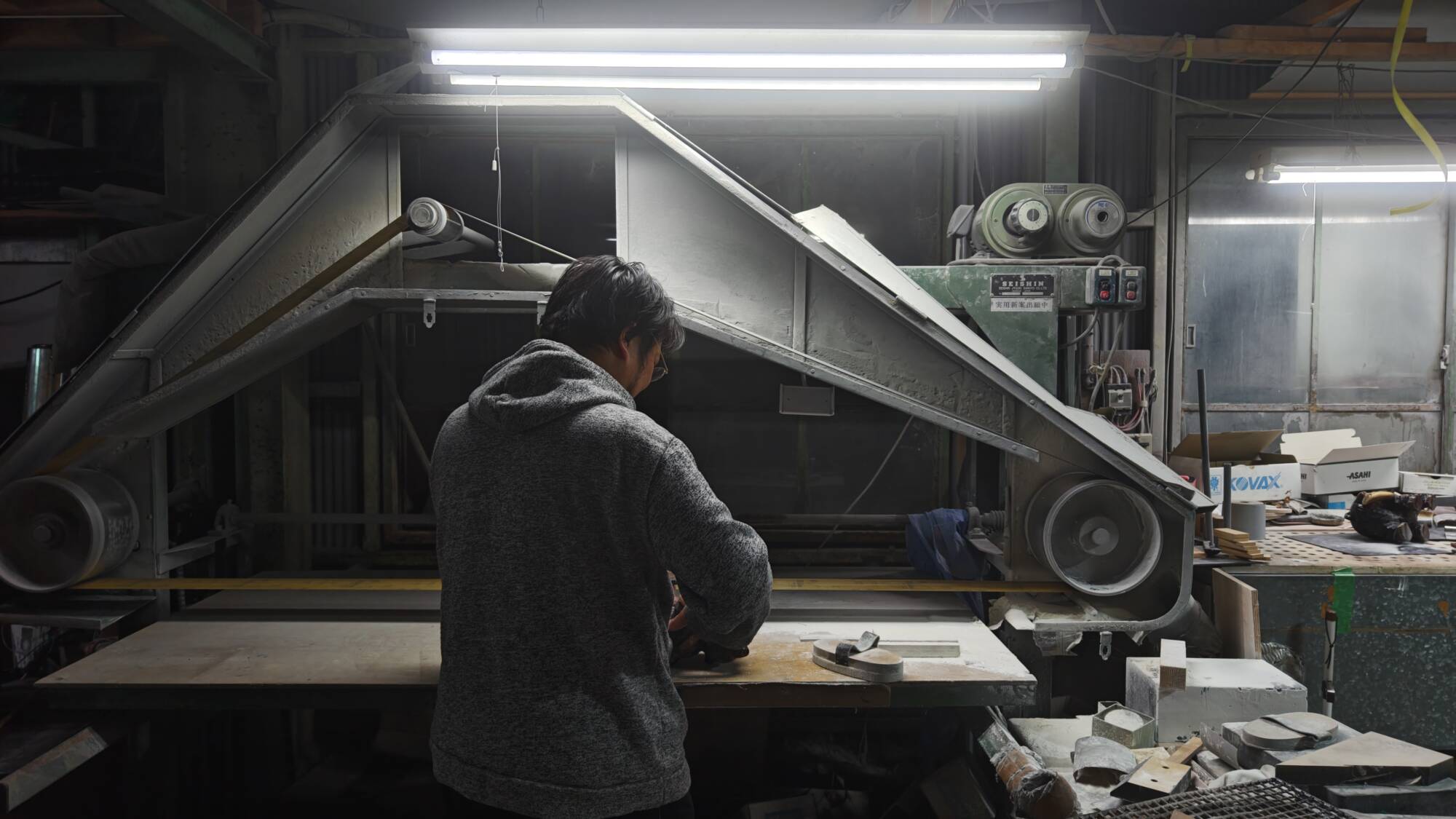
The creation process
A cultural bridge across the sea
Another feature of this project is the meeting of Hokkaido’s wooden bears and the artisans of Takaoka, Toyama.
In fact, these two regions are bound by deep historical ties. From the Edo to the Meiji period, Hokkaido and Toyama had lively exchange by way of the Kitamaebune trading ships.
Merchant ships traveling the Sea of Japan carried marine products from Ezo and goods from Honshu, bringing culture to each port. Kelp, herring and fish fertilizer are said to have traveled from Hokkaido, while rice, textiles and household goods arrived from Toyama.
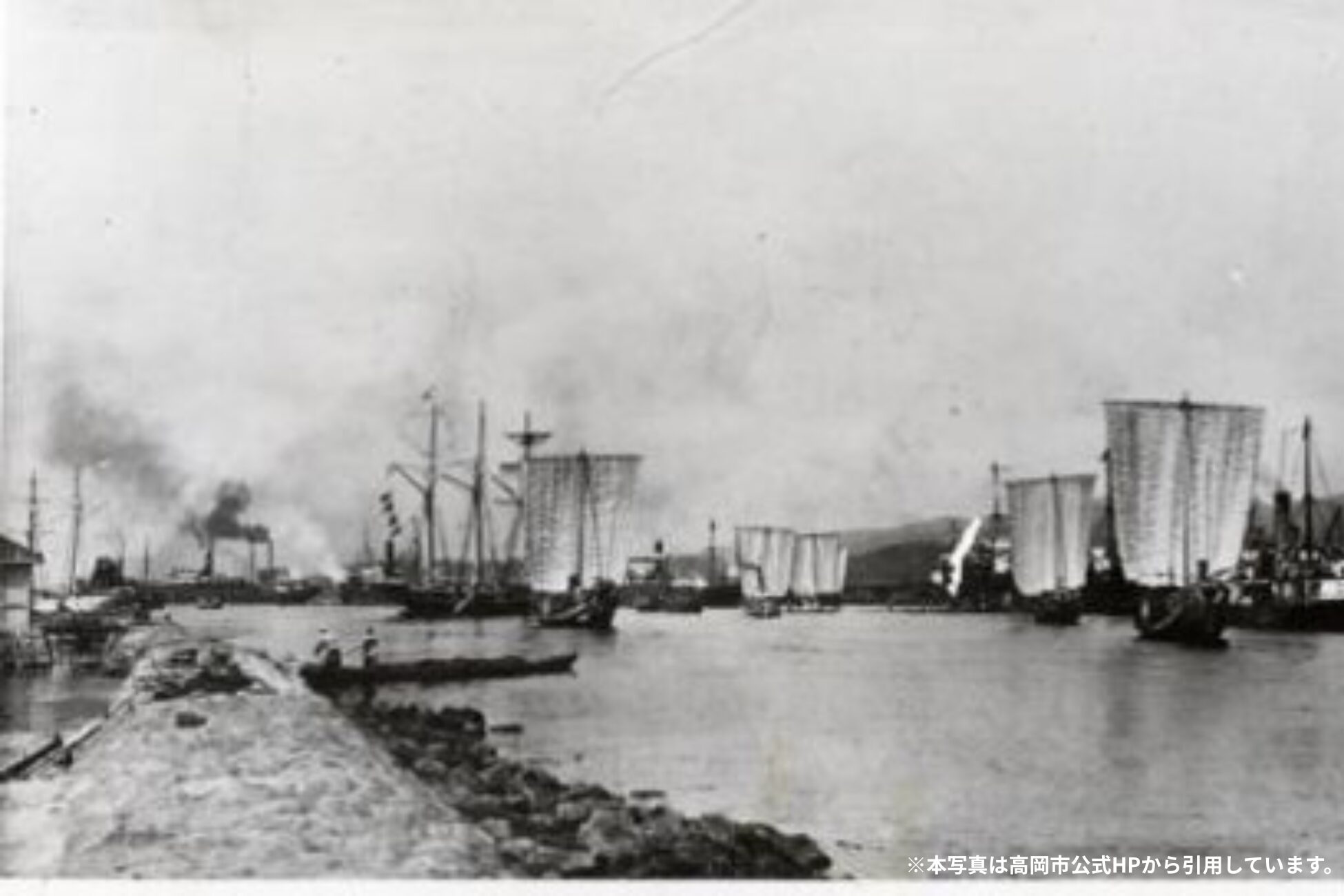
Kitamaebune: trading ships that traveled to and from many parts of Japan from the Edo to the Meiji period. (Quoted from the official website of Takaoka City)
Through this exchange, a distinctive food culture using kelp developed in Toyama and remains alive on everyday tables today. In the Meiji period, many people also went from Toyama to Hokkaido to work in fishing and kelp harvesting, building ties that crossed regions.
In this way, though separated by the sea, Hokkaido and Toyama supported each other through the movement of people, goods and culture, building rich lives and economies.
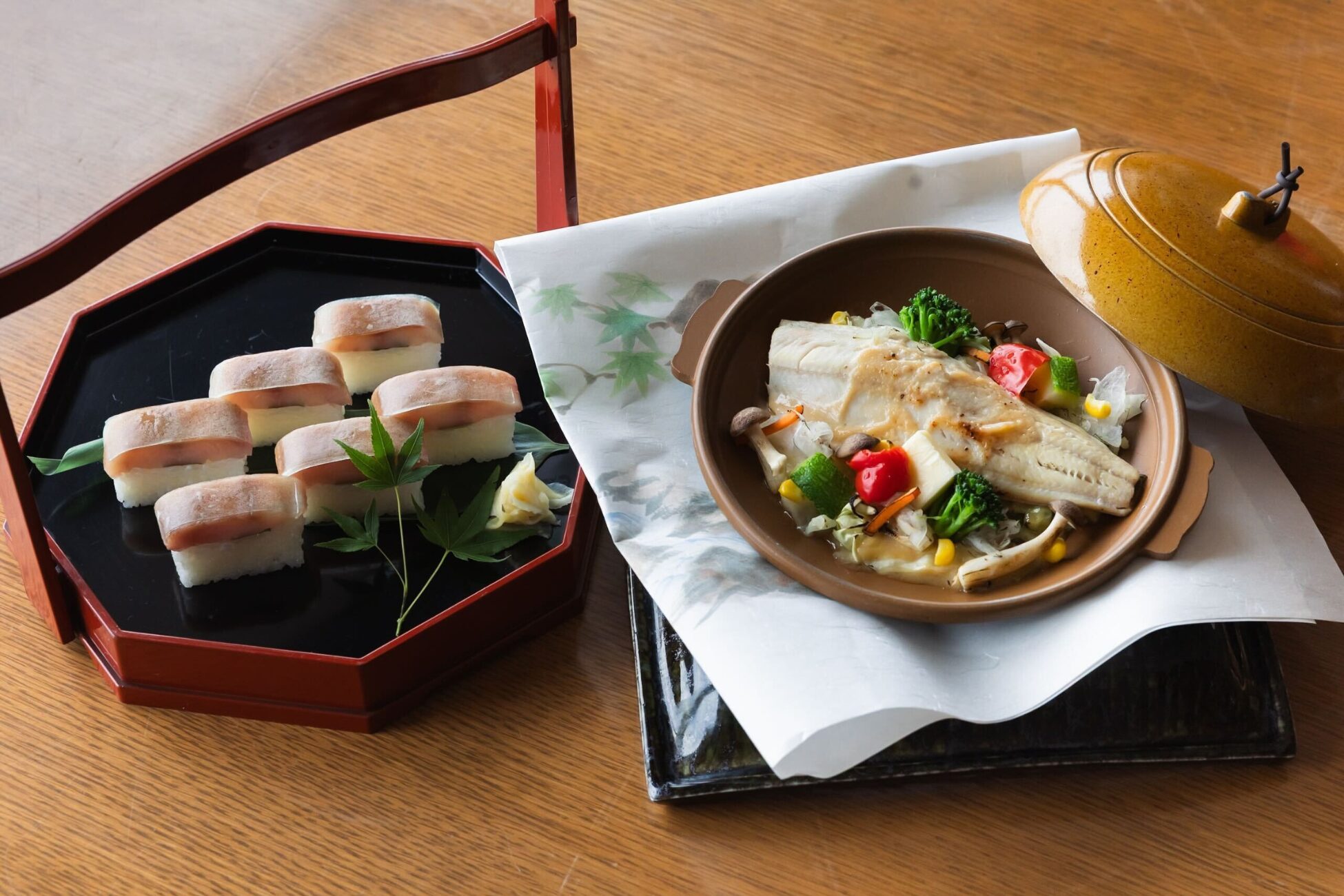
“Kelp-cured hokke” and “hokke chanchan-yaki” served at SARYO
That the techniques of Toyama’s traditional crafts give new breath to the wooden bear, a cultural asset of Hokkaido, can be seen as an extension of these historical ties.
Drawing on the cultural background of the region, the fusion of modern upcycling thinking and artisans’ handwork has transformed the wooden bear into “a new cultural asset handed down across time.”
The story of the hotel and the island, connected by wooden bears
The finished bears are planned to be sold at the hotel shop and online and displayed in the hotel. We also plan to share them with visitors from overseas, conveying the culture and appeal of Rebun Island through the wooden bear.
“I hope the wooden bears lead not only hotel guests but also local people and visitors to feel the appeal of Rebun Island. I would be glad if people were surprised to find a hotel doing something this interesting,” says General Manager Nishimura.
For the coming season, a renovation of the shop and a special display corner are also under consideration, and the bears that spent quiet years in the storeroom are now setting out on a journey once more.
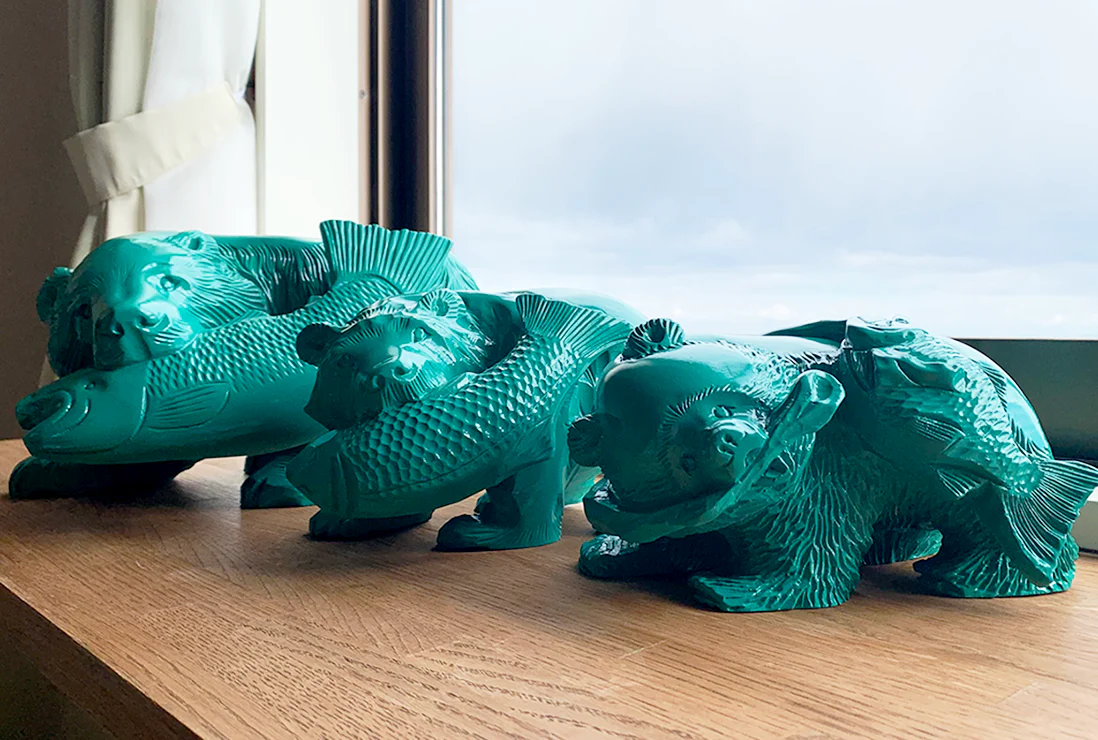
[Re:bear Project Limited Collaboration] Wooden Bear | REBUN HOTEL SARYO
On an “island with nothing,” there is everything
Rebun Island lies at the northernmost tip of Hokkaido.
Majestic nature, flowers blooming through the seasons, clear seas and wide skies: all of it paints a landscape found nowhere else. It is sometimes said to have “nothing,” but in truth it is an island that has “everything,” from untouched nature and living culture to the warmth of its people.
The wooden bear art project is an opportunity to look again at the island’s rich nature, culture and history, and a symbol of connecting people, skills and feelings across regions. This story, spreading outward from the hotel, will quietly and powerfully take root as a step toward the island’s new future.
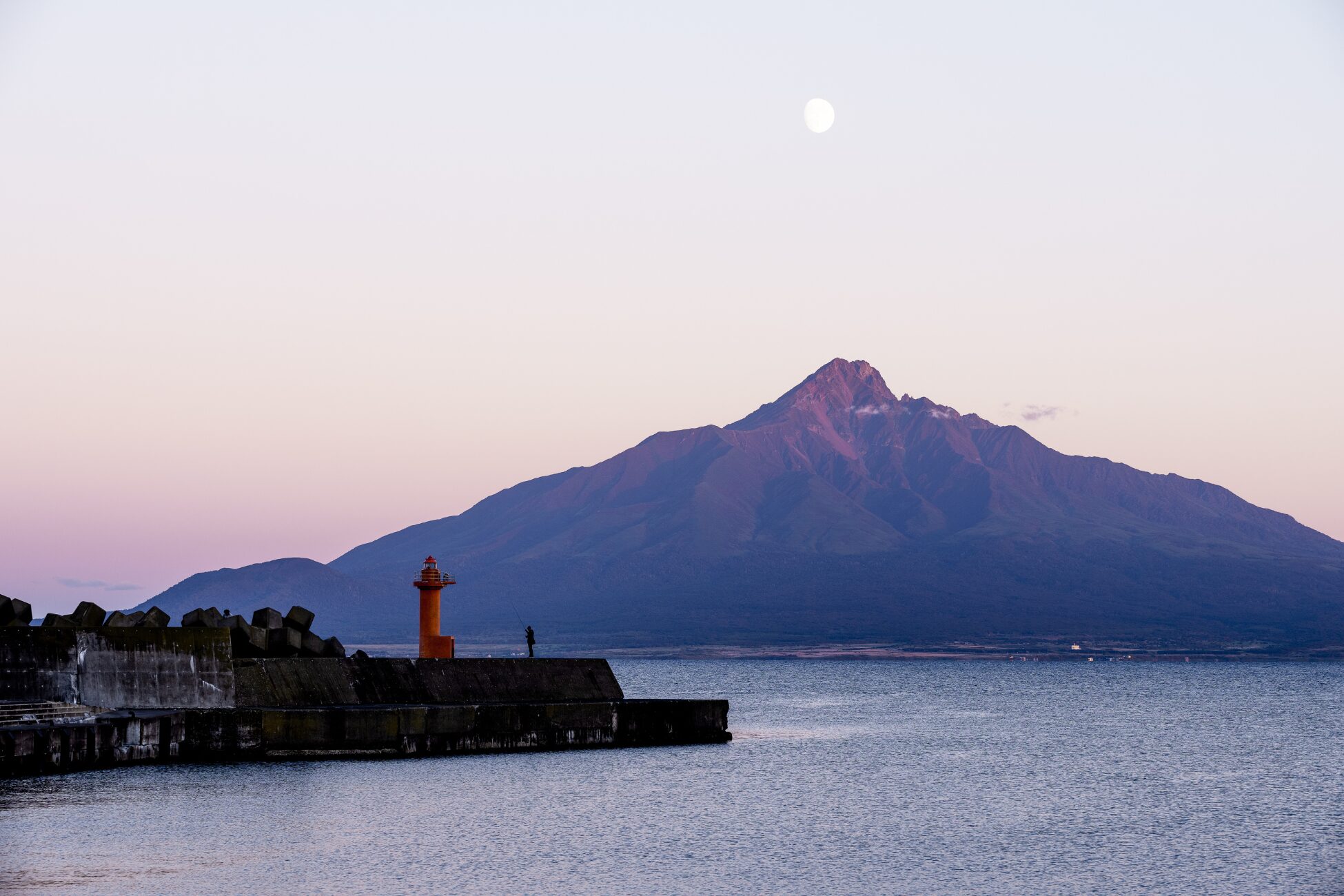
Mount Rishiri seen from Rebun Island
Product overview
– Product name: [Re:bear Limited Collaboration] Wooden Bear | REBUN HOTEL SARYO
– Size: Varies by piece (approx. 12 cm to 18 cm in height)
– Price: From JPY 35,000 (tax included)
– Sales start: Tuesday, October 28, 2025
– Quantity: 3 pieces
– Where to buy: The Onko Chishin official online shop is here
About REBUN HOTEL SARYO
SARYO is a seaside seasonal hotel open only from April to October.
The Sea of Japan stretches out before it, and on clear days Mount Rishiri rises close at hand. From the ocean-facing guest rooms and the second-floor dining room, you can quietly take in the ever-changing face of nature, with the clear, calm sea and majestic Mount Rishiri. While encountering the history and stories of Rebun Island, enjoy an island landscape found nowhere else, woven from dynamic terrain, rich vegetation and untouched nature.
[Overview]
– Hotel name: REBUN HOTEL SARYO
– Address: 277 Kafukatonnai, Rebun, Rebun District, Hokkaido 097-1201
– Rooms: 100 in total (64 Western-style, 32 Japanese-style, 4 Japanese-Western style)
– Season: April to October *Closed in winter
– Facilities: Large communal bath (Rebun Onsen), restaurant, banquet hall, laundry corner, shop and more
– Email: [email protected]
– Official website: https://rebun.by-onko-chishin.com/
– Instagram: https://www.instagram.com/rebun.saryo/