
Exploring Local Crafts on the Goto Islands [Travel Guide vol. 20] GOTO RETREAT ray by Onko Chishin #5
2022 - 10 - 20

We send “Tabisaki Annainin” (Travel Guide), a newsletter focused on the people connected with our inns, to guests who regularly stay at the properties we operate.
Since [vol. 15], we have been running a series on the Goto Islands over several issues. GOTO RETREAT ray by Onko Chishin opened this summer, and the series introduces the “local lights” of the Goto Islands.
(Hotels operated by Onko Chishin: SETOUCHI RETREAT AONAGI, IKI RETREAT KAIRI MURAKAMI, HAKONE RETREAT FÖRE and VILLA, SETOUCHI KEIRIN HOTEL 10, GOTO RETREAT ray)
The Artisans of Goto, Making Their Skills Shine Today
One of the great pleasures of travel is “encountering local craftsmanship.” Local handwork carries the necessity of the place where it was born. Polished by artisans who make their skills shine today, it gives us insights found only in that land.
At our hotel GOTO RETREAT ray, “local crafts” (local lights) is one of the concepts, and works by local artists color the space of ray. We would be glad if you would quietly listen to the voices of local makers who create original works while making the most of Goto’s materials.
Wood Works Full of Goto’s Energy: wan -made in Gotoislands-
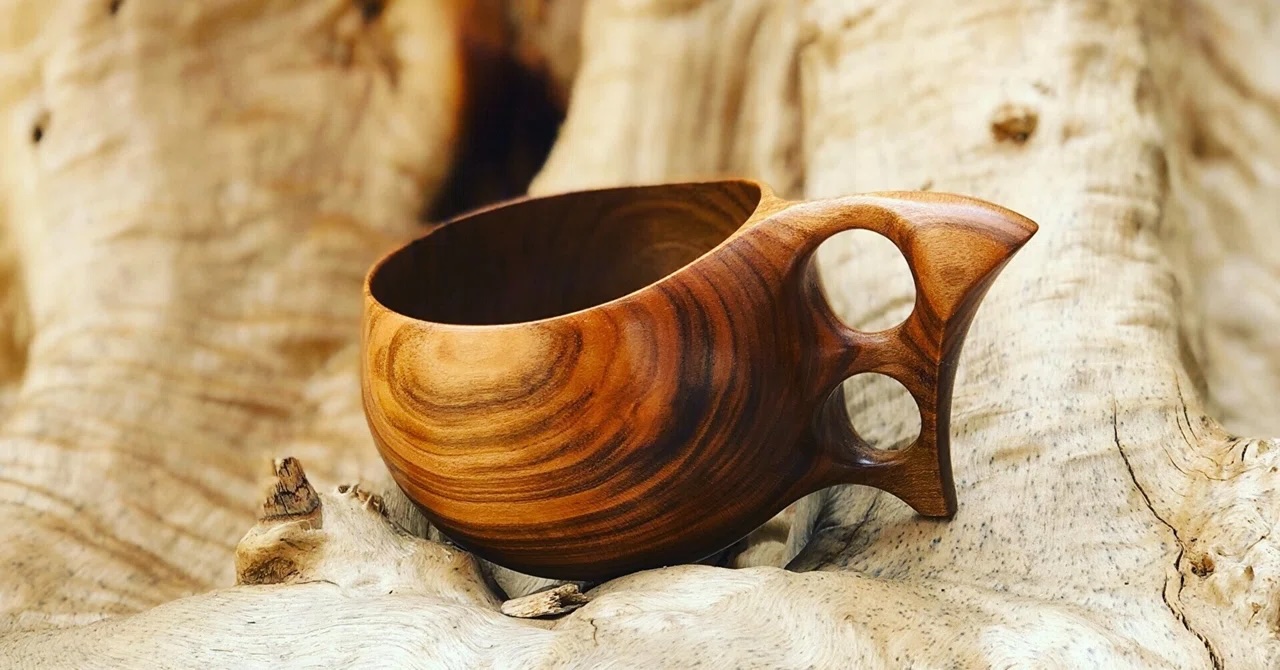
A wide variety of trees grow wild across the nature-rich Goto Islands. Using these trees to make his work is woodworker Yoshito Sakaguchi of wan -made in Gotoislands-. We were drawn in at first sight by his pieces, which carry the warmth of wood while keeping a sharp, dignified presence, and they are now offered at the hotel’s spa and shop.

wan -made in Gotoislands-

“About nine years ago, I came back to Goto from Nagoya. After high school I took a job off the island, but I grew tired of the bustle of the city and returned, and I noticed how much thinned timber there was on the island. Thinned timber with no one to take it has no choice but to be thrown away, which is a waste. I wondered if it could be used for something. While I was thinking about this, I came across the kuksa, a traditional Finnish wooden mug.”

Mr. Sakaguchi
At first, Mr. Sakaguchi made pieces while holding another job, starting small by exhibiting at local markets and selling on consignment at cafes. Later, when he left that job, he decided to try making things in earnest. He explored various kinds of woodworking and taught himself techniques from video sites, gradually establishing his present style.
“The Finnish kuksa is made from a birch burl and feels very wild, but I wanted to make something easier to use every day that fits into daily life. Tableware is essential to people’s lives, so I made it simple and strong, yet suited to any occasion. I finished it with a design that looks as if it has always been there.”
Mr. Sakaguchi does everything himself, from design to production, and his pieces have a distinctive, individual presence unlike anything seen before. Today they draw attention from beyond the island, including a pop-up at Mitsukoshi Isetan, and his wood tableware brand from Goto is steadily making a name for itself.
After a Typhoon Passes, the Phone Rings
“I used to actively use rare timber from off the island, but now I mainly use thinned timber from the island. Even for wood from off the island or of unknown origin, such as wood salvaged from demolition sites, I value keeping things in circulation.
After felling, I air-dry the wood in my own workshop for three to five years. Then I judge its dryness and saw it into smaller pieces. A kuksa is carved in one go from a box-shaped block of wood. Cutting the wood so that the grain shows its character at that moment is difficult without a setup that lets me mill logs myself, so it is one of my pleasures. I hope those who pick up a piece will enjoy choosing which grain they want.”

“Some time after I started, I began getting calls from many people asking me to cut down trees. My father taught me how to cut, and I started going to do it myself. The phone rings especially often after a typhoon. This area has many typhoons, and trees often fall, so that’s when people call me.”
The typhoon story is unique to Goto, and it impressed us. Turning a local trouble into something positive through craft is a wonderful way of making things. Mr. Sakaguchi currently uses woods such as cherry, ash, shii and maple, and a single cup or plate seems to convey the richness of Goto’s nature.
Facing the Life of Wood
“When I make things, I realize that wood is a living thing. While carving, I sometimes find insects living inside, and each piece has a different expression and softness, its own character. Once in a while I meet a piece of wood that really excites me, and I’m surprised that wood with such a beautiful grain existed on the island. I think, I’ll make it even more beautiful! (laughs)”

“One of my series is carved from wood mixed with resin. It’s a slightly playful work that expresses the sea around Goto that I love. wan’s workshop is at the foot of Mount Onidake, a symbol of Fukue Island, in an area with no public water supply. We store rainwater in an underground tank and filter it for daily use, and when there is little rain the tank runs dry and I often go to fetch water from a nearby spring. We live receiving many blessings from nature, but in order to live, some sacrifice is unavoidable. A portion of the sales from the resin series is donated to a nature conservation group. It is my own way of expressing gratitude to nature, and, though it may be presumptuous, a way of giving something back.”
Living in nature, valuing circulation and facing wood with respect for the environment: this is Mr. Sakaguchi. Works unique to Goto, born of that mindset, blend softly into our lives as we use them, and each time we use them, our hearts seem to return to the nature of Goto.
On the Goto Islands, there are many other artisans who look at local materials beyond wood in new ways and make things from them. “Every object has a hometown and a reason it was born in that place.” We hope you will touch these artisans’ fragments of spirit at GOTO RETREAT ray by Onko Chishin.
—-
wan -made in Gotoislands-
Website: https://wan-madein-gotoislands.jimdofree.com/
Online shop: https://shop.wangoto.net/
—-