
Discovering Local Crafts in the Goto Islands: Part 1
2022 - 10 - 20
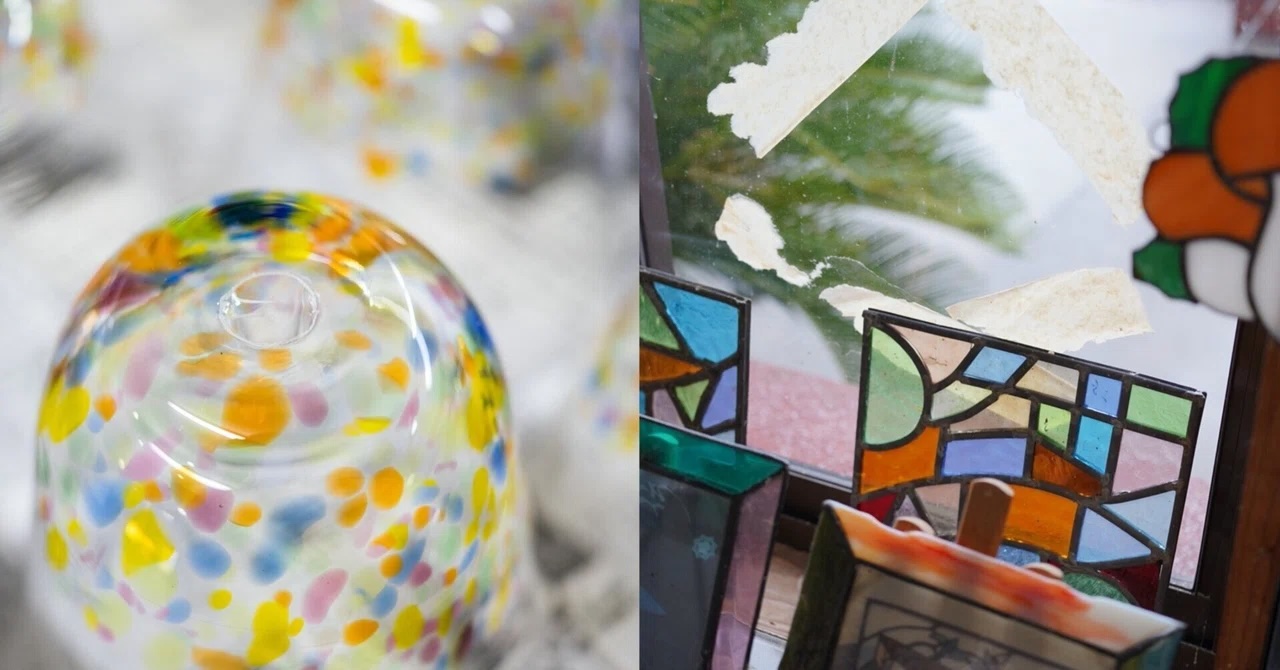
The vessels and crafts we meet while traveling can, once we learn about the materials and climate of the place, the techniques handed down and the lives of the makers, reveal the outline of the land itself.
At GOTO RETREAT ray by Onko Chishin, “local crafts” is one of the themes of a stay, and the vessels and furnishings throughout the property include work by makers from Nagasaki and the Goto Islands.
Why make things in this place? What landscapes and culture have nurtured their handwork?In two parts, we visit makers connected with GOTO RETREAT ray and trace the relationship between their work and the land.
The glass culture handed down in Nagasaki
Nagasaki, which developed as a gateway for exchange with other countries, is also a place with deep ties to glass.
In the latter half of the 16th century, glass products and the methods for making them are said to have reached Nagasaki through trade with Portugal and other countries. The glassmaking techniques nurtured in Nagasaki then spread to other regions and contributed to the development of glass culture in Japan.
In Nagasaki, with this history, we visited two makers who still work with glass today.
Glassmaking at Rurian, facing a furnace above 1,000 degrees
Rurian has its studio in the city of Nagasaki.
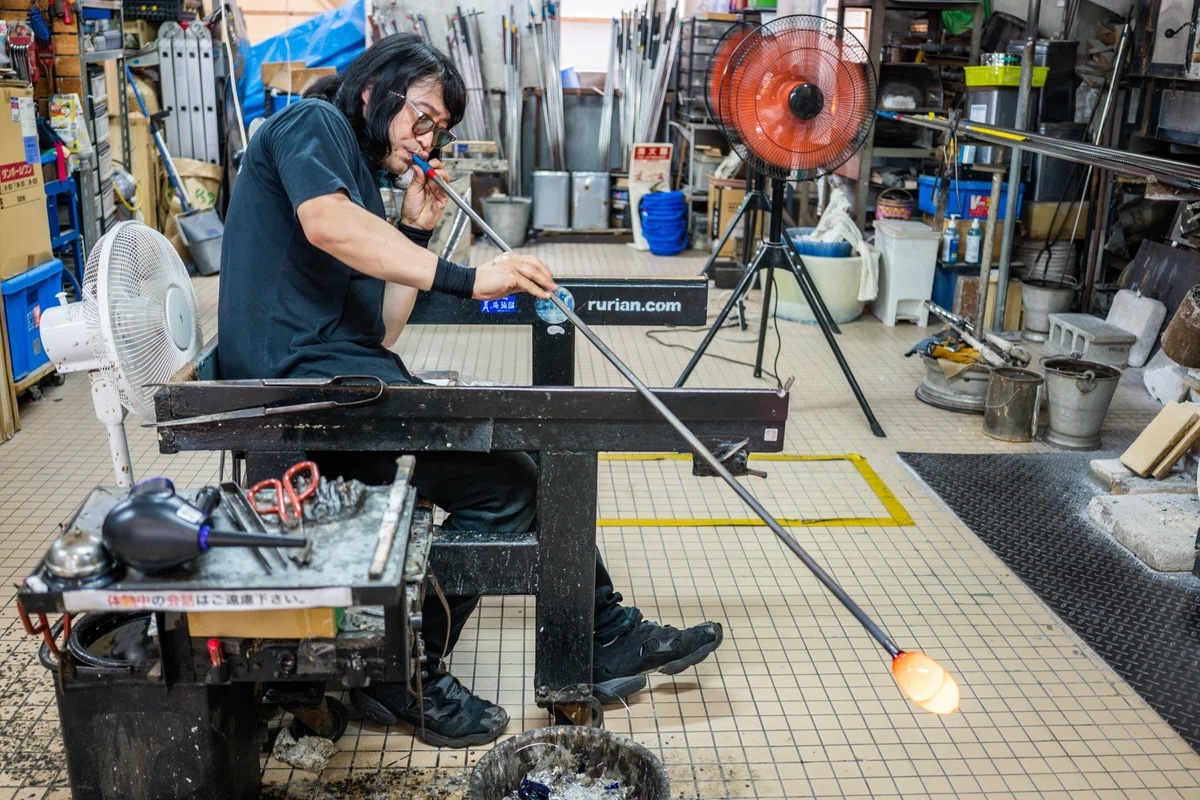
At the back of the space, where the studio and shop sit side by side, craftsmen are making blown glass. The flame of the melting furnace is kept burning without pause, and the inside of the furnace exceeds 1,000 degrees Celsius.We were welcomed by glass craftsman Ayato Takeda.
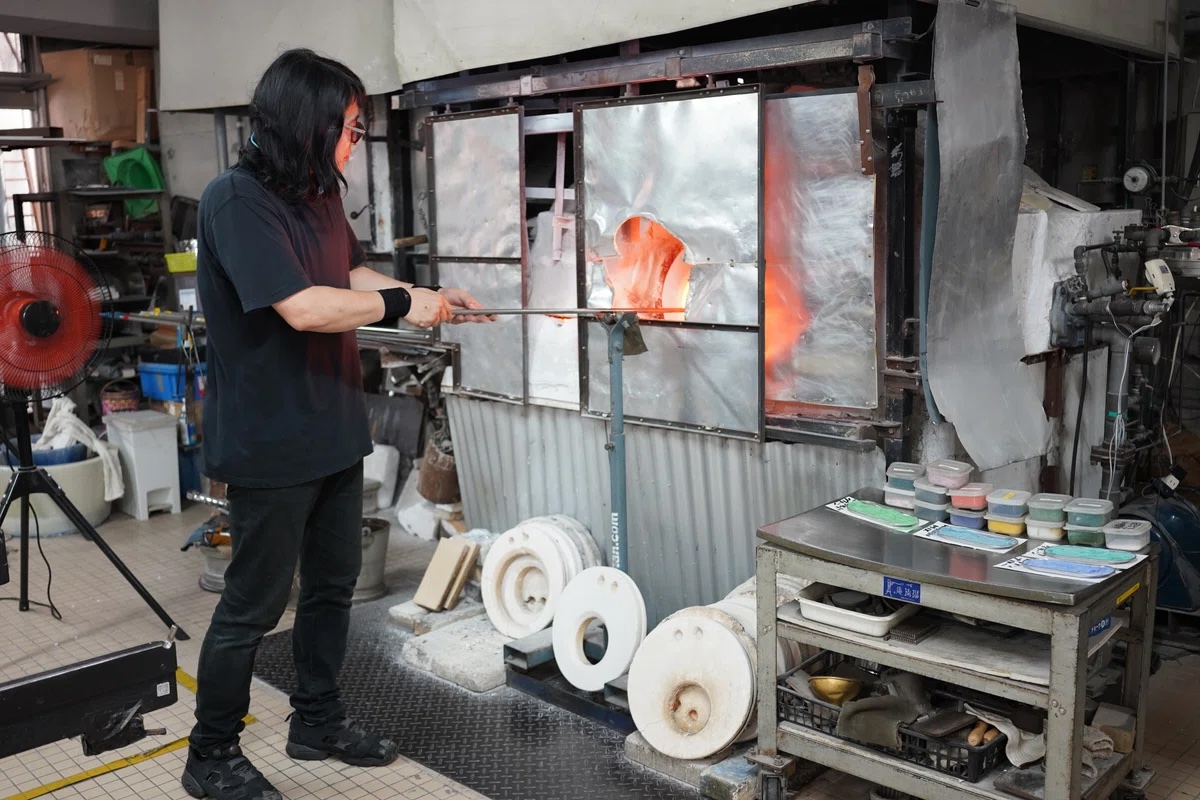
Glass craftsman Ayato Takeda
“People who make udon or soba say the ingredients are different every day, and glass is the same. If the temperature drops, it cracks, so in winter the time we have to shape it outside the furnace is short. In summer the time is longer, but it is a battle against the heat. A single drop of sweat can make the glass break. It is that delicate, and no two pieces are ever alike.”
Reading the season, the temperature and the state of the glass that day, the craftsmen form each piece in the limited time they have. In each of these seemingly uniform glass vessels, the craftsman’s feel and experience are layered.
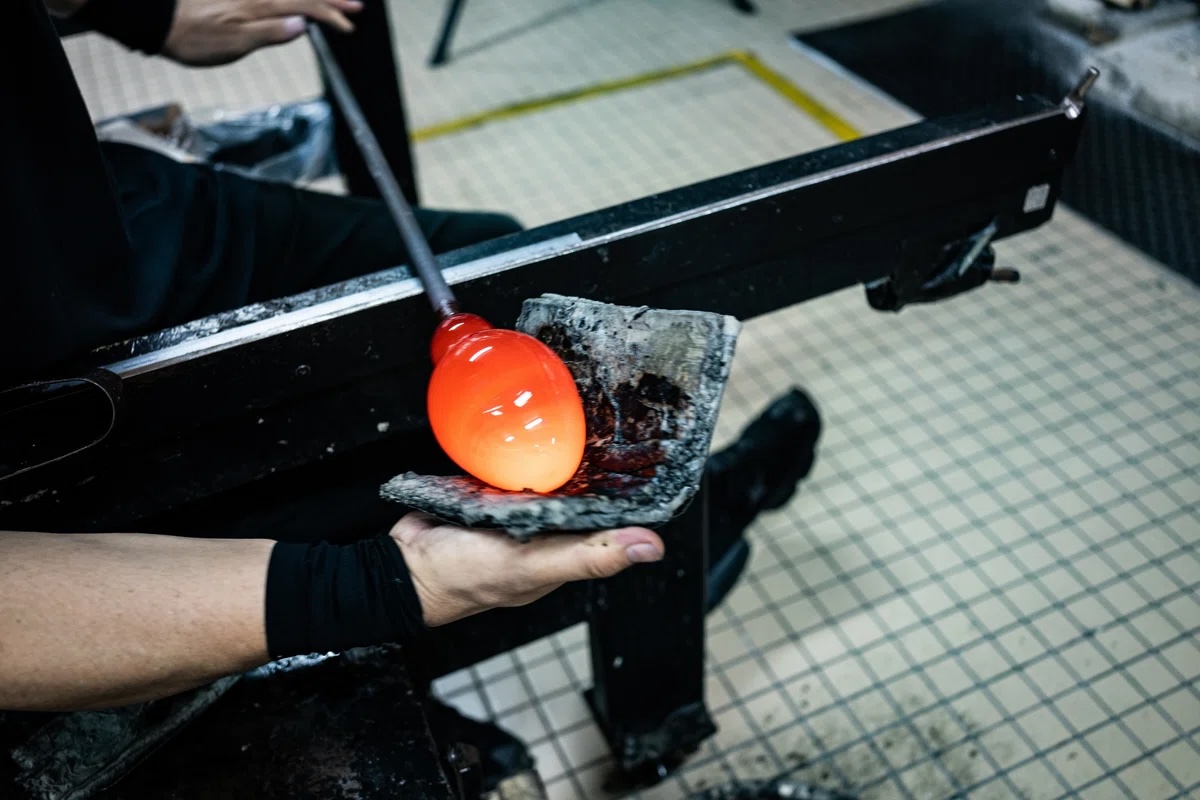
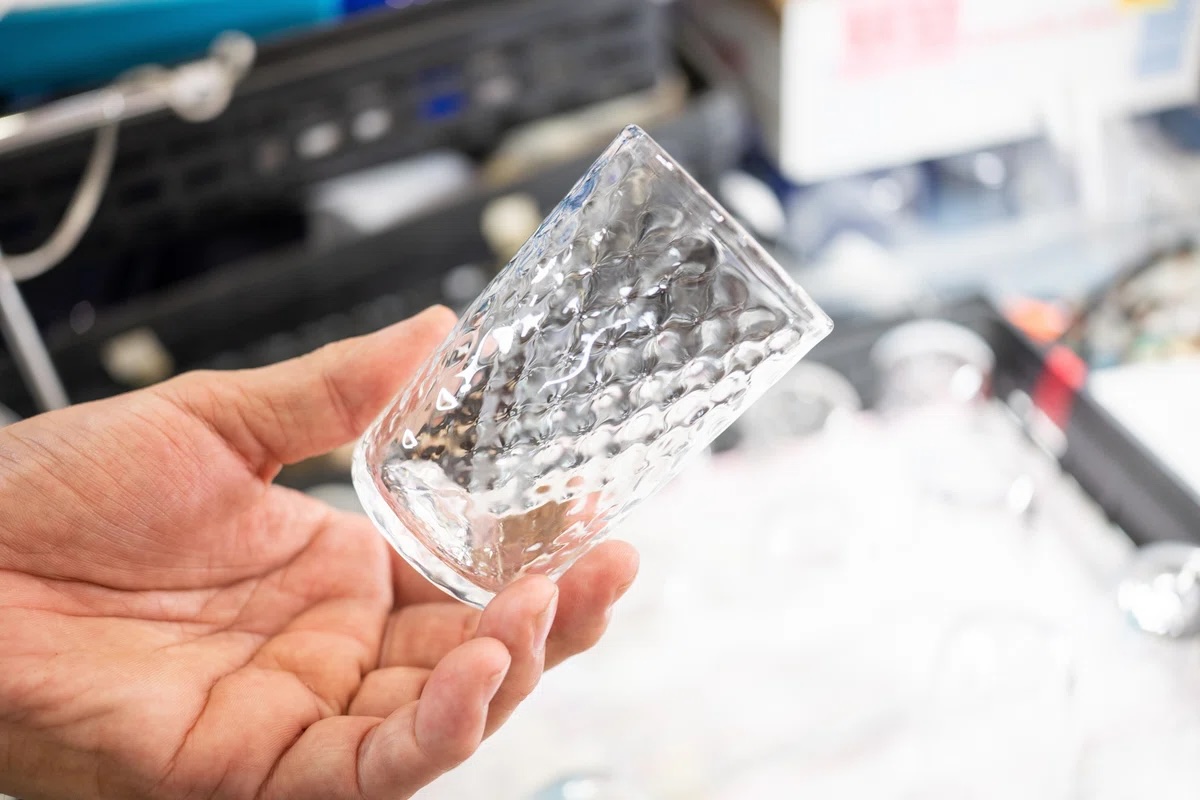
Rurian glass, made from raw materials
At Rurian, they do not simply melt ready-made glass material and shape it; they make glass starting from blending raw materials such as silica sand.
The silica sand currently used comes from Tasmania. In the past in Japan, sand collected from the coast and elsewhere is said to have been used as a raw material for glass.
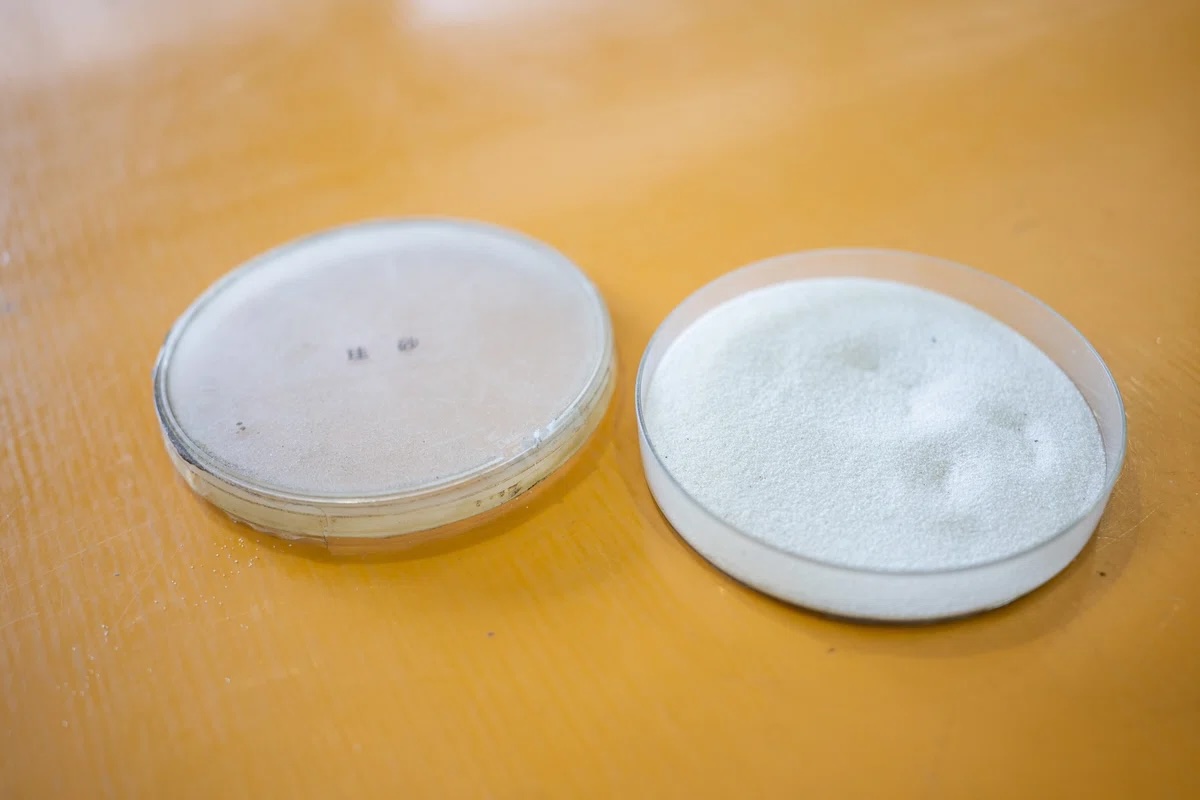
“We add various components to the sand to bring out clarity, but if the original sand is not good, nothing can be done. Around the world, places where beautiful sand can be found are becoming fewer and fewer. Perhaps the beauty of the earth and the beauty of glass are always side by side.”
We rarely think about raw materials when looking at a finished vessel.Even clear glass, traced back to its beginning, comes down to a natural material: sand. Mr. Takeda’s words show that glassmaking cannot be separated from the natural environment.
“We have to make it in Nagasaki”: why he continues in this place
At Rurian, Mr. Takeda and his father, Katsuhito, work on glass as two generations.Katsuhito, who had originally worked in construction, left his company at 37, studied glass professionally and then set up the studio in Nagasaki.
Behind this was the fact that, although Nagasaki has deep ties to glass culture, at the time most of the glass products sold in the city were made overseas.
“Doing it in Nagasaki is our greatest commitment and what gives it meaning. It is where I was born, it has history, and there is nowhere else.”
Rurian today also takes part in restoring glass used in historic buildings.Over its long years in the same place, it once happened that a child who had tried glassmaking on a school trip became a teacher and came back to the studio with his own students.
“Every object holds attachment and stories. Precisely because something is handmade, I believe people will want to treasure it and may sense something in it.”
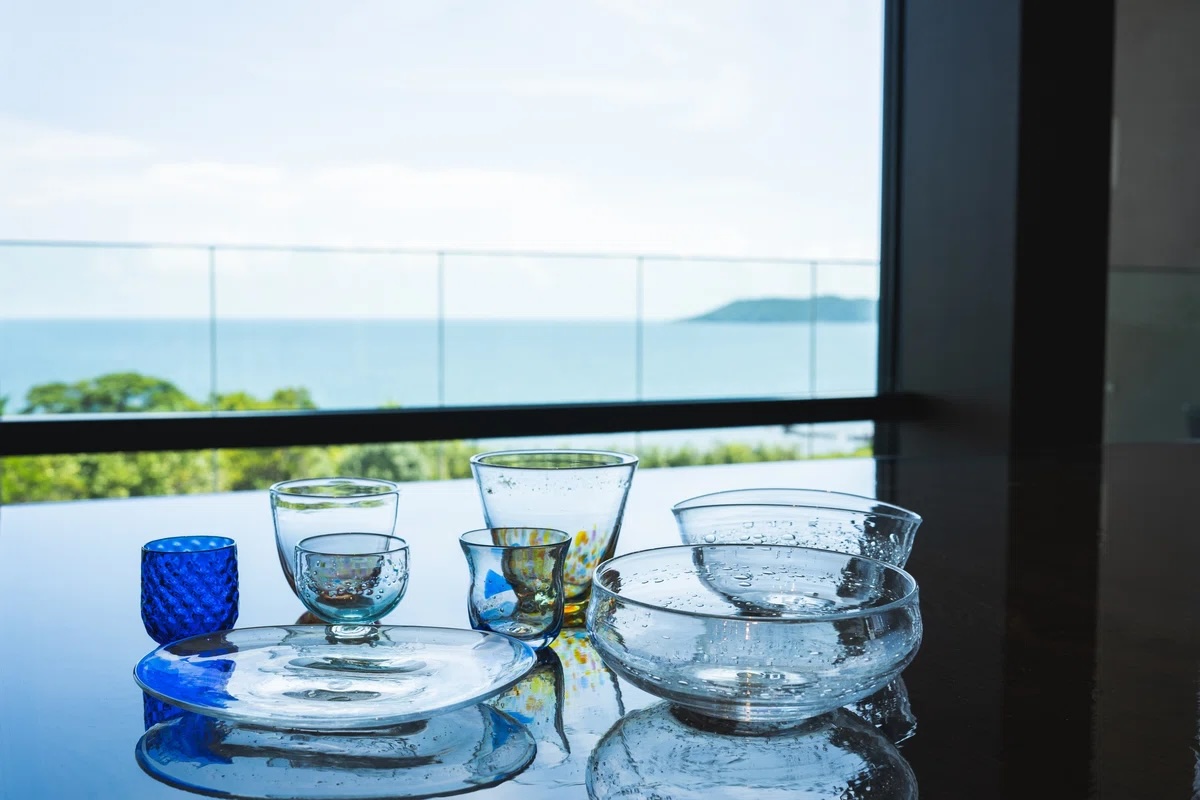
At GOTO RETREAT ray by Onko Chishin as well, some of the vessels and glasses used in the guest rooms and restaurant are made in collaboration with Rurian. The glass culture handed down in Nagasaki and the sensibility of today’s craftsmen come together in these vessels, which live on in the stays of guests who visit the Goto Islands.
————————————————–
Glass Studio Rurian
Address: 5-11 Matsugaecho, Nagasaki, Nagasaki
TEL: 095-827-0737
Hours: 9:00 a.m.–6:00 p.m.
Closed: Tuesdays
————————————————–
A stained glass studio that walks with Goto’s church culture
Crossing the sea from Nagasaki to Fukue Island.
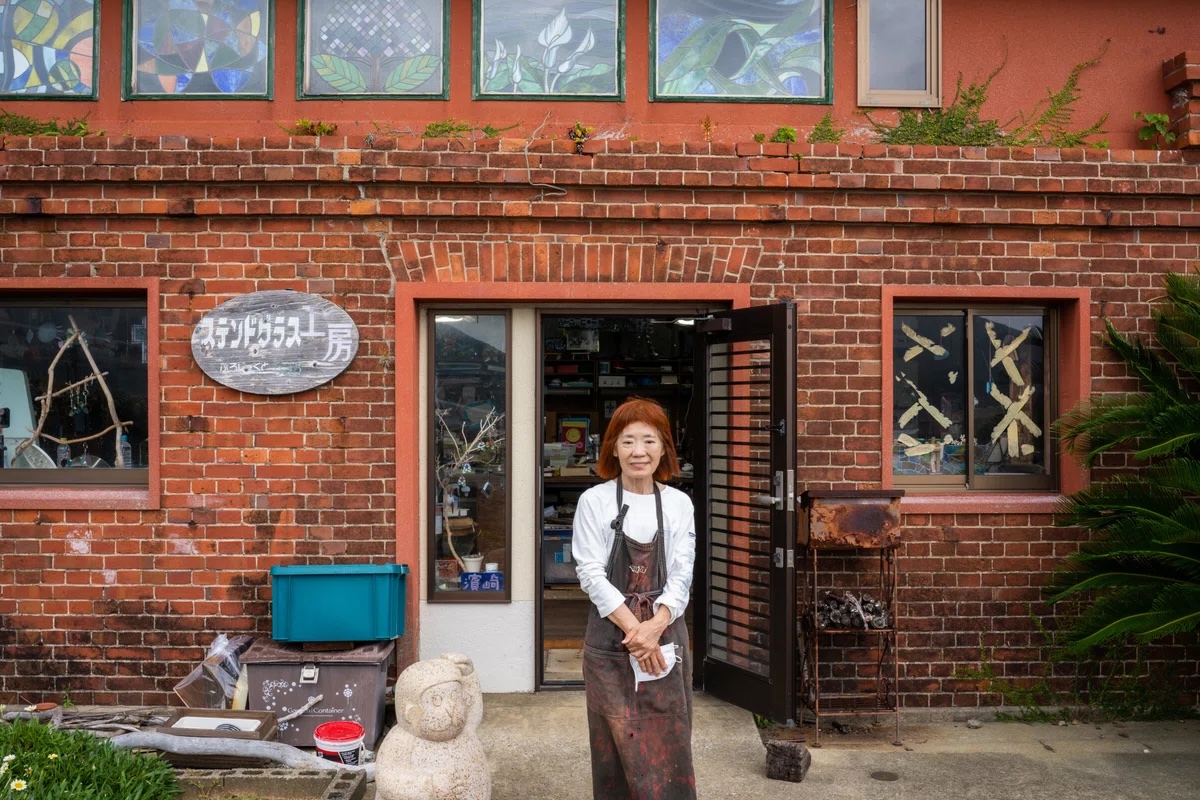
In the northwest of the island, near the sea in Miiraku, stands the 538 Stained Glass Studio.We were welcomed by Yumiko Hamasaki.
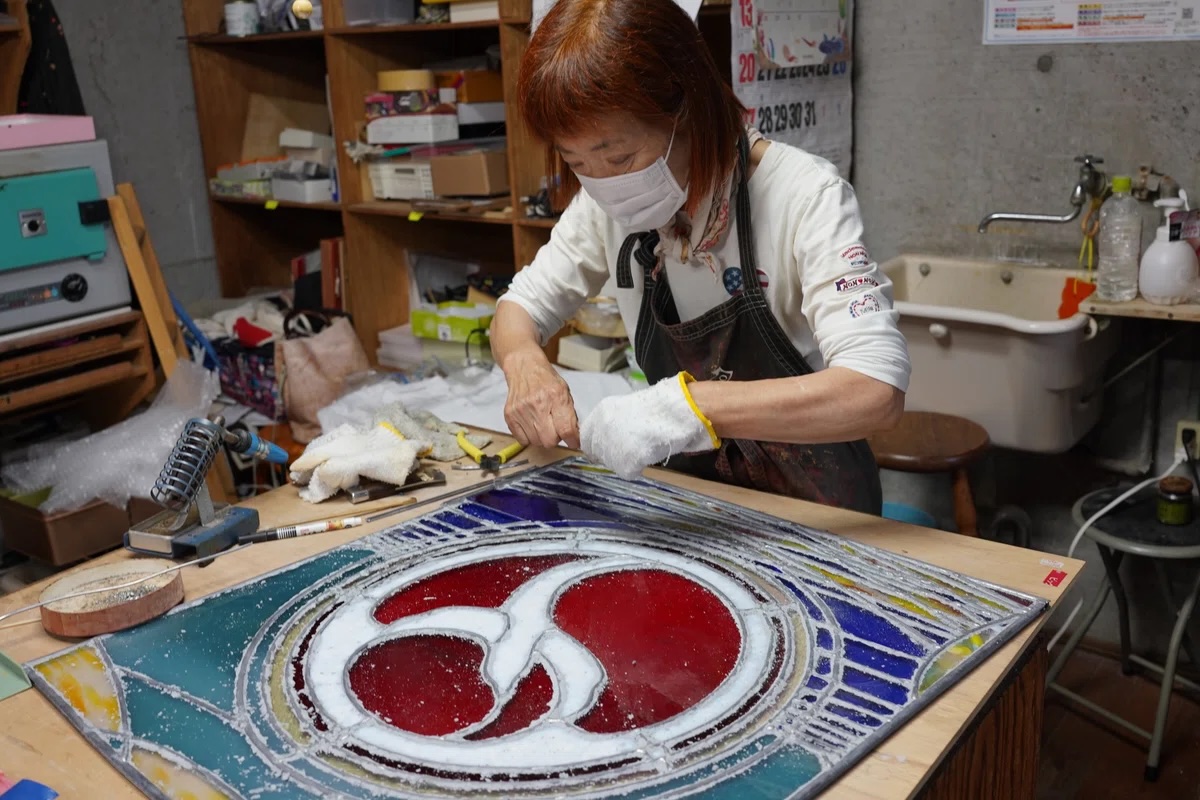
Yumiko Hamasaki of the 538 Stained Glass Studio
The studio began with the making of the stained glass for Miiraku Church.
The church once had stained glass, but it was lost when the building was rebuilt. “Stained glass in our church once more.” From this wish of the local people, a project to make it began.
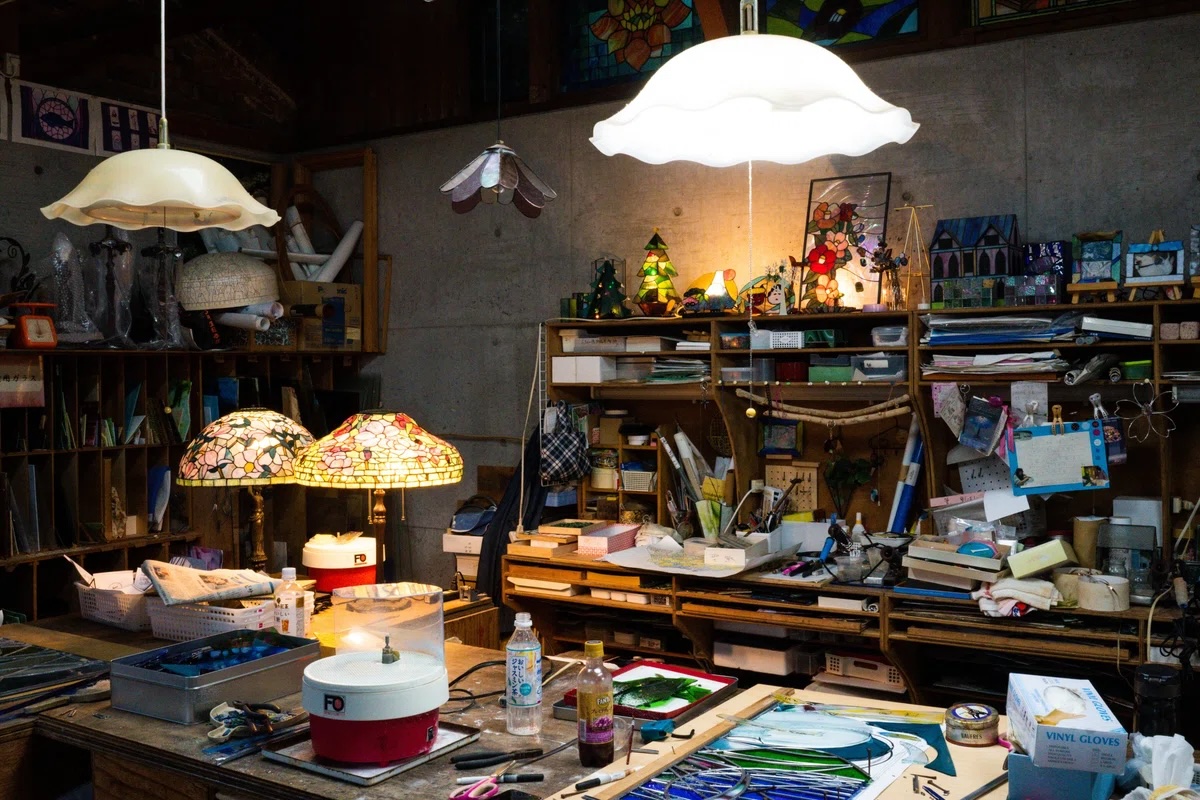
About a year after the studio started, Ms. Hamasaki joined the activity as a student.There were nine members then, most of them beginners with no experience in glasswork. They invited an instructor from Osaka and made the pieces while learning the techniques from scratch, and the project, originally planned for five years, ran to six.
The completed stained glass came to 34 panels.
“Of course I was anxious. But once I finished one panel, my mindset changed. When I felt the joy of completing it, I truly forgot my fatigue. I was moved, thinking, oh, how beautiful.”
The person who founded the studio fell ill while working on the pieces for Miiraku Church and passed away without seeing them finished.Afterward, Ms. Hamasaki took the lead in carrying on the studio and began making and restoring stained glass for churches.
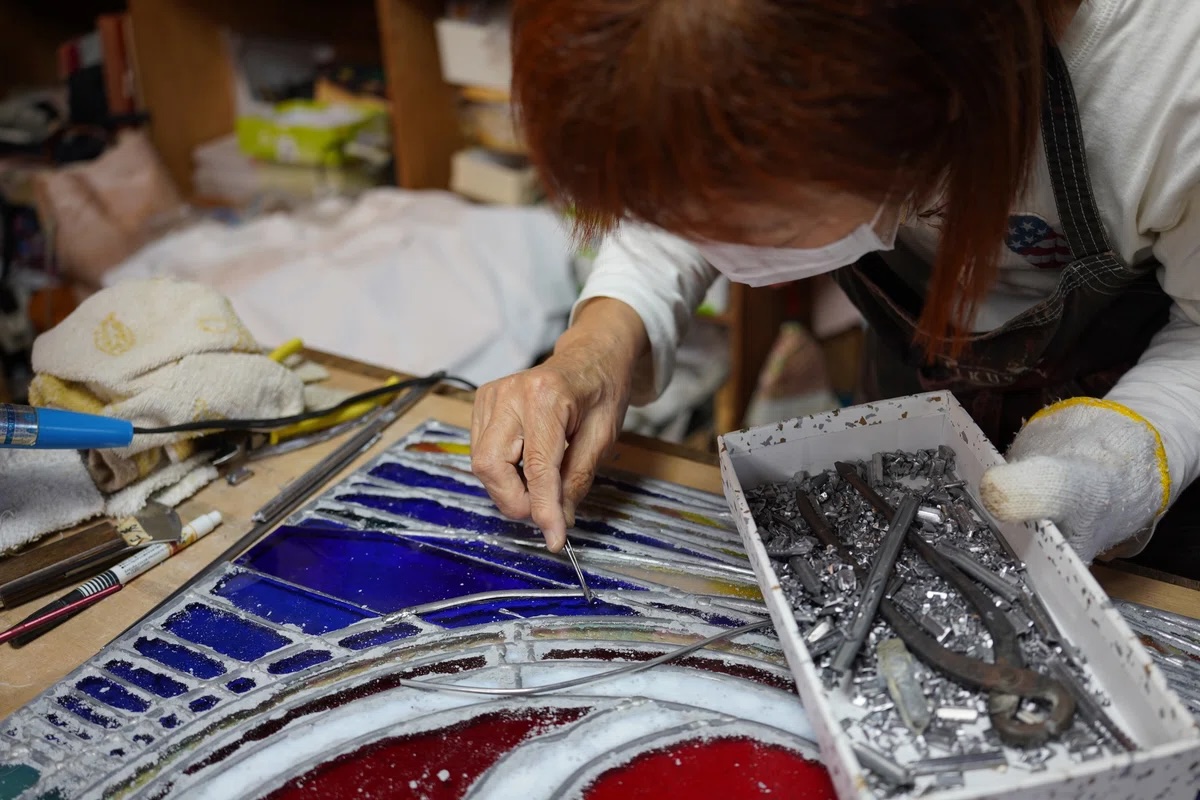
Entrusting feelings to light and color
There is one piece that still stays with Ms. Hamasaki.
In 2011, after the Great East Japan Earthquake, she received a phone call from a Catholic believer living in Iwate Prefecture.Having lost home and belongings to the tsunami, the caller, while thinking about life ahead, had remembered the stained glass of a church seen on a past visit to the Goto Islands.
“It is hope. I thought, if I have this, I can go on living… I want to display it in my home.”
Taking the commission, Ms. Hamasaki kept in close contact and made four pieces of stained glass on the theme of “the Creation.” Layering the client’s feelings onto each motif, including a statue of Mary, a rainbow and birds, she sent them to Iwate.
“In an age when many people could not yet read, stained glass had the role of conveying feelings and meaning through color and form.”
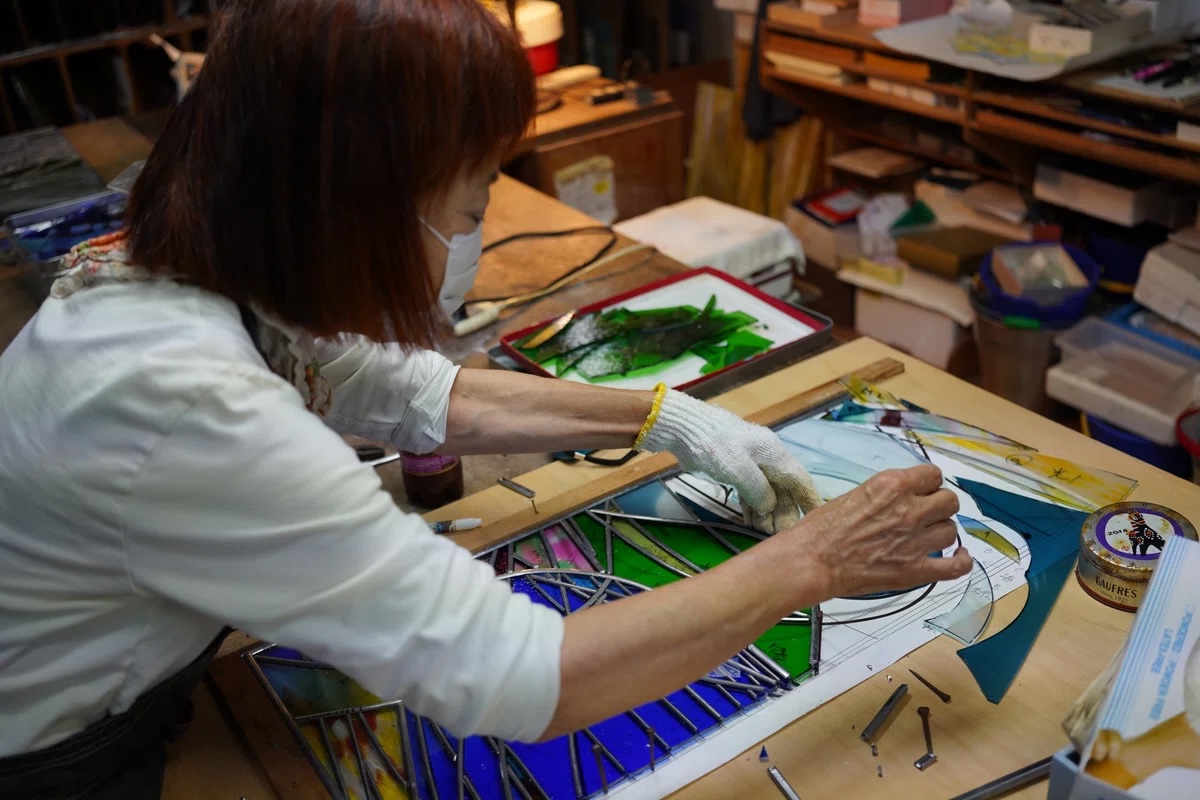
Entrusting meaning to colors and shapes that let light through, and delivering it to those who see them.
What Ms. Hamasaki’s work shows is that stained glass is not mere decoration but has played the role, over a long history, of conveying people’s feelings and stories.
Continuing to make, in Goto
Ms. Hamasaki kept making stained glass while working at city hall, then retired at 55 to devote herself to the studio.Today, in addition to making and restoring pieces, she offers opportunities to try making stained glass.
“I want to contribute something with what I have. I want to keep making things.”
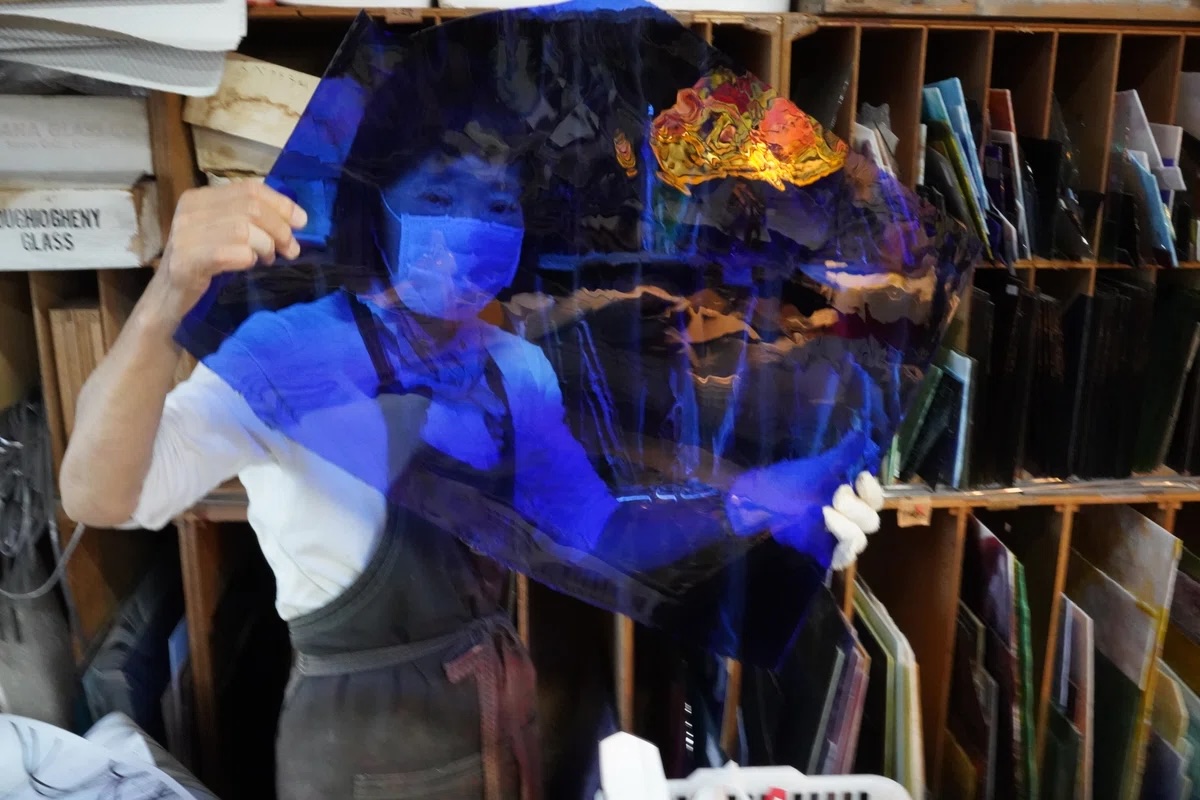
A local activity that began with a single piece of stained glass has produced people to carry on the technique, and it continues in the Goto Islands today.GOTO RETREAT ray offers a hands-on making experience at this 538 Stained Glass Studio.
Not only viewing the work at the hotel, but visiting the place behind it, talking with the maker and touching craft with your own hands. That, too, is one doorway to knowing the land of Goto.
————————————————–
538 Stained Glass Studio
Address: 806-9 Hamanoaze, Miiraku-cho, Goto, Nagasaki
Closed: irregular
*GOTO RETREAT ray offers a stained glass making experience as an activity. Please contact the hotel if you are interested.
GOTO RETREAT ray: 0959-78-5551
————————————————–
The glassmaking handed down in Nagasaki, and the stained glass nurtured within Goto’s church culture.Each has a different history, yet in both we see people who engage with the land, pass techniques on and carry them into present-day life.
What “local crafts” at GOTO RETREAT ray values is not only the beauty of the finished work.By touching the land, the people and the background of the making beyond it, the scenery of a journey comes to look a little different.A single vessel or piece of glass met in the hotel becomes a chance to learn more about Nagasaki and Goto. We hope to keep creating such encounters within a stay.
▶︎ In Part 2, we visit Yoshihito Sakaguchi of “wan -made in Gotoislands-,” a woodworker who continues to make things from the trees of Goto.